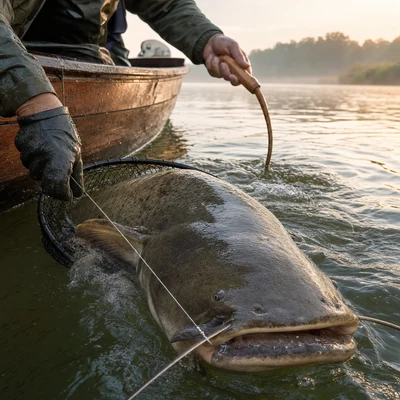
In this article, we will dive deep into one of the most exciting and effective methods for targeting Wels catfish: clonk fishing (or “clonking”). To be precise, you don’t actually catch the catfish with the clonk itself; rather, the fishing happens with its direct and active assistance. So, what exactly is a clonk? You are likely already familiar with it, at least on a surface level, but fish-trail.com is here to break down the specifics. A clonk is a specialized angling tool used to produce distinct, rhythmic acoustic waves on the water’s surface that are incredibly attractive to catfish. By striking the water correctly, you exponentially increase your chances of triggering a strike from a true river giant.
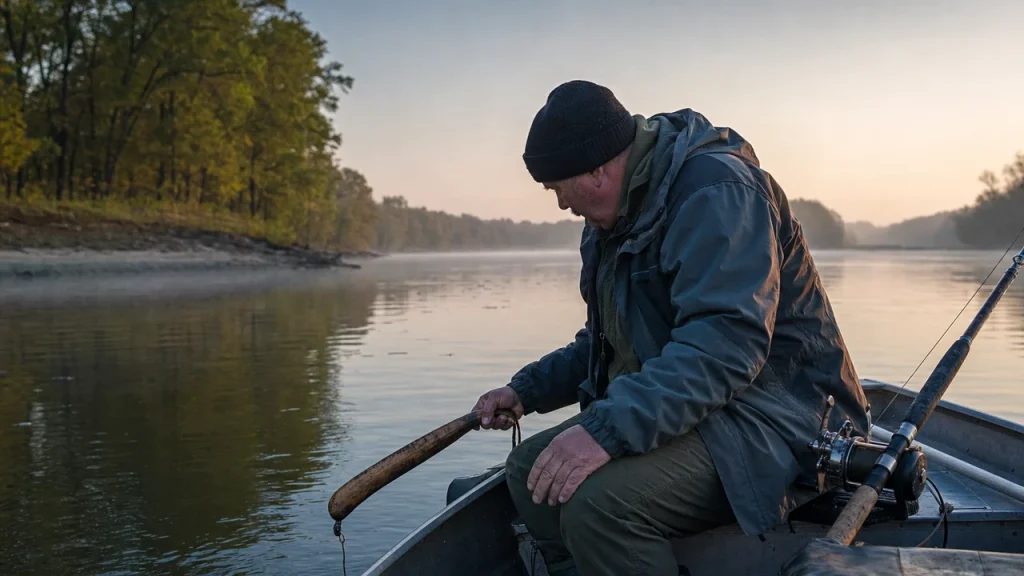
With this unique fishing tool, you can successfully target catfish even in broad daylight. The acoustic signature created by the clonk does more than just draw the attention of the whiskered predator – it actively awakens its appetite and triggers a predatory response. By working the clonk directly above or near your presented bait, you draw this massive fish straight to your zone and provoke a definitive strike. However, you should know from the start that this method is a subtle art requiring a specific touch. You will need plenty of practice before you can consistently produce the correct, high-quality sound. We will cover all the fine details of this style of fishing below.
Choosing a Catfish Clonk: Buy Online or DIY?
Some novice anglers attempt to craft a clonk by hand as a DIY project. Let me be direct: for a beginner, this is rarely a good idea. It is highly recommended to purchase a professionally made clonk from specialized tackle shops; this ensures you receive an instrument built strictly according to proper acoustic and hydrodynamic principles. Alternatively, you can buy one from master craftsmen who have spent years perfecting their custom designs. If you try to make your first clonk yourself without experience, the odds of producing a functional tool are low.
For a clonk to work effectively, the angle of the blade relative to the handle must be precise, and the “heel” or “foot” – which is the primary source of the required sound – must be shaped flawlessly. It’s not just a matter of basic woodworking or metalworking skills; it requires a deep, practical understanding of how the tool interacts with water and exactly what kind of acoustic profile you need to achieve.
When purchasing a clonk, pay close attention to the build quality. The tool should, at the very least, be smoothly finished and sealed with a high-quality water-resistant varnish. Historically, anglers relied purely on wooden clonks, but modern tackle shops offer excellent metallic and carbon-fiber variations as well. While there isn’t a massive difference in efficacy, the sounds produced by wooden and metal clonks do carry distinct tonal differences. It is highly advisable to keep several clonks in your arsenal – for instance, both metal and wooden models, featuring both large and small heels. Sometimes catfish respond better to a muted, deep thud, while other days they prefer a sharper, clearer pop. Over time, you will develop the intuition to select the perfect tool based on how the fish are reacting.
When to Target Catfish with a Clonk
Wels catfish begin to wake up from their winter dormancy as soon as water temperatures climb past the 5°C (41°F) mark. The more the water warms, the more active this apex predator becomes. The most pronounced spike in catfish activity occurs right after the spawning season, which generally takes place around May, though this can shift depending on your specific region and local climate patterns. For spawning to commence, the water temperature needs to reach at least 15°C (59°F). The active clonking season typically winds down around October or November; as the autumn chill sets in, catfish activity drops drastically, and they begin moving toward deep wintering holes where they will remain until the following spring.
Regarding the best time of day to fish, nighttime is undoubtedly the absolute peak for catfish feeding. However, their daytime activity does not stop completely, and clonk fishing is actually most frequently practiced during daylight hours. Daily activity cycles also depend heavily on the season. In the peak of summer, catfish can be quite lethargic during the bright, scorching midday hours. In contrast, during the autumn months, their feeding activity remains highly consistent around the clock.
Catfish typically begin their main hunting patterns as twilight sets in. This is when they actively forage for suitable prey, such as smaller fish, frogs, freshwater mussels, large earthworms, and leeches. If you are a beginner and aren’t thoroughly familiar with the layout of your local waters, it is best to practice clonk fishing in broad daylight. Experienced anglers, however, can comfortably “clonk” day and night. For your first few trips, use the daylight hours to master your boat control and clonking rhythm, and when night falls, anchor up or head to the bank to target these river giants using standard heavy ledgering (bottom) rigs.
Where to Locate Wels Catfish
The Wels catfish is a structure-oriented predator with very specific environmental preferences, which is why experienced catfishes can easily identify promising holding spots on any given body of water. The more experience you gain, the better you will read the river, leading to significantly larger catches.
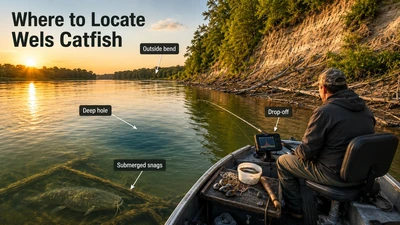 The very first place you should focus on is a deep hole or depression. Any significant drop-off – the deeper, the better – represents a prime holding area for catfish. Typically, mature catfish claim their own specific holes. Smaller specimens under 3–4 kg (6–8 lbs) are more social and may share a single deep depression, forming small localized colonies of 2 to 5 fish.
However, deep river pools are far from the only places where catfish rest and hunt. Prominent structural features that offer protection from strong currents serve as excellent ambush points for clonk fishing:
- Behind massive bridge pilings and supports
- Along deep river ledges, drop-offs, and underwater shelves
- On sharp river bends, specifically holding tight to the inside edges where the current slackens
- Inside slow-moving bays and backwaters
- Directly behind breakwaters, wing dams, and wing dykes
With that said, you should avoid looking for areas completely devoid of current; fishing a clonk in stagnant water rarely yields impressive results. Additionally, catfish are drawn to heavy snags, submerged timber, and rootwad complexes – very much like large carp. They also frequently shelter beneath trees overhanging the water and under thick mats of lily pads. During periods of rising water or floods, they will readily leave their deep sanctuaries to hunt in much shallower zones. Catfish also venture into the shallows at night, coming remarkably close to the riverbanks in search of food.
Top Baits for Catfish Clonk Fishing
Your choice of catfish bait should be scaled directly to the size of the fish you expect to target. If you are using lighter tackle or are fishing a smaller river system where true trophy-sized monsters aren’t present, the ultimate setup is a generous bunch of large earthworms (nightcrawlers) or local freshwater mussels (such as Unio or painter’s mussels). To prepare a mussel bait, you must extract the meat from the shell and thread it onto the hook and directly onto the hair or hook-shank – use at least 2 to 3 large pieces to form a substantial, fleshy cluster. The larger and more substantial the cluster, the more aggressively the catfish will respond. Nightcrawlers should similarly be packed onto the hook in dense bunches of 3 to 5 or more worms.
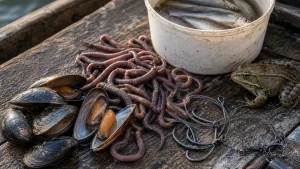
If your tackle is heavy enough to handle fish weighing 5 to 10 kg (11–22 lbs) or well beyond, and you know your water holds legitimate monsters, live bait becomes your best option. Excellent live bait choices include hand-sized crucian carp, tench, small bream (skimmers), or large roach. The live bait is typically hooked either securely through the upper lip or just beneath the dorsal fin to ensure natural swimming movement. Some anglers prefer composite presentations, running multiple hooks through various parts of the baitfish, but be aware that this drastically restricts its natural mobility and reduces its lifespan in the water. (At the end of this article, we have included a video showcasing an excellent, highly effective method for rigging live bait using a specialized two-hook presentation).
Catfish also react incredibly well to live frogs, which are best secured by hooking them carefully through one of the hind legs. Beyond these staples, other highly effective and proven catfish baits include:
- Fresh chicken liver
- Traditional singed poultry baits (an old-school method where feathers or skin are lightly scorched with a blowtorch to create an intense, oily scent trail in the water)
- Fresh chicken offal and entrails
- Aged, pungent, or slightly turned meats
- Large medicinal or horse leeches
- Fresh crayfish
- Whole deadbaits or sections of fish (such as a large fish head or tail cut)
It’s important to remember that catfish preferences can vary wildly from one river system to another. If you successfully land a quality fish, it is highly recommended to safely check its stomach contents or observe what it regurgitates. This simple habit is often the fastest, most reliable way to uncover the exact preferred seasonal delicacy of the catfish in that specific body of water.
Essential Gear for Clonk Fishing
Because clonk fishing is conducted strictly from a boat, you will need a specialized short, incredibly rigid, yet lightweight rod. It must feature massive backbone capability to withstand the extreme, punishing pressure of pulling a river giant up from the depths. Even a relatively modest 5 kg (11 lb) catfish is an exceptionally powerful fighter capable of snapping substandard tackle with a single violent, downward surge. The ideal rod length ranges between 1.6 and 1.8 meters (5.2 to 6 feet) – this compact length provides perfect leverage and ergonomics when working directly over the side of a boat.
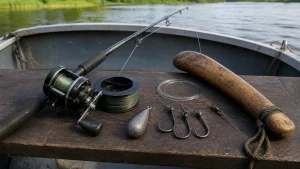
Hooks must be selected based entirely on the size of the fish you are targeting and the physical bulk of your bait. As a standard rule, you should look for heavy-gauge, forged hooks starting at size 6/0 and ranging up to 10/0 or larger. Your main line or braided leader must be rated for extreme breaking strains; when selecting this part of your rig, place absolute priority on raw knot strength and abrasion resistance. If you are intentionally targeting catfish in the 10 to 20 kg (22–44 lb) class or larger, your line must be fully prepared to handle the strain, meaning you should look for premium braids with a minimum test rating of 25 kg (approx. 55–60 lbs) or higher.
In terms of basic mechanics, the overall rig functions similarly to a standard heavy bottom-ledgering setup. You can easily utilize either a fixed inline sinker or a heavy sliding weight. The exact weight of your sinker must be adjusted dynamically based on the speed of the river current, the size of your bait, and your specific presentation depth.
Advanced Tactics and Core Nuances
Clonk fishing is traditionally done while drifting naturally with the current in a boat. Ideally, you should equip your watercraft with a high-quality sonar or fish finder unit. A good sonar is an absolute game-changer: it provides real-time data on the exact depth, shows you precisely where your bait is sitting in the water column, and – most excitingly – allows you to watch a large predator actively rise off the bottom to investigate your clonk. Attempting this method without a fish finder makes it significantly harder to map out productive underwater structures, confirm the presence of active predators, or time your presentation when a fish approaches the bait. Make sure to prioritize adding this piece of technology to your boat setup.
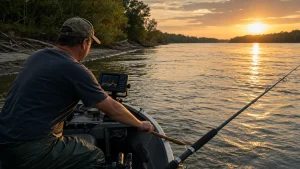 During high winds and heavy surface chops, executing a clean, resonant strike with a clonk becomes a major challenge. This is because passing waves constantly alter the entry angle of the clonk’s heel as it meets the water’s surface. If you find yourself fishing in rough conditions, switching to a clonk with a significantly larger heel will make it much easier to lock in the proper sound compared to using a model with a small, delicate foot. As a rule of thumb, the smaller the surface area of the clonk’s heel, the higher and crisper the resulting pitch will be. Conversely, a large-heeled clonk generates a much deeper, more resonant, bass-heavy acoustic pulse, and this low-frequency sound wave is capable of traveling vastly longer distances through deep water.
Catfish activity tends to drop off sharply during sudden weather fronts, when heavy storm clouds roll in, or during extreme mid-summer heatwaves when surface water temperatures climb past 25°C (77°F). Stable, fair-weather days with moderate temperatures consistently offer the highest activity levels. However, if you experience nighttime summer thunderstorms, you can easily locate active catfish holes without any sonar electronics at all. During a midnight thunderstorm, catfish frequently breach and create massive, unmistakable surface splashes directly over their home depressions, which they rarely venture far from during these atmospheric shifts.
The standard operational technique involves drifting slowly over key river features while executing systematic acoustic patterns. You should never clonk continuously; always incorporate distinct pauses after a set number of strikes. Most seasoned catfish anglers utilize a rhythm consisting of 2 to 3 clean consecutive strikes followed by a prolonged pause of several seconds.
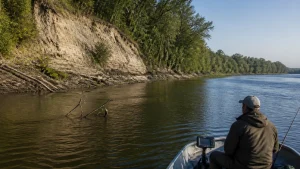
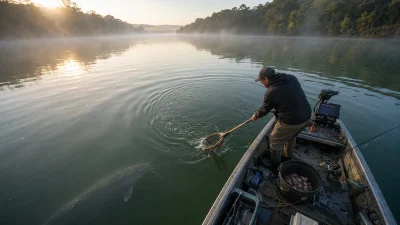 When your drift takes you past a sheer, cliff-like clay or rock riverbank, slow your boat down and work that specific perimeter with maximum focus. A steep, vertical bank is a definitive indicator of an immediate deep drop-off and heavy underwater structural holds – classic real estate that is guaranteed to shelter at least one mature catfish. Keep your boat positioned no further than 50 meters from these steep banks and maintain a steady, active clonking rhythm.
Across major European river systems – from the Ebro and the Danube to the Dnieper and the Volga – the core clonk fishing season kicks off in earnest around mid-June and remains highly productive through September, with daily peak times often running from 5:00 AM until well past midnight. You should always adjust these timelines based on the exact latitude of your home waters, as autumn arrives much faster in northern territories, rendering October practically a winter month there.
Think of a clonk on a catfish river exactly how you would think of high-quality groundbait on a carp lake. While it is technically possible to catch a carp without baiting an area, doing so is vastly less efficient. By integrating a clonk into your strategy, you multiply your chances of locking horns with a legendary whiskered giant. Even if your initial outings don’t result in a new personal best, never get discouraged. Every single drift gives you a deeper feel for the water, refines your striking technique, and builds the practical experience that ultimately leads to consistent fishing success.
The team at fish-trail.com wishes you tight lines and clear marks on your sonar. We look forward to seeing you back on our pages for more expert guides!