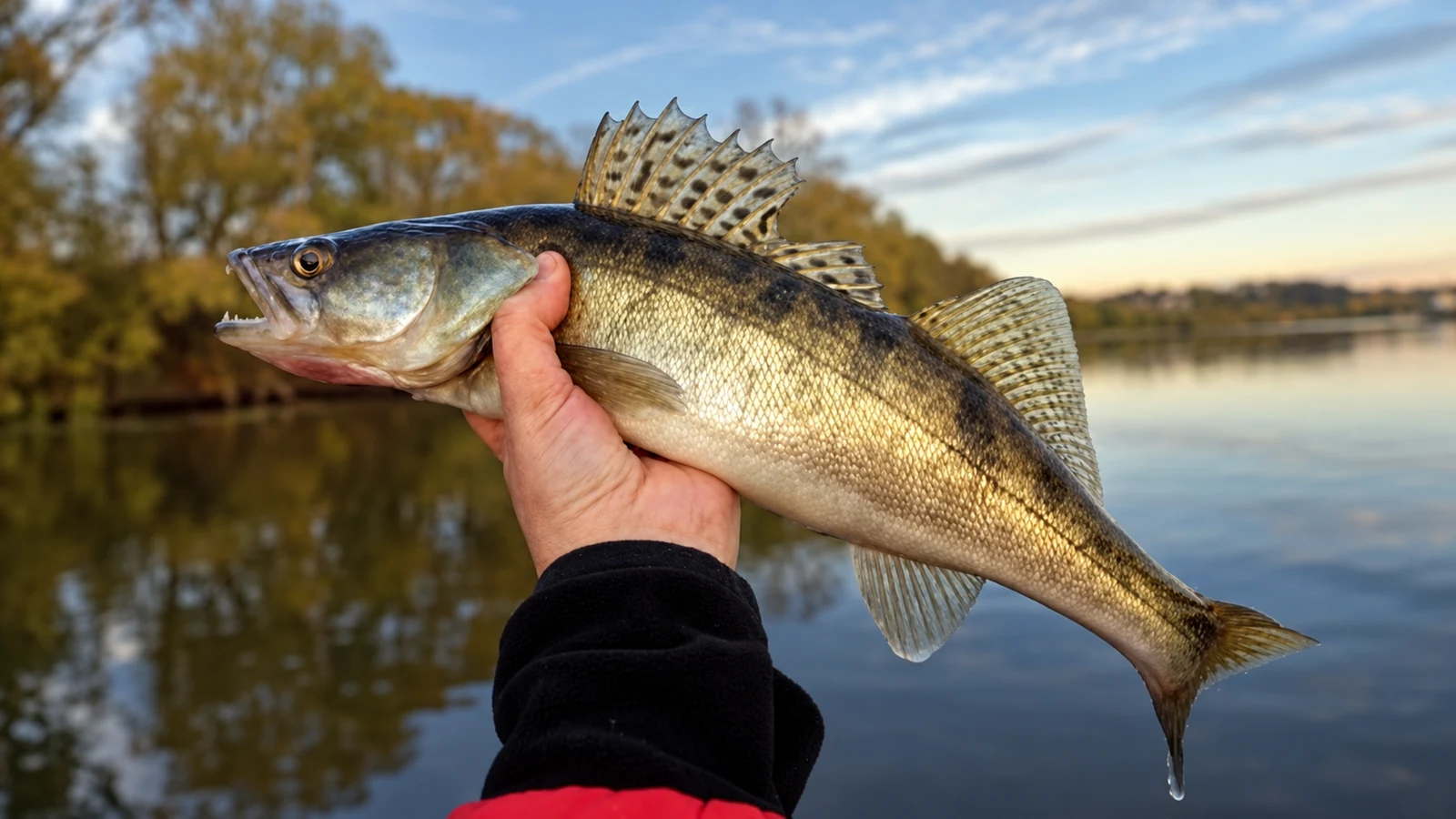
In many regions, March can still offer a window to target zander before local spawning restrictions come into force. During this period, you have a chance to target zander on jigs and scratch that itch after waiting all winter for the open-water season.
Why jigging? Because it is simply the most effective method for catching zander. Local closed seasons and tackle restrictions vary across Europe, so always check the rules for the water you plan to fish. But while you still have the time to cast a lure before the ban, let’s break down March zander jigging and outline all the crucial details to make your early spring sessions as productive as possible.
Locating Zander in March
 First of all, you need to understand where to look for zander right now, where they hold, and where to cast your lure first to increase your chances. Searching for zander in March differs significantly from summer or autumn, largely due to rising water levels.
You need a different approach. Do not linger on spots where you aren’t getting bites, even if these were your favourite marks in the summer or autumn. Make a few casts, perhaps 5 to 10, and move on. In March, zander are highly localized; they form large, tight shoals in specific areas that you need to find. Once you locate a holding spot, you have a great chance of catching multiple fish. As mentioned, they group up densely, and if you find a shoal, you must act.
Keep fishing that specific spot until the bites stop. Once the takes dry up, it means the feeding window there has closed, but it will happen again later, perhaps in an hour or two. That specific “hotspot” will likely remain productive throughout the entire month of March. Therefore, it is worth returning periodically to check if the zander have switched back on. In the meantime, you can search for another productive mark.
Finding just two of these hotspots can make your entire session. You can simply alternate between them as the bites slow down. Zander will reliably return to the spots where they were feeding earlier. Furthermore, these marks often remain productive every spring for several years.
Searching for March zander is tricky because the predator migrates constantly. They might be caught in deep water one moment and in the shallows the next. You cannot identify a good spot merely by looking for a deep hole. March zander can turn up in the most unexpected places. Small zander often move into the shallow margins where the ice has melted to hunt small baitfish. However, larger, more cautious zander avoid these areas and stay further out.
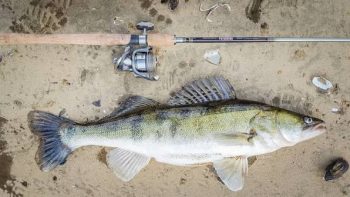 Even in March, the most consistent areas are drop-offs, the edges of deep holes, and reverse currents. But do not get entirely fixated on these classic features. Try casting into spots that seem unpromising; spring zander often show up in places where they never feed in summer.
Remember: In early March, look for zander in their deep winter holding areas or adjacent ledges. From mid to late March, they move onto the main river drop-offs, following them upstream in preparation for spawning. By April, closer to spawning time, they will push even closer to the marginal drop-offs.
Snags and submerged timber are incredibly productive for March zander. The presence of even a single submerged branch on the bottom significantly increases the likelihood of zander holding there. If you find a submerged tree in deep water, it is exactly the sort of place where you should expect zander to be holding. In these areas, it is essential to use weedless setups, such as offset hooks, to avoid constant snagging.
The most important takeaway for locating March zander: keep moving. The more water you cover, the higher your chances of finding a shoal. Once you find them, stay put until the action stops.
When Do Zander Bite in March?
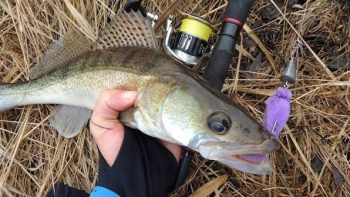 Regarding feeding times, you can start fishing as soon as patches of open water appear at the margins. The moment the water partially clears of ice, you can confidently try your luck. Even as snow melts, water rises, and fish become harder to find, zander still need to feed.
Gradually, the jig fishing improves, and the predators become more active. Once the water level reaches its peak and stabilizes, zander begin to feed heavily. This marks the start of the pre-spawn feeding frenzy, which lasts for about two weeks, usually occurring in late March or early April.
As for the time of day, zander activity is completely unrelated to the clock. They can spontaneously start feeding at any hour. Their activity in March comes in waves, rising and falling throughout the day. Do not try to perfectly time a specific feeding hour; just fish when you can, and you will eventually hit a feeding spell.
March is undeniably challenging. Locating fish is hard as they move between the margins, deep holes, and mid-water. Zander over 2 kg may be less common in catches at this time. However, there are distinct advantages. You do not need to meticulously read complex bottom topography. If you struggle with reading depths, March actually makes things easier. You simply need to cover the maximum amount of water, regardless of depth or structure. Once you find a few productive spots, they will produce fish for the rest of the month.
Which Jig Lures to Choose for Zander in March
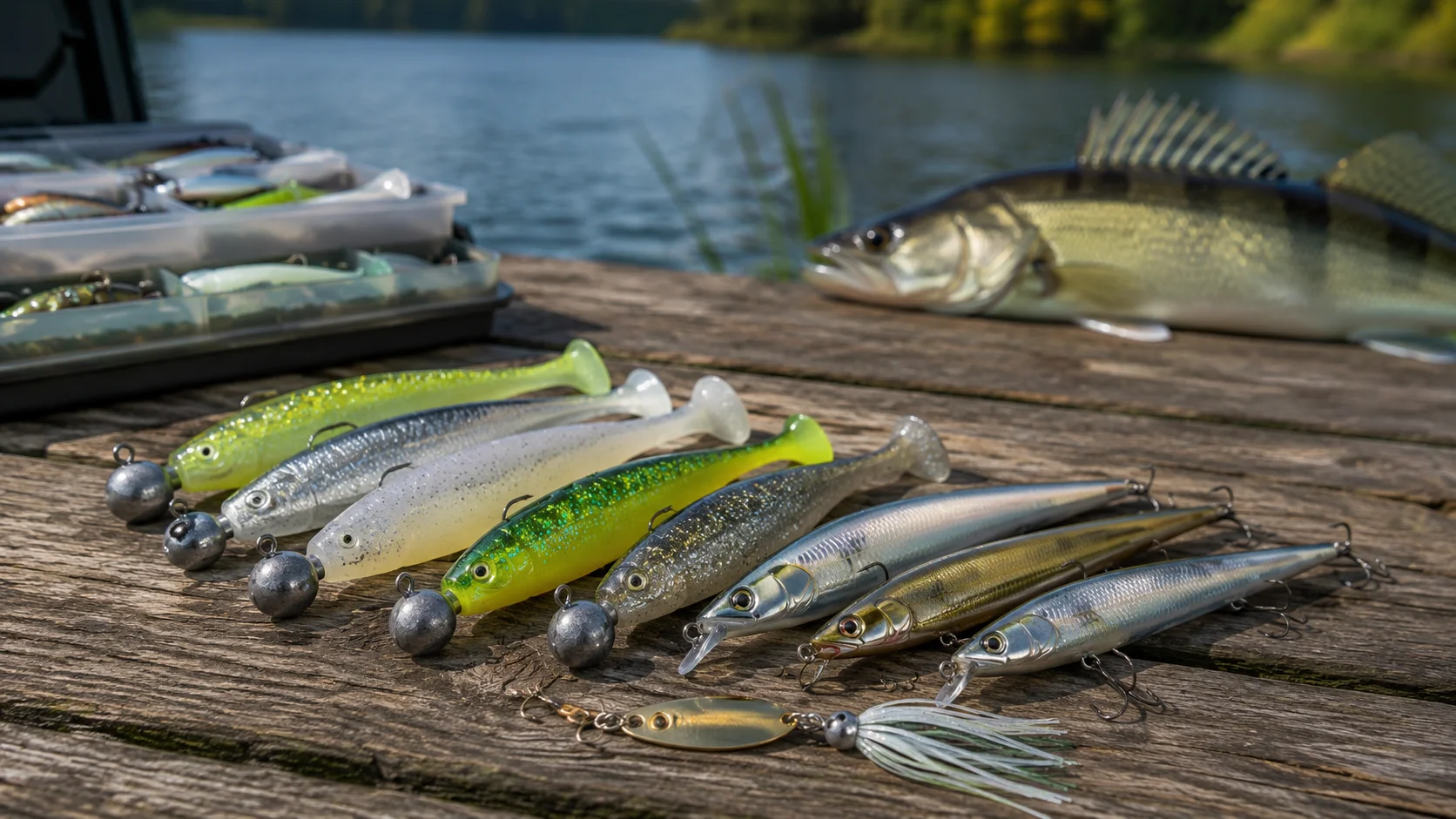
Now it is time to look at lure selection for March jigging. First, let’s review the general types of soft lures we can use for zander:
- Shads (paddle tails);
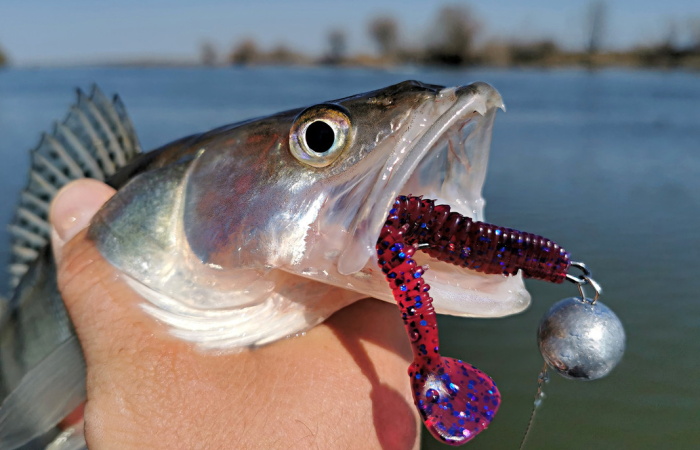
- Grubs (curly tails / twisters);
- Foam fish (classic Eastern European articulated foam lures);
- Dragonfly nymphs and similar creature baits;
- Crayfish imitations.
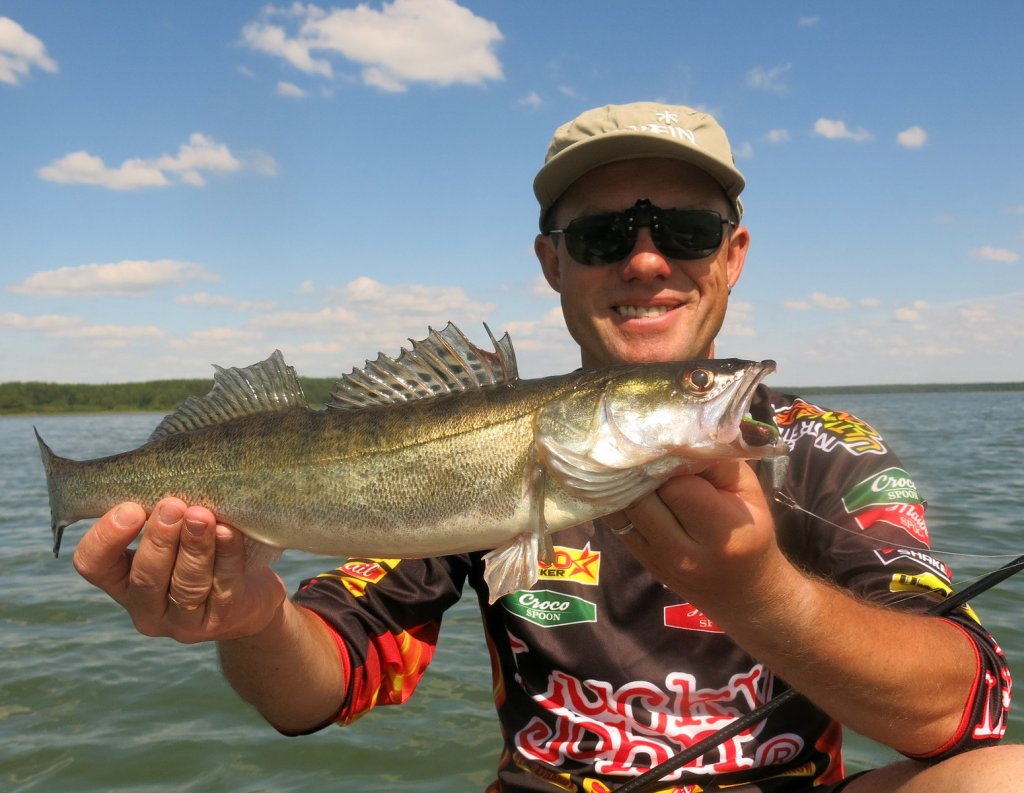
Since early spring zander can be lethargic and are localized in tight areas, it makes sense to start searching with the most appealing lures. Do not begin with overly large baits or bulky crayfish. Small shads or grubs are ideal for locating fish.
March water is typically coloured from runoff. While zander have excellent vision, bright lures are much easier for them to track than natural patterns. Therefore, the optimal search lures for March are bright and compact, around 2 to 3 inches (5 to 8 cm) in length.
Effective colours include:
- Green (including chartreuse / lime);
- Red;
- Yellow;
- Purple and similar bright variations.
By using a small, bright lure, you give zander a much better chance of spotting it in coloured water, and they are less likely to refuse a compact meal before spawning.
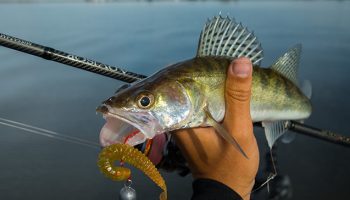 Jig head weight is another crucial factor. Start with weights around 10 g, adjusting based on conditions. The deeper the water or the stronger the flow, the heavier the jig you need. Casting distance will also dictate weight. So, your starting setup is a bright 2 to 3-inch lure mounted on a 10 to 35 g jig head.
Changing the weight of your jig head can significantly impact the bite rate. Altering the weight changes the lure’s fall rate during a sink-and-draw retrieve, which is a key trigger for zander. Experiment with this constantly. This approach helps you locate zander quickly. Sometimes they will engulf the bright lure immediately, but often you will locate them through tentative taps or nipped tails.
Once you find a shoal but the bites are unconfident, simply fine-tune your presentation. Switching to a natural colour, tweaking the lure size, or altering the jig weight is usually enough to provoke a confident strike. A good shoal can produce several fish in a short spell — sometimes just one or two, sometimes four or five before the action dies away.
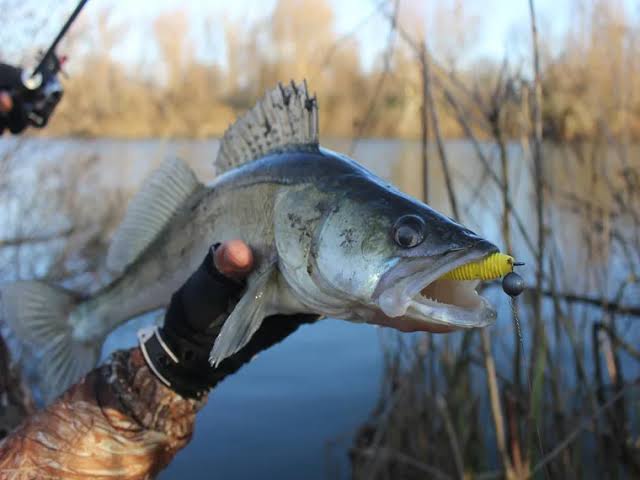
If you are unsure which specific lures to buy, brands worth looking at include:
- Lucky John;
- Reins;
- Bait Breath;
- Keitech.
Lucky John’s Tioga, for instance, is one proven example of a classic zander profile.
Tackle for March Zander
Let’s briefly cover the tackle best suited for spring zander fishing. Getting your rod, reel, and line right will make your fishing not only more effective but far more comfortable.
For bank fishing, rods around 2.4 to 3.0 metres are common, with the longer end useful when extra casting distance is needed. For boat fishing, a shorter rod between 1.8 and 2.4 metres is much more manageable. Look for a fast action blank with a sensitive, responsive tip so you can feel the bottom contours during your retrieve.
Choose the rod’s casting weight based on the lures you plan to use. For most situations, a rod rated around 10–30 g or 10–35 g makes a good all-round choice. On smaller rivers and stillwaters, 5–20 g or 7–21 g may be enough.
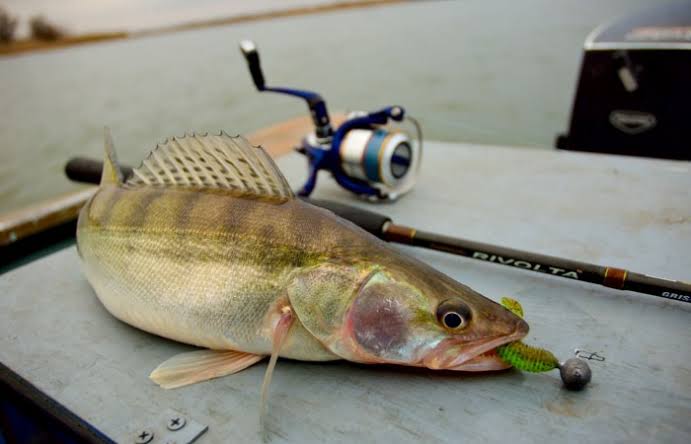
Pair this with a spinning reel (fixed spool). While baitcasters are an option, they are unnecessary for beginners. A 2500 to 3000 size reel suits most of the setups described above. You do not need a premium, top-tier reel, but a smooth, reliable drag is still worth having.
Braided line is usually the better choice for zander jigging because its low stretch improves bite detection and bottom contact. Select a braid with a rating roughly between PE 0.8 and 1.2 (around 8 to 15 lb), depending on lure weight, flow, and the amount of snaggy cover.
A critical note on traces: Zander themselves are unlikely to bite through braid or a suitable leader, but if pike are present, use a wire or other genuinely bite-resistant trace. Even a small pike can cut through mono or standard fluorocarbon very quickly.