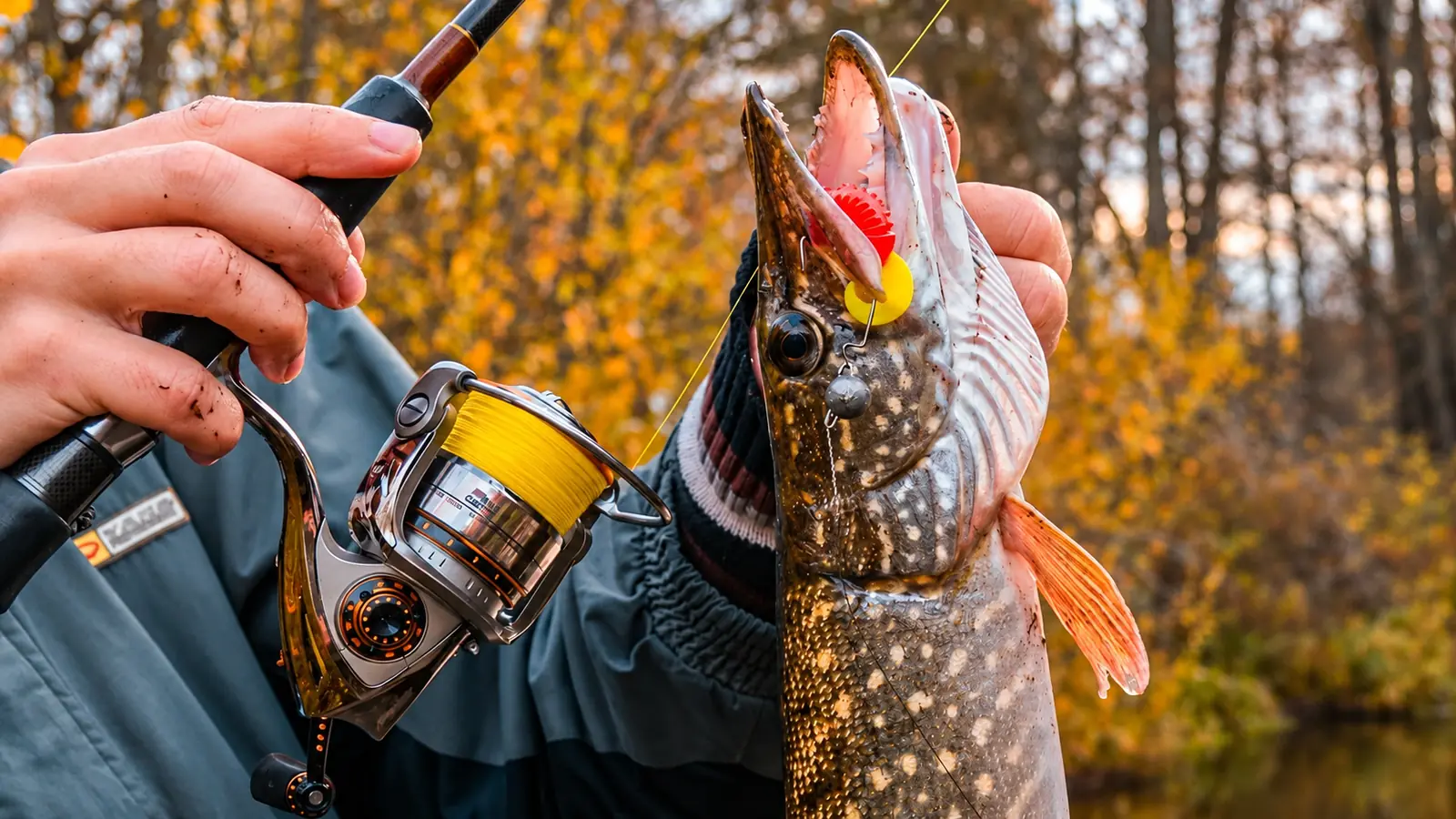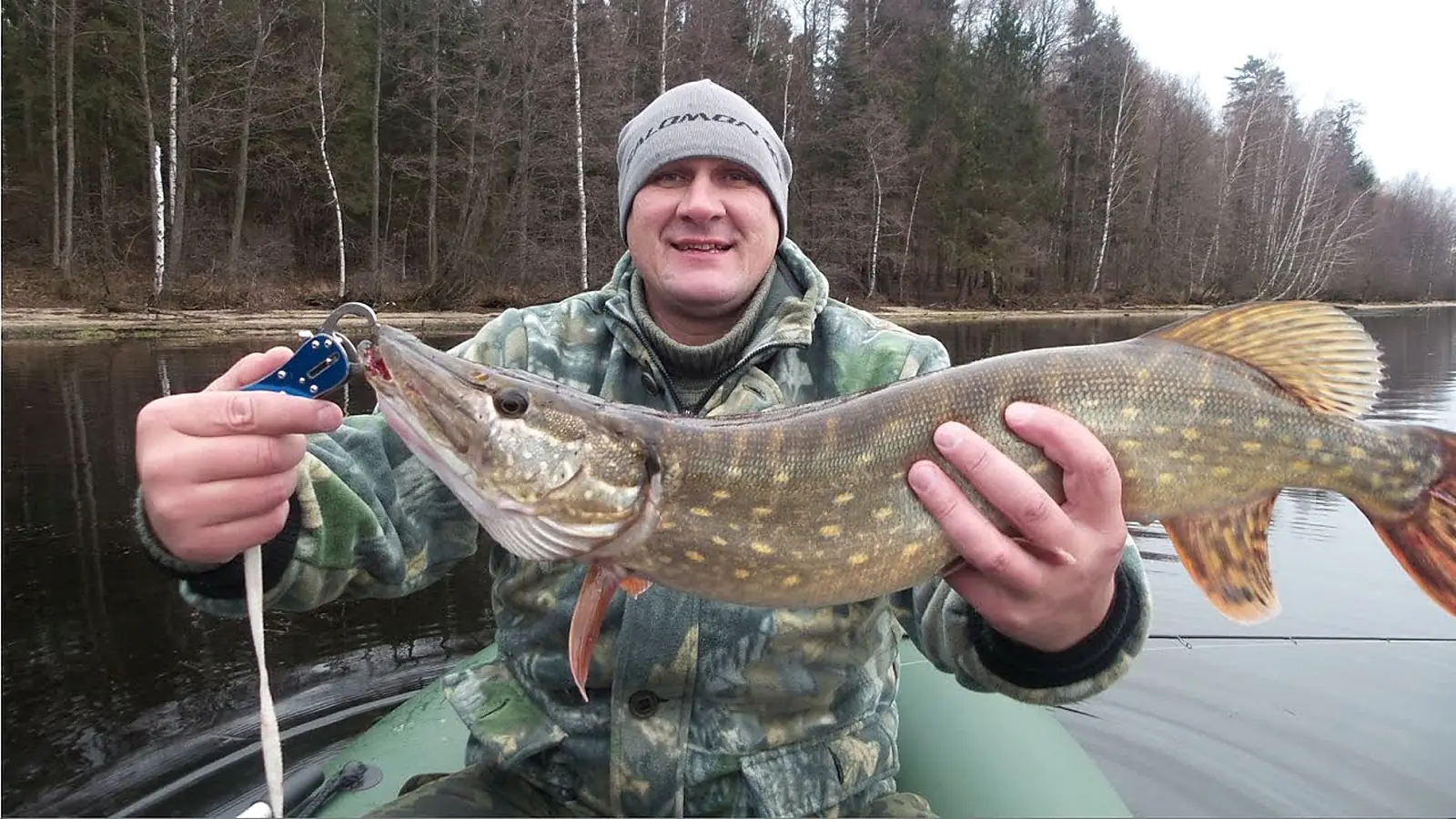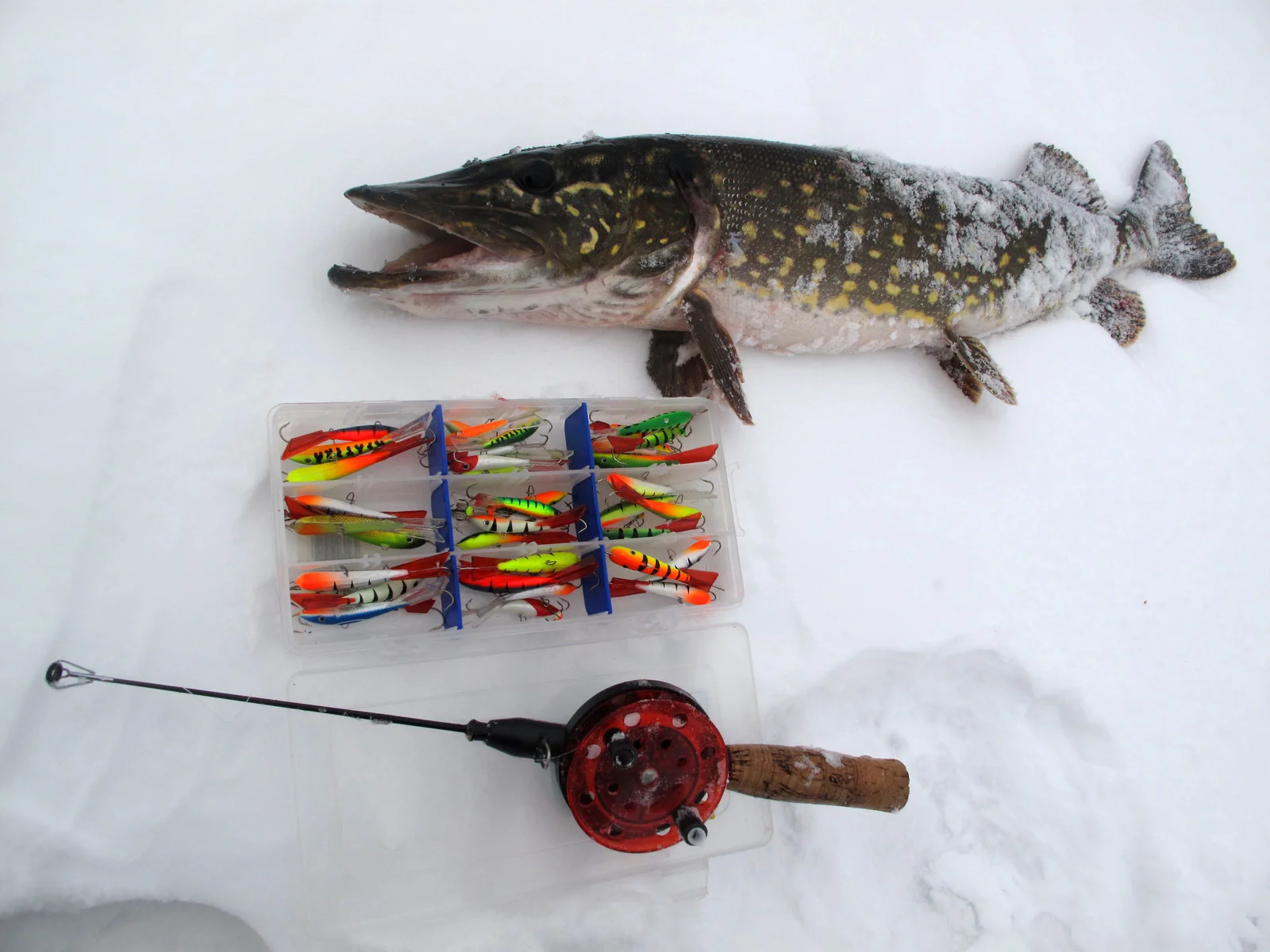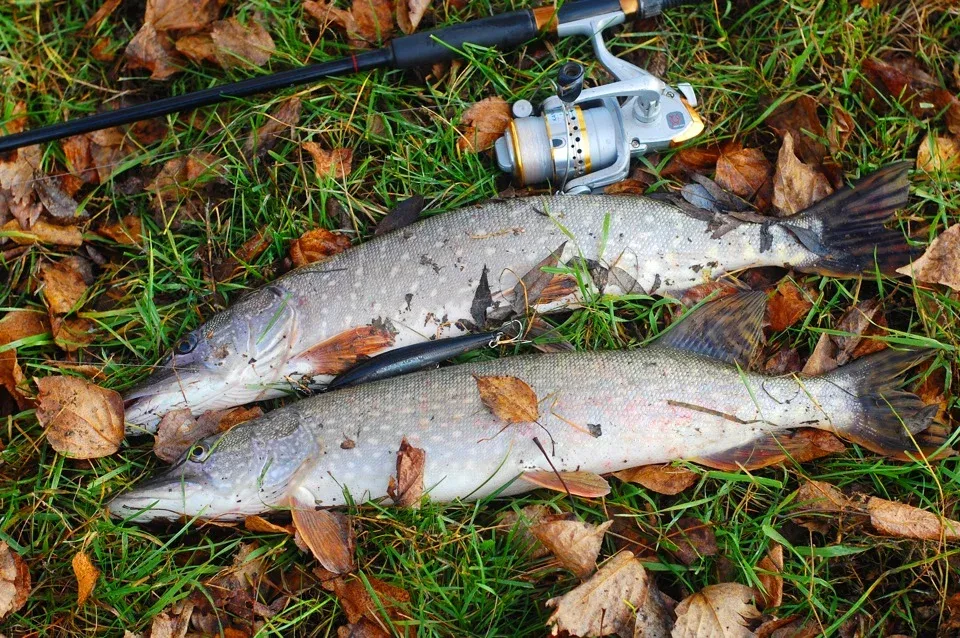
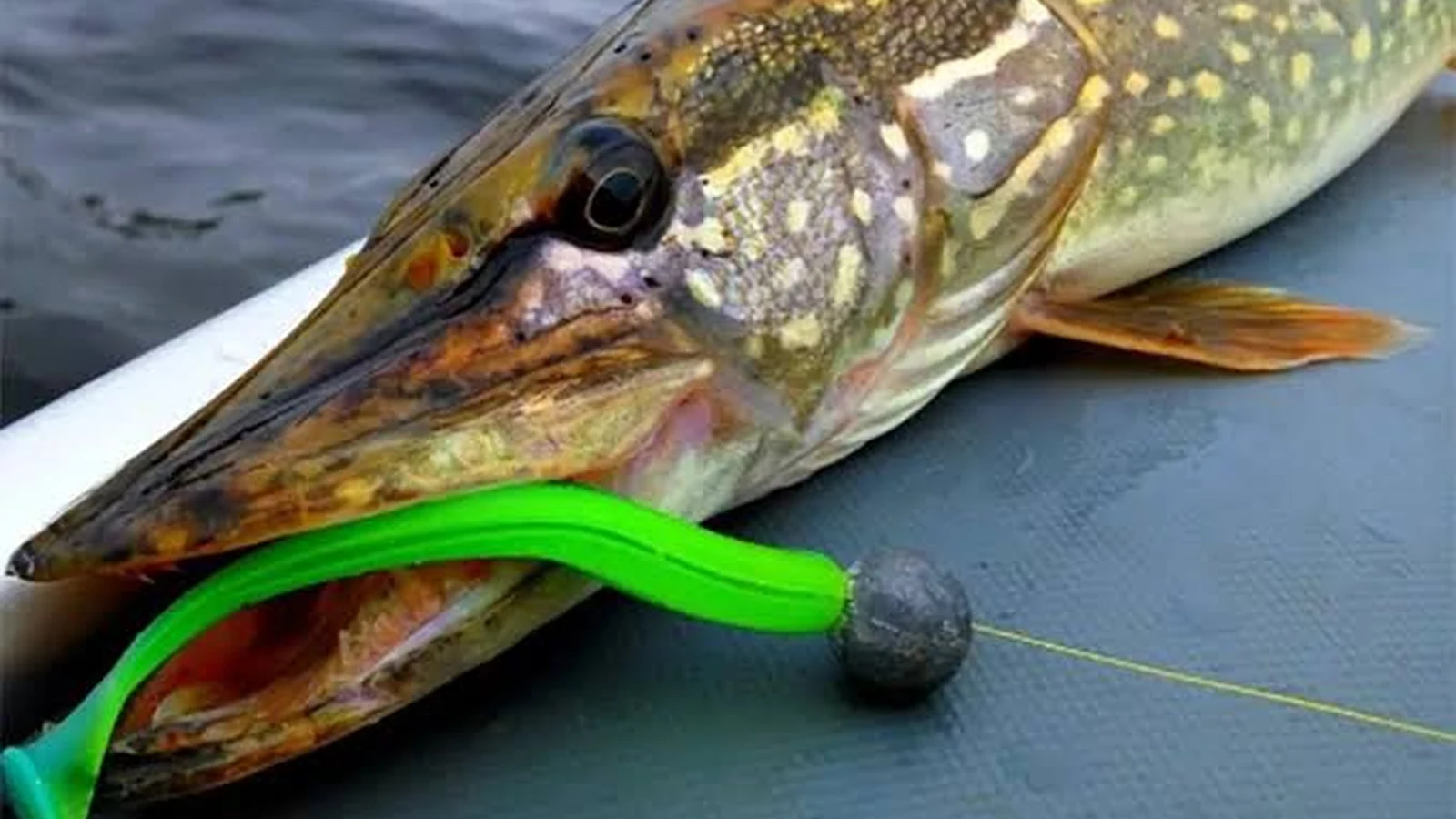
A softbait that keeps swimming when you slow the retrieve right down is a valuable thing to have in a pike box. Add a supple body and an attractive scent, and you have a lure that deserves to be fished with confidence along a reed edge, over a weed bed or down the side of a drop-off. The important part is choosing one that does the job you need, rather than buying ten different versions of the same presentation.
This selection brings together ten scented soft baits for pike, from compact shads for everyday spinning to substantial paddle tails and a soft glide bait. Some are established favourites; others bring newer designs and rigging features to the water. Each earns its place through a particular combination of profile, movement and practical use.
Every model below has a scent or attractant incorporated into the bait or its factory treatment. These are purpose-made scented fishing lures, rather than ordinary soft plastics that need an extra spray before you start. Use them to build a useful range of presentations: a dependable shad, a different silhouette, and an alternative action for fish that follow without striking.
Choosing a Scented Pike Lure That Suits the Job
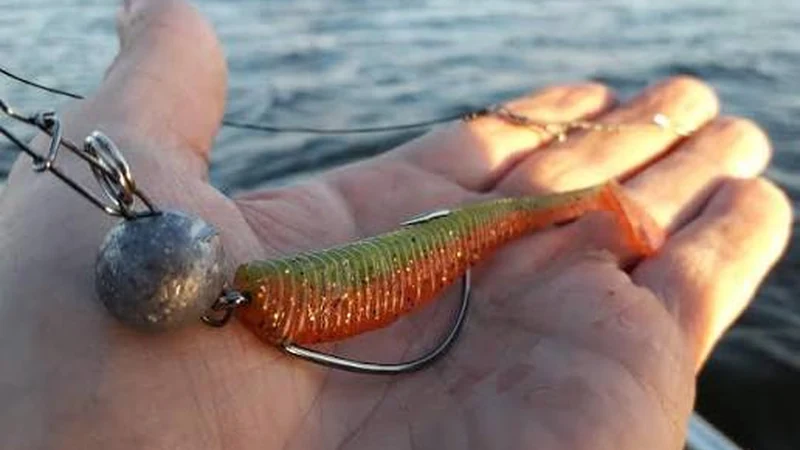 Start with the water you intend to fish. A deep-bodied shad with a broad paddle tail is a strong choice for searching open stretches and fishing above vegetation. A slimmer bait presents a different outline and works well along channels, bankside cover and deeper edges. A curly tail keeps moving during a slow retrieve, while a glide bait lets you change direction and hold a following pike’s attention.
For general fishing, begin with a shad around 12–15 cm. It is a useful size for canals, smaller rivers and lakes, and it fits a wide range of ordinary pike lure outfits. Carry a larger option around 17–22 cm when the water holds substantial prey, when you want a more visible presentation or when bigger pike are your main target. Match the rod to the complete rigged lure, including its hooks and added weight.
Scent is part of the attraction, but the bait still needs to swim properly. Check it beside the bank before casting: the tail should work at your intended speed, and the body should stay upright. A crookedly mounted lure that corkscrews through the swim needs straightening, not another dose of attractant. Set the hook promptly when a pike takes; there is no advantage in deliberately allowing it to swallow an artificial bait.
Ten Scented Soft Baits Worth a Place in Your Pike Box
| Lure | Sizes selected for this guide | Main reason to choose it |
|---|---|---|
| Keitech FAT Swing Impact | 4.8″ and 5.8″ | A substantial, active shad for everyday pike fishing |
| Keitech Easy Shiner | 5″ and 6.5″ | A slimmer baitfish profile with a rolling action |
| Sawamura One Up Shad | Size 7, listed by Ultimate Fishing as 148 mm | Soft-bodied weedless presentations around cover |
| Savage Gear 3D Herring Shad V2 | 17.5 and 21.5 cm | A broad, realistic profile with a rattle and strong movement |
| Berkley PowerBait Smash | 17 and 23 cm | A dedicated pike shad for shallow screw rigs |
| Molix RA Shad | 4.5″ | A compact, versatile scented shad |
| Rapala CrushCity The Curl | 12.5 cm | A responsive curly tail for slow presentations |
| Keitech Mad Wag | 7″ | A long curly-tail profile for swimming around vegetation |
| Crazy Fish Scalp Minnow | 5.5″ model | A supple paddle tail suited to jigging and offset hooks |
| Berkley PowerBait Chop Block | 20 cm | A soft glide bait for changes of direction and reaction strikes |
1. Keitech FAT Swing Impact
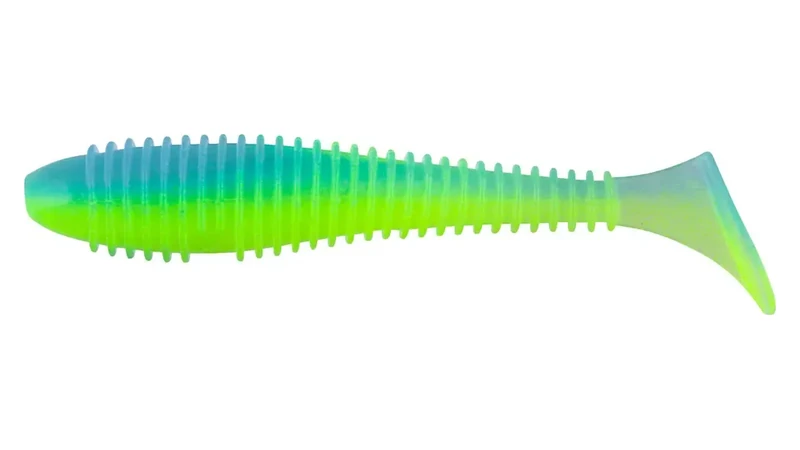
The FAT Swing Impact is the first choice here for an angler building a scented pike selection. Its thick, ribbed body gives the fish a substantial target, while the paddle tail works during a slow retrieve. Keitech combines salted plastics of different densities and, in the standard range, a strong squid scent. The result is a bait that lends itself to both steady swimming and bottom-oriented jigging.
Choose the 4.8″ for general fishing and the 5.8″ when you want more presence. On an exposed-hook jighead, swim it beside reed beds or let it descend down a slope before bringing it back with controlled lifts. Around weed, use a wide-gap weedless swimbait hook that leaves enough room for the thick body to compress.
Begin with a steady retrieve just fast enough to keep the tail working. Add a short pause beside a gap in the vegetation, then resume. On a clean bottom, follow with a second cast slightly deeper rather than immediately changing colour. This makes the FAT a useful first lure for establishing the depth where fish respond.
Its soft material trades durability for easy movement. Carry spare bodies for an extended session, especially when several pike are feeding in the same area; a torn nose is usually easier to replace than repeatedly force back onto the hook.
2. Keitech Easy Shiner
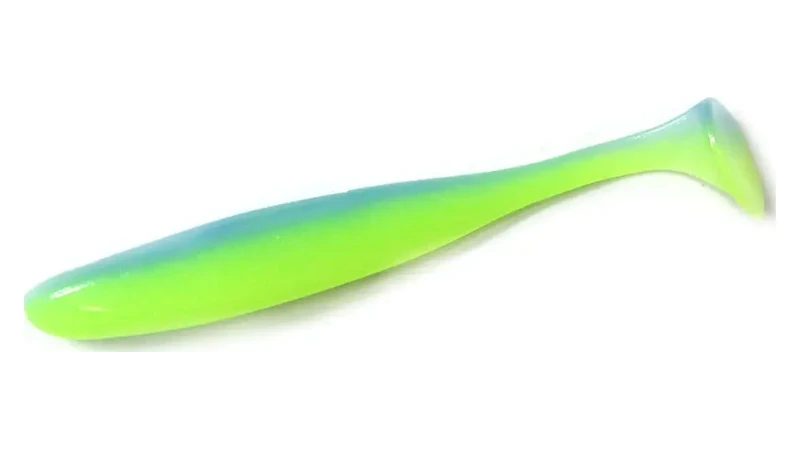
The Easy Shiner offers a cleaner, slimmer silhouette than the FAT Swing Impact. Its body rolls as the paddle tail works, giving you a good alternative when a bulky shad looks out of place among narrow-bodied prey. It also contains Keitech’s squid scent. The 5″ is a useful everyday option, with the larger 6.5″ adding a more substantial meal without turning to a deep-bodied lure.
Fish it on a jighead along canal margins, deeper weed edges and the sides of underwater points. Count it down before retrieving so the first few metres of the cast cover the intended depth. In open water, keep the hook point fully exposed; near vegetation, use a correctly fitting weedless hook. A smooth retrieve with occasional gentle acceleration makes a good starting presentation. If a pike follows, briefly increase the speed and then pause where you can still control the lure. Give the fish a change to react to rather than continuing an identical retrieve all the way to your feet.
3. Sawamura One Up Shad
The One Up Shad earns its place through its supple material, lively swimming action and distinctive Trump attractant. For this selection, choose the size sold as One Up Shad 7. Ultimate Fishing lists that particular model at 148 mm, so use the stated product dimensions when ordering rather than converting the size name as a conventional seven inches.
Its strongest role here is fishing around cover with a weedless hook. The soft body compresses readily during the strike, helping the hook point clear the plastic. Use a large, wide-gap hook matched to the body; Ultimate Fishing recommends an 8/0 offset hook for this model in its pike fishing guidance.
Take particular care when threading it. Keep the hook centred and bring its point out where the bait lies naturally along the shank. A body stretched tightly between the nose and hook bend has less room to collapse when a fish closes its mouth.
On shallow water, start without extra weight and swim it above the weed or beside overhanging branches. Add a belly-weighted hook when you need to follow a deeper edge. Keep the retrieve controlled and bring it through openings in the cover. Weedless rigging reduces snagging, but pushing any lure into an impenetrable mass of branches is still an excellent way to lose it.
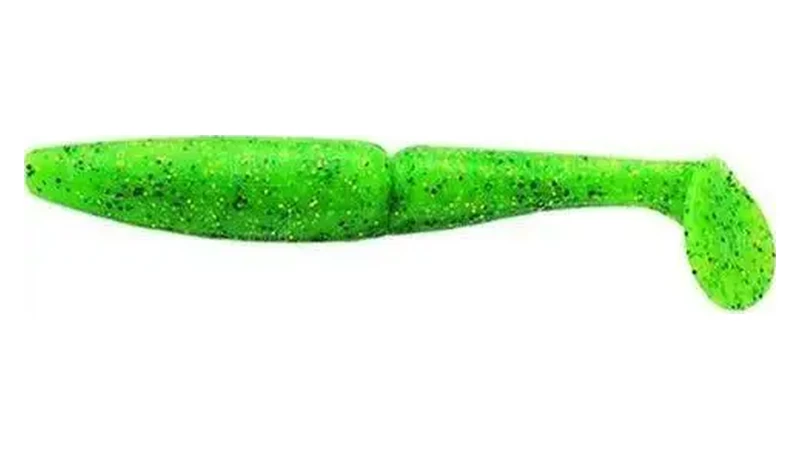
4. Savage Gear 3D Herring Shad V2
Choose the Herring Shad V2 when you want a larger, broad-sided bait with plenty happening during a straightforward retrieve. Its rolling body produces flashes, the paddle tail kicks, and the articulated fins add secondary movement. The factory scent and fitted glass rattle give it a different combination of attractions from the simpler shads in this list.
The 17.5 cm body weighs 35 g before rigging; the 21.5 cm weighs 65 g. Those figures matter when choosing tackle. Fit a suitable screw-in pike harness, with the hooks positioned securely using the belly slot, and add weight to reach the required running depth.
Start over submerged points, outside weed lines and the margins of open bays. Retrieve steadily, then pause beside a likely ambush point before making the tail work again. The smaller of these two sizes is the practical starting choice; use the 21.5 cm when your tackle and venue justify a larger profile. Keep it above the bottom when fishing open water rather than automatically dragging it through debris.
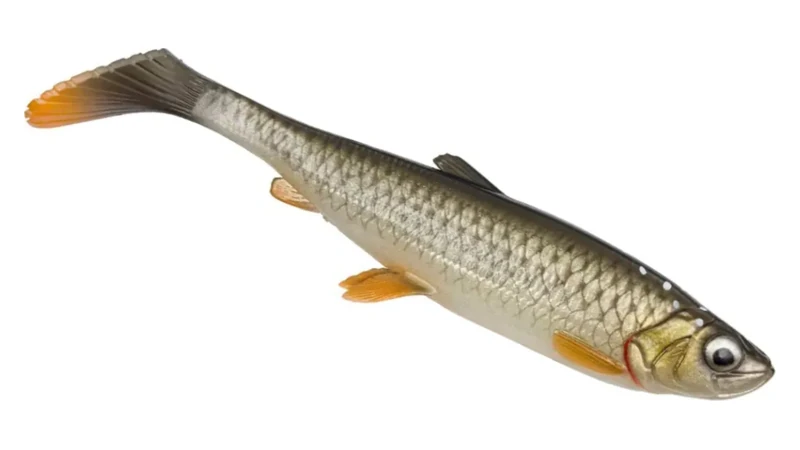
5. Berkley PowerBait Smash
The PowerBait Smash belongs in a pike-focused selection because it is built around a substantial profile, tight body roll and an assertive tail swing. It is available in 17 and 23 cm versions and uses Berkley’s PowerBait scent technology. Look for that full product name: older Sick Smash stock is a different proposition, and Berkley’s earlier Sick range information identifies that model as lacking the PowerBait flavour.
Rig it on a shallow screw and an appropriate pike harness for fishing over vegetation. Add a screw-in weight when you need to reach the outer edge of the weed bed or work a deeper bay. Keep hooks and stinger wire clear of the moving tail. The 17 cm is the sensible starting size for most anglers moving into dedicated pike softbaits. Fish it with a measured, steady retrieve that lets the body and tail do the work. The 23 cm offers a much larger target for substantial waters and larger prey patterns, with a corresponding increase in tackle requirements.
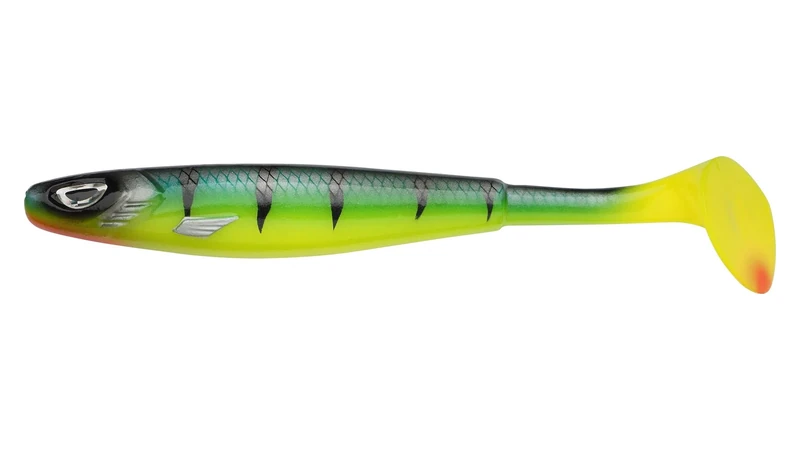
6. Molix RA Shad
The 4.5″ RA Shad stays in this selection because it provides a useful compact option alongside the larger pike baits. It has a ribbed body, a thin tail section and a paddle designed to produce a natural swimming action. Molix’s product sheet for this version specifies a crawfish scent.
This is a good lure to carry when fishing smaller waters or when a change to a more manageable profile is needed. Mount it straight on a jighead for open-water work, or use its hook pockets for an offset presentation around scattered weed and timber. Keep the hook shank clear of the thin working tail section. Begin with a steady retrieve along the outside of cover. On a deeper edge, let it sink, make a short controlled lift and follow the descent with the rod. Keep enough contact to detect a take without pulling the bait upwards throughout the fall.
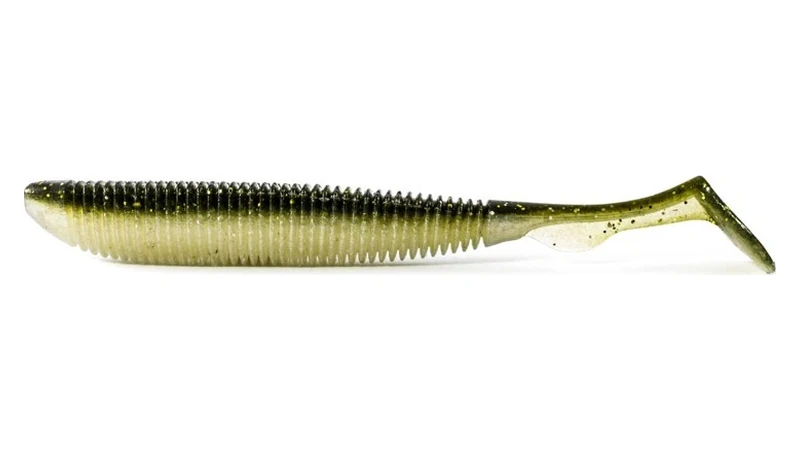
7. Rapala CrushCity The Curl
The Curl is the choice for a smaller-bodied presentation with a broad, responsive curly tail. The 12.5 cm version gives pike a worthwhile target while retaining a lighter approach than the biggest shads here. Rapala incorporates salt and scent in the belly and scent in the back through its Smart Injection process.
Use it on a jighead to swim over low weed or work down a clean slope. The tail starts moving at very low retrieve speeds, making the lure particularly useful when you need to keep a bait in front of fish for longer. Avoid an unnecessarily heavy head that sends it crashing to the bottom after every lift.
Try a slow, continuous retrieve with the occasional lift of the rod tip, then let it descend on a controlled line. It is also a useful change after several casts with a paddle tail: you retain a moving tail, but change its shape and rhythm. Store it with the tail lying naturally rather than folded tightly under other lures.
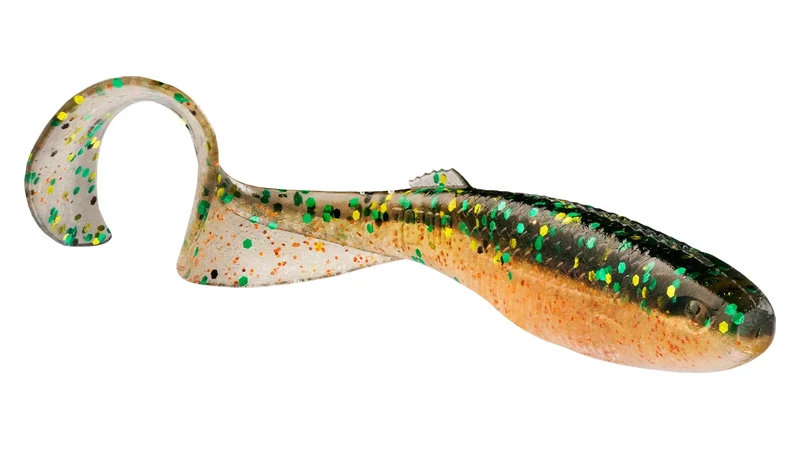
8. Keitech Mad Wag
The 7″ Mad Wag combines a long, ribbed body with a pronounced curly tail and squid-infused material. It brings a stretched, sinuous outline to the box, giving you something distinctly different from a conventional shad. Its broad-edged tail is designed to keep working at slow speed.
A weedless offset or weighted swimbait hook makes it useful along lily beds, reed margins and submerged vegetation. Match the hook gap to the body and check that the point can clear the plastic fully. Before fishing, remove any moulded connecting tab holding the tail to the body so the tail can move freely.
Swim it steadily over the top of the weed, keeping the rod high enough to clear isolated stems. At the edge of a pocket, lower the rod slightly and let the bait settle before continuing. This is a lure to swim with purpose: a smooth retrieve lets the long tail advertise the bait, while constant sharp jerks interrupt the action you chose it for.
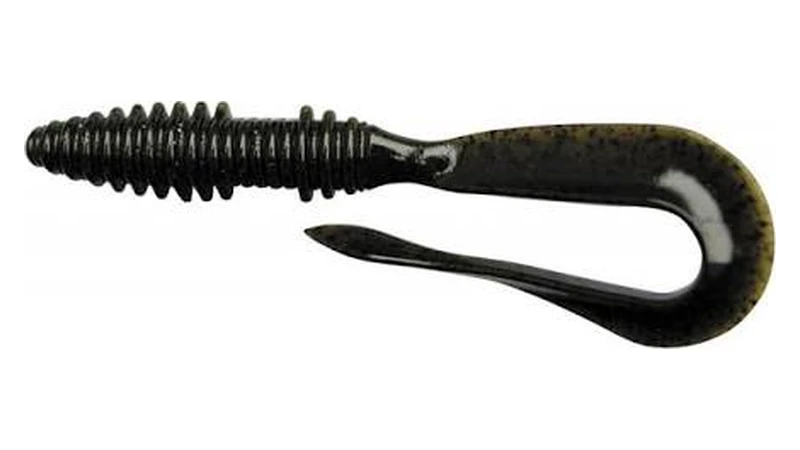
9. Crazy Fish Scalp Minnow
The Scalp Minnow 5.5″ remains a worthwhile choice from the original selection. It is a supple, active paddle tail that works during slow retrieves and accommodates offset hooks. Choose a factory-scented version such as the shrimp option. For this model, Crazy Fish lists a body length of 13 cm; follow the manufacturer’s dimensions rather than calculating length from the model name.
Use it as a practical jig bait for the foot of a slope, a canal channel or the open side of a reed bed. An exposed jig hook suits clean ground; an offset hook on an articulated weight gives you a better route through scattered obstructions. A controlled lift-and-fall is the starting retrieve. Let the lure reach the required depth, lift it clear of the bottom and follow it down without losing all contact. Where there is low weed, change to a steady or gently rising-and-falling retrieve above it.
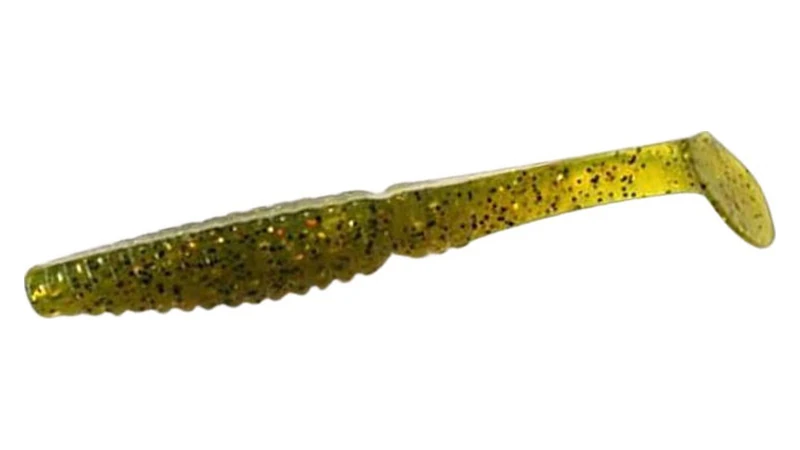
10. Berkley PowerBait Chop Block
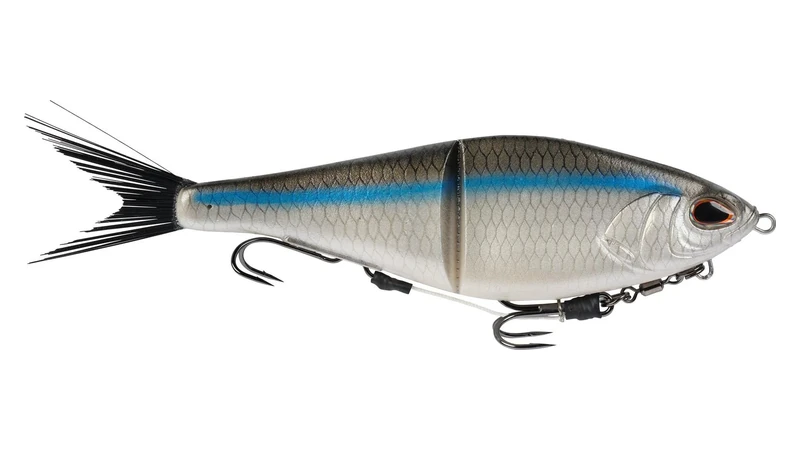
The Chop Block adds the most different presentation in this selection: a scented soft glide bait with a broad body and no paddle tail. Choose the 20 cm version for the main pike role. Its appeal is the ability to switch between wider, slower glides and shorter, faster chopping movements, supported by PowerBait scent technology.
Begin in open pockets beside reeds, above submerged weed or along a clear bankside shelf. Use short turns of the reel handle and controlled taps of the rod, allowing enough slack between movements for the bait to move sideways. Start slowly beside the bank until you can produce a repeatable left-to-right action.
When a fish follows, shorten the movements or make a deliberate pause rather than automatically winding faster. The lure includes nail weights for adjusting the presentation; make small changes and check its posture and sink rate after each one.
Treat it as a directional alternative to a shad, rather than another bait to drag along the bottom. Its best role in this box is working a clear route with room to glide, especially when a pike has already shown interest in a more conventional presentation.
Rigging Scented Soft Plastics for Pike
A compact bait and a large soft swimbait need different outfits. For shads around 11–15 cm with modest jigheads, a rod rated approximately 15–50 g and braid around 30–40 lb make a useful starting setup. A 17–23 cm bait with a screw rig often calls for a heavier outfit, commonly around 40–100 g or more, with 50–65 lb braid. Check the actual rigged weight against the rod rating: the Herring Shad V2 at 21.5 cm already weighs 65 g before hooks or extra ballast.
Use a dependable wire or titanium trace for every pike presentation. A trace around 40–50 cm is a practical starting length for these lures, with its strength and fittings matched to the outfit. Light fluorocarbon intended for perch is not a substitute. Inspect the wire, crimps, snap and knot after a fish or a serious snag, and replace any damaged component.
Choose the mounting to suit the route through the swim:
- An exposed-hook jighead gives direct control for open-water swimming and bottom-oriented jigging. Thread the body straight and leave the hook point unobstructed.
- A weedless swimbait hook suits vegetation and scattered timber. Leave sufficient gap for the body to collapse, with the point lightly skin-hooked rather than buried deeply in solid plastic.
- A screw-in pike harness suits larger shads. Secure the hooks so they stay correctly positioned during casting, and keep the stinger clear of the tail and fins.
- A factory-rigged soft glide bait should be checked before use and whenever you alter its ballast. Added weight changes its balance as well as its depth.
For a 12–15 cm shad in still water, start around 5–10 g of head weight when fishing roughly 1–3 metres deep. Move towards 10–20 g for deeper margins around 3–6 metres. These are starting combinations, not weights to apply blindly to every body size: current, wind and the lure’s resistance change the amount needed. Use the lightest weight that keeps the bait under control at the desired depth.
For the wider tackle choices behind these outfits, see our guide to pike fishing tackle for European waters.
Getting More from the Lures You Already Have
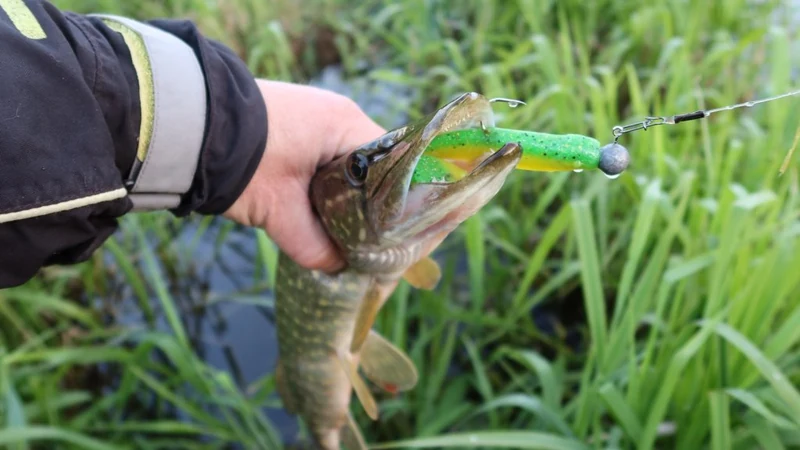 Begin with location and depth. Work the outside of vegetation, submerged cover and nearby slopes, then adjust the running depth before changing through an entire packet of colours. Make one cast parallel to the feature and another across it. A lure passing along an ambush edge stays in useful water longer than one pulled straight away from it. For late-autumn sessions, see our guide to pike fishing in November, with practical locations and retrieves for rivers, canals and lakes.
If a bulky paddle tail draws follows without takes, change the presentation in a clear sequence. First alter the pace during the retrieve. Next try a slimmer shad at the same depth. If the fish still track it without committing, use the Chop Block to introduce a directional change, or a curly tail to maintain movement during a slower presentation. Each adjustment gives you new information instead of simply replacing one similar lure with another.
In clear water, begin with a natural prey pattern such as perch, roach or a silver-backed colour. In coloured water, start with a contrasting pattern such as chartreuse, firetiger or a dark silhouette. Do not spend the whole session debating shades: once you have a visible, properly swimming lure, concentrate on putting it close to fish.
During colder open-water sessions, keep the lure near likely holding areas for longer through slower swimming and controlled pauses. A responsive tail is especially valuable here because the bait stays active without being rushed through the swim. Our guide to pike fishing in December explains the seasonal locations and open-water tactics in more detail.
Keep the Baits Straight, the Hooks Sharp and the Box Organised
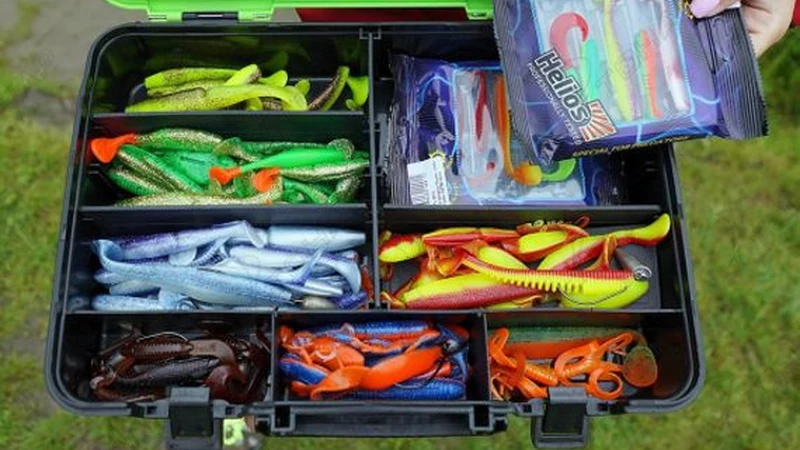 Soft material is an advantage until damage prevents the lure from working. After a take, inspect the nose, hook exit and tail root. Straighten a body that has slipped, remove weed from the hook and replace badly torn plastic. Check hook points after striking rocks or timber; an attractive bait on a blunt hook wastes the opportunity it creates.
Keep scented softbaits in their original packaging wherever practical. It preserves their shape and factory treatment and avoids unwanted reactions between incompatible materials. Do not mix TPE lures with conventional soft PVC unless the manufacturer explicitly allows it, and avoid leaving packets on a hot dashboard. A spare straight bait is more useful than a box full of deformed tails.
Carry a suitable landing net, long forceps, cutters and a wetted unhooking mat, and have them ready before casting. Check local rules on lure fishing, hooks and closed seasons, especially when travelling between European fisheries. Retrieve torn-off plastic from the swim whenever possible: a scented bait is still an artificial lure, not something to leave in the water.
Build a Small Selection You Know How to Fish
You do not need all ten models to start catching pike. Begin with the FAT Swing Impact or Easy Shiner in a general-purpose size, add The Curl or Mad Wag for a different tail action, and carry a larger shad or the Chop Block when the venue calls for it. That gives you meaningful changes in profile and movement without turning every session into an endless search through the tackle box.
The confidence comes from knowing what your lure does. Watch it swim, learn how long it takes to reach the depth you want, and recognise the retrieve that keeps it working above the weed or alongside a slope. Put that presentation in front of pike consistently, and these scented softbaits give you a strong foundation for successful fishing.
Tight lines!