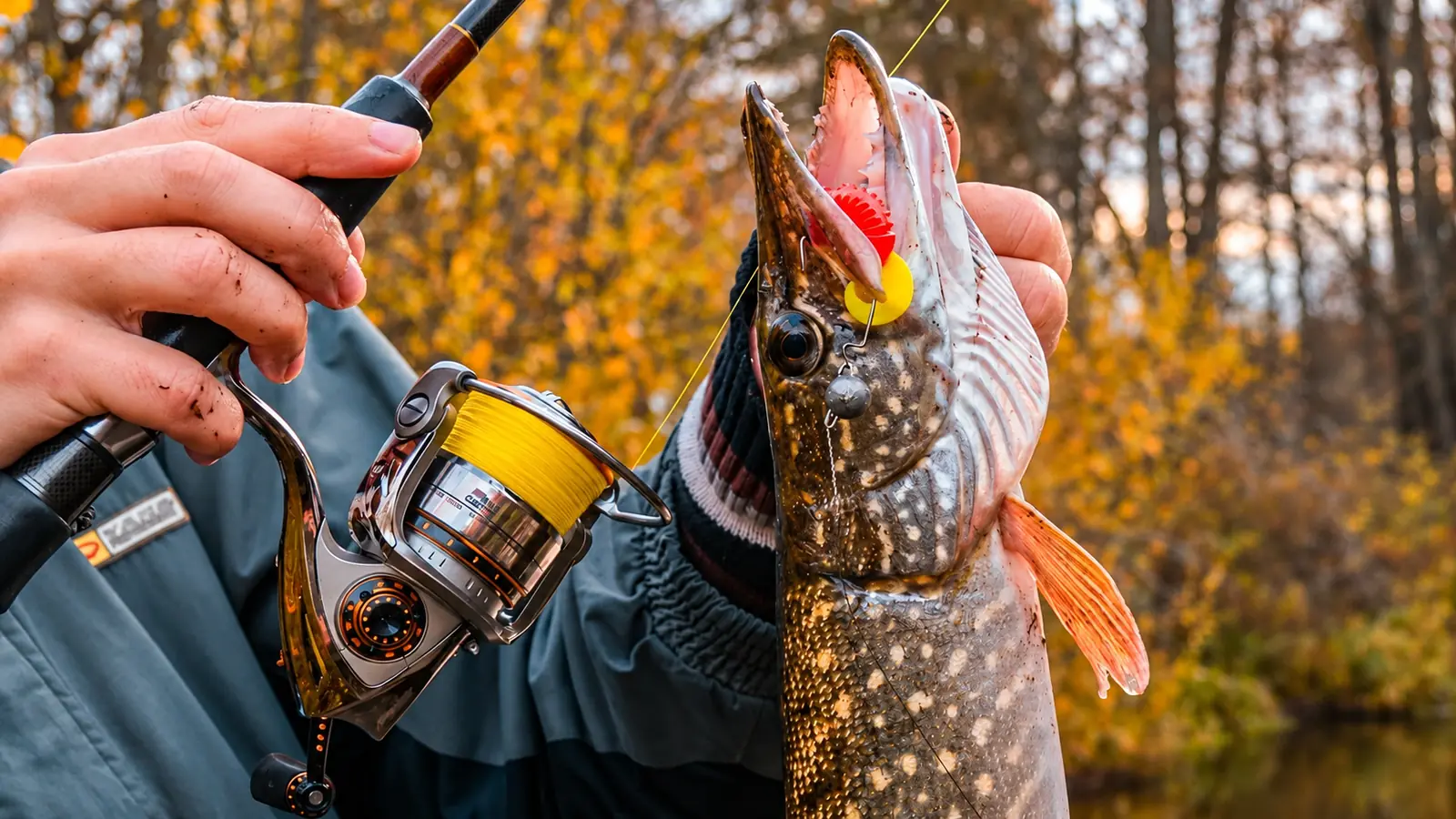
November is a month worth keeping free for pike. There is still plenty of water to cover with a lure, the weed is opening up, and a short afternoon feeding spell can transform an otherwise quiet session. It is also a good time to fish with a larger pike in mind: prepare the tackle and landing equipment before the first cast, rather than discovering their limitations when a heavy fish takes.
The important change is where and how you present the bait. An October swim deserves another visit, but the productive line through it can move from a shallow weed bed to its outer edge or the first drop beyond it. Follow those changes with shads, spoons and plugs, and you can build a useful picture of the water even during a short November day. Begin by finding fish, then spend your time making the lure work properly around them.
Where to Find Pike in November
Begin with places that put food and an ambush position close together. Remaining weed, a shelf beside deeper water, a sheltered river margin or the entrance to a canal basin all give you something worth investigating. As autumn cover thins, these features help narrow the search. Look for small fish topping, a tight shoal appearing on the sounder or fry scattering along a margin, and give that water priority.
Lakes and reservoirs: follow the edges before the deepest water
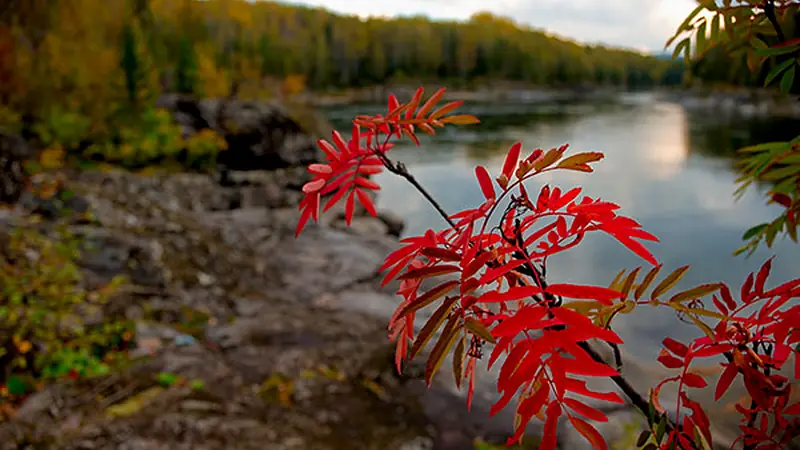 On stillwaters, start along the outside of surviving weed beds, points extending into deeper water and the lip of the first substantial drop-off. Green weed is particularly useful where it still provides cover for small fish. Work the water above it before trying the clean bottom beyond its edge; dragging a lure through dying weed spends much of the cast fishing with fouled hooks.
On a shallow lake, a change from 1.5 to 3 metres is worth careful coverage. On a deeper reservoir, start with shelves and nearby slopes around 3–6 metres, then follow the baitfish if they are holding farther out. Keep a shallow bay in the search while it still has cover and visible activity. Pike feeding there remain reachable from the bank, even late in the month.
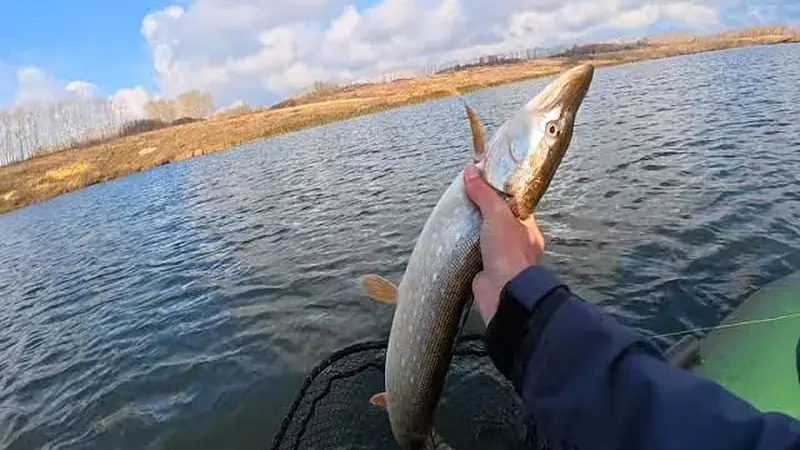
From a boat, use your sounder to connect baitfish with contours, then position far enough away to cast across the feature. If a shoal is suspended above a slope, count the lure down to fish above or through its level instead of dropping beneath it to the lake bed. From the bank, favour points and corners that let you reach several depths. A cast along a shelf keeps the lure beside that feature for longer than one that crosses it at right angles.
Rivers: look for shelter with food nearby
 On a clear river at a steady level, cover the inside of bends, slack water beside the main flow, deeper margins and sheltered water behind cover. Pay particular attention to the boundary where slow water meets the main current. Cast slightly upstream of the area you want to fish, allowing the lure to reach its working depth before guiding it along that boundary.
After rain raises the river, put more attention into accessible slacks, inside bends and protected margins. A heavier jighead helps maintain depth, but extra lead does not make a poor casting angle effective. Reposition first, then adjust the weight. If the river is carrying heavy debris and visibility has collapsed, switch to a canal or stillwater rather than spending the day pulling leaves off the hooks. Stay back from flooded or undercut banks.
Canals: cover the features, including your own bank
On canals, investigate bridge approaches, bends, junctions, moored-boat edges and the mouths of wider basins, respecting access and avoiding casting against boats. Cover both the far-bank cover and the deeper central track, then make a few casts along your own margin before walking on. On narrow water, moving quietly often gains more than another five metres of casting distance.
Do not spend the whole session at the first attractive bridge. Work a series of features and note where you see small fish, follows or strikes. Once a section produces activity, give similar nearby water priority.
The Best Time and Weather for a November Session
 Plan to fish through the middle of the day. If you only have a few hours after a cold night, a session from late morning into the afternoon is a sound choice, especially on a shallow, sheltered water. Dawn and dusk still deserve attention, but November gives you good reason to stay after an uneventful morning. A swim that looked lifeless at first light is worth another pass later.
For an enjoyable, productive lure session, favour settled conditions with cloud cover and a manageable breeze. A ripple is useful on clear water, provided you can still control the line and feel the lure. On a bright, calm day, approach the bank quietly and concentrate on cover and changes of depth. A mild spell after cold weather is a good opportunity to revisit shallow bays and margins, while a river rising rapidly after rain calls for sheltered water and close attention to clarity.
Use the forecast to choose the water and organise the day, rather than waiting for a particular pressure reading to promise a feeding spell. A mild British canal can retain autumn weed while a northern European lake is approaching freeze-up. On open water, keep searching with a purposeful retrieve; where follows turn into refusals, slow down and spend longer beside the feature holding the fish.
Which Lures to Take for November Pike
Pack soft baits, spoons and plugs so that you can change both depth and action. A shad lets you explore a shelf methodically, a spoon covers an open bank efficiently, and a suspending plug holds in front of a fish during the pause. Those differences give you useful options when a promising swim stops producing.
Soft baits for shelves, slopes and weed edges
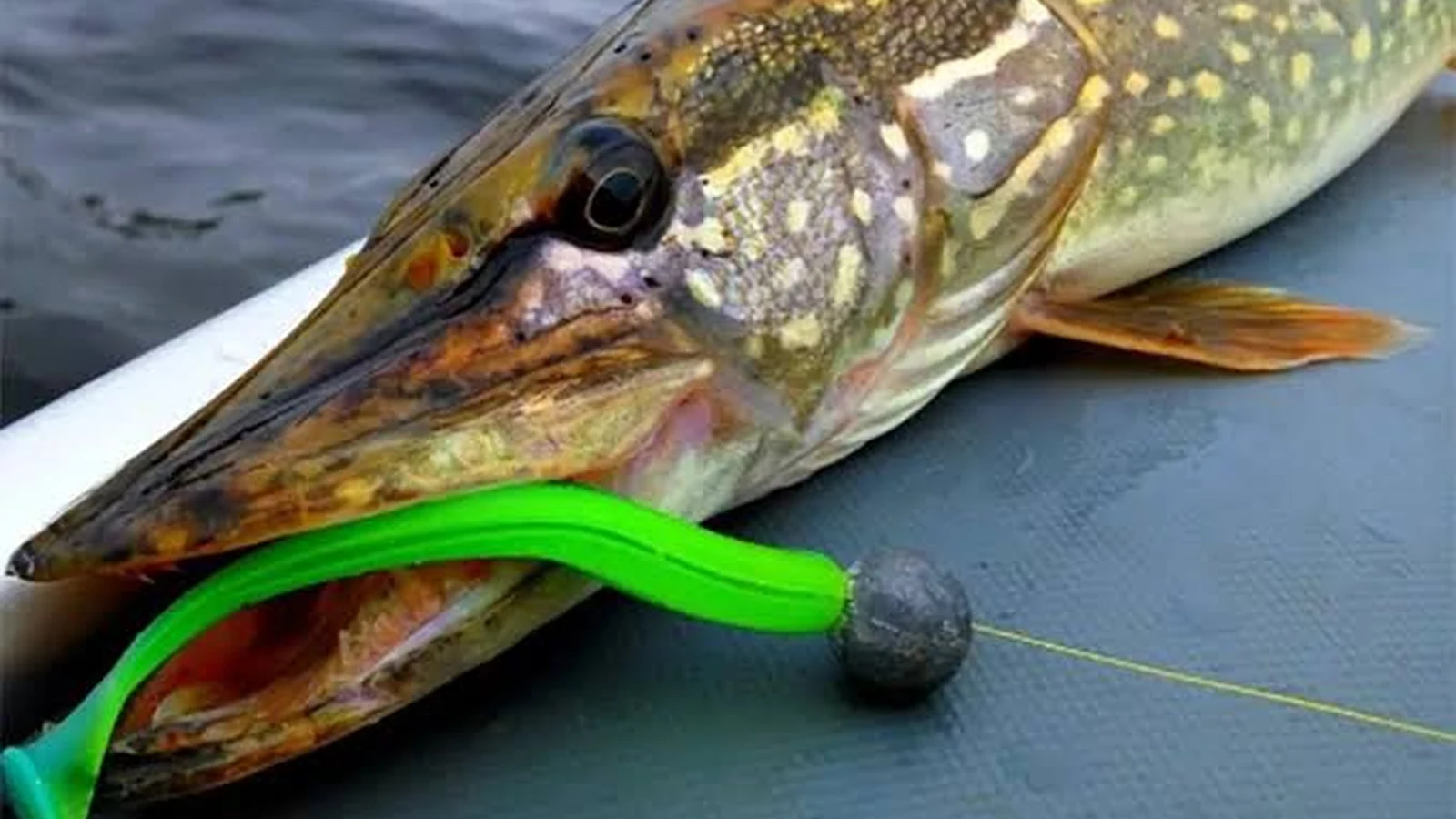
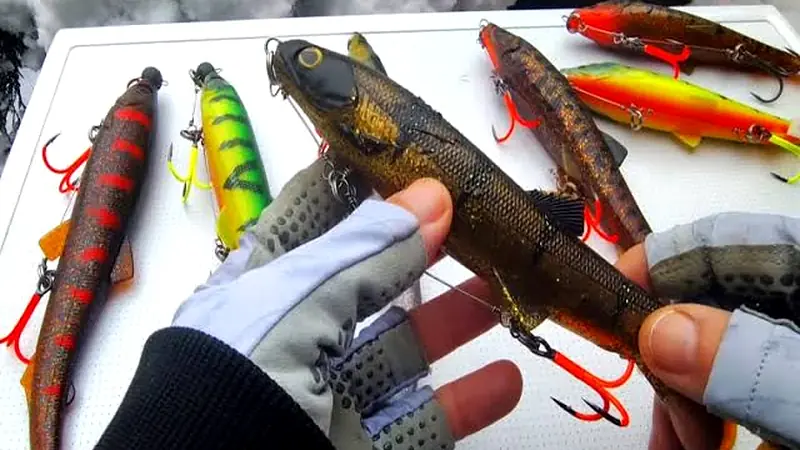 Start with a paddle-tail shad around 12–15 cm long. That is a useful everyday pike bait, with enough presence for open water while remaining manageable on a medium-heavy spinning outfit. Choose a tail that works at a slow pace and rig the body straight. Test it beside the bank: it should swim cleanly without lying on its side or turning over.
A Westin ShadTeez in 12 or 16 cm is a straightforward option with a pronounced rolling action. For a different presentation, add a curly-tail soft bait around 12–18 cm; its trailing tail is useful on a slow swim or a restrained lift-and-drop retrieve. Our guide to scented soft baits for pike provides further choices for this approach.
On sheltered water around 2–4 metres deep, begin with a jighead around 5–10 g for a 12–15 cm shad. Increase the weight when wind, current or depth prevents you keeping contact; reduce it when the bait drops too sharply and spends too little time swimming between lifts. Choose a hook with adequate clearance beneath the body and keep its point exposed when fishing clean water. Around remaining weed, a suitable weedless rig lets you cover the edge with fewer fouled casts.
Take a 17–20 cm shad as a larger alternative, particularly where the prey fish have a substantial profile. Keep a smaller 10–12 cm bait for narrow canals or fish that follow a bigger lure without taking. Work through depth and presentation first, then use size as another deliberate adjustment. November does not require the largest bait in the box on every cast.
Spoons for covering water and varying the fall
A broad spoon around 15–30 g earns its place on a November outing. It casts well and gives you a clearly different flash and movement after a shad. A Mepps Syclops is a useful choice for this role, with a familiar wobbling action that is easy to work along a bank or across a shelf.
Start with a steady retrieve and check the action where you can see it. Aim for a distinct wobble rather than a spoon spinning continuously. Over clear bottom, interrupt the retrieve with a brief controlled fall, then resume winding. Over weed, keep it swimming above the tops and shorten the pause before the hooks reach the vegetation. Long pauses are useful only while the lure remains in fishable water.
Plugs and hybrids for shallow cover and deeper shelves
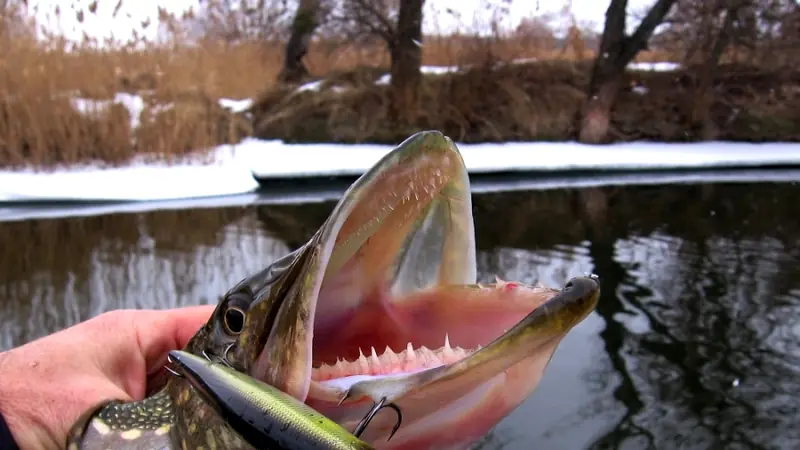
A suspending minnow around 10–14 cm is particularly useful along clear-water margins and above weed. Bring it to its working depth, give it one or two short pulls, then pause for 2–4 seconds. Watch it beside the bank with the wire trace attached before fishing: the trace changes its balance, and a plug that sinks quickly needs shorter pauses over shallow cover.
For a deeper shelf, choose a diving plug rated to reach the water above it. Wind it down, then maintain a steady retrieve along the contour. Match the model’s stated running depth to the swim and leave clearance above snags; a shallow minnow will not reach a deep slope simply because you retrieve it more slowly.
A slow-sinking hybrid gives you another way to swim a substantial bait above shallow cover. The 14 cm Rapala X-Rap Peto weighs 39 g and has a stated running depth of 0.5–1 metre; retrieve it steadily or add short pauses where there is room for it to sink. The 20 cm version weighs 83 g and needs a heavier outfit. Check the complete lure weight before choosing the rod.
Across these lure types, pack a natural roach or perch pattern and a conspicuous alternative such as chartreuse or firetiger. Start naturally in clear water and use the brighter option when colour or low light makes the bait harder to pick out. Two contrasting patterns give you a useful comparison without turning the session into an endless search through the lure box.
Match the Tackle to the Complete Lure
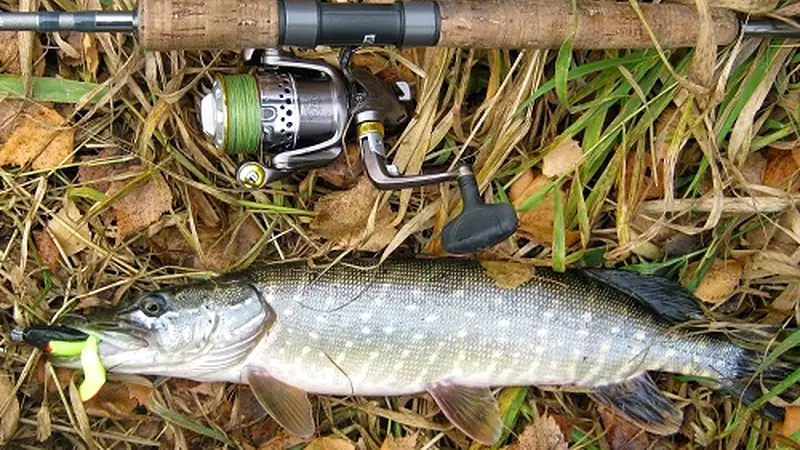 For shads, spoons and plugs within its actual casting range, a spinning rod around 2.4 metres rated approximately 20–60 g is a versatile starting outfit. A longer rod helps from open banks; a shorter one is easier beneath trees or in a boat. Move to a properly rated heavier outfit for large hybrids and heavily weighted soft baits rather than forcing them through the same rod.
Use braid suited to the lure weight and cover, with roughly 30–40 lb a practical starting range for this general outfit. Add a dependable wire trace around 40–50 cm long, rated at least as strongly as the main line. Check the wire, snap and knots after each fish and whenever the rig has been pulled through a snag. Replace kinked or damaged traces. Our guide to pike fishing tackle explains how to match the full setup to different waters and lure sizes.
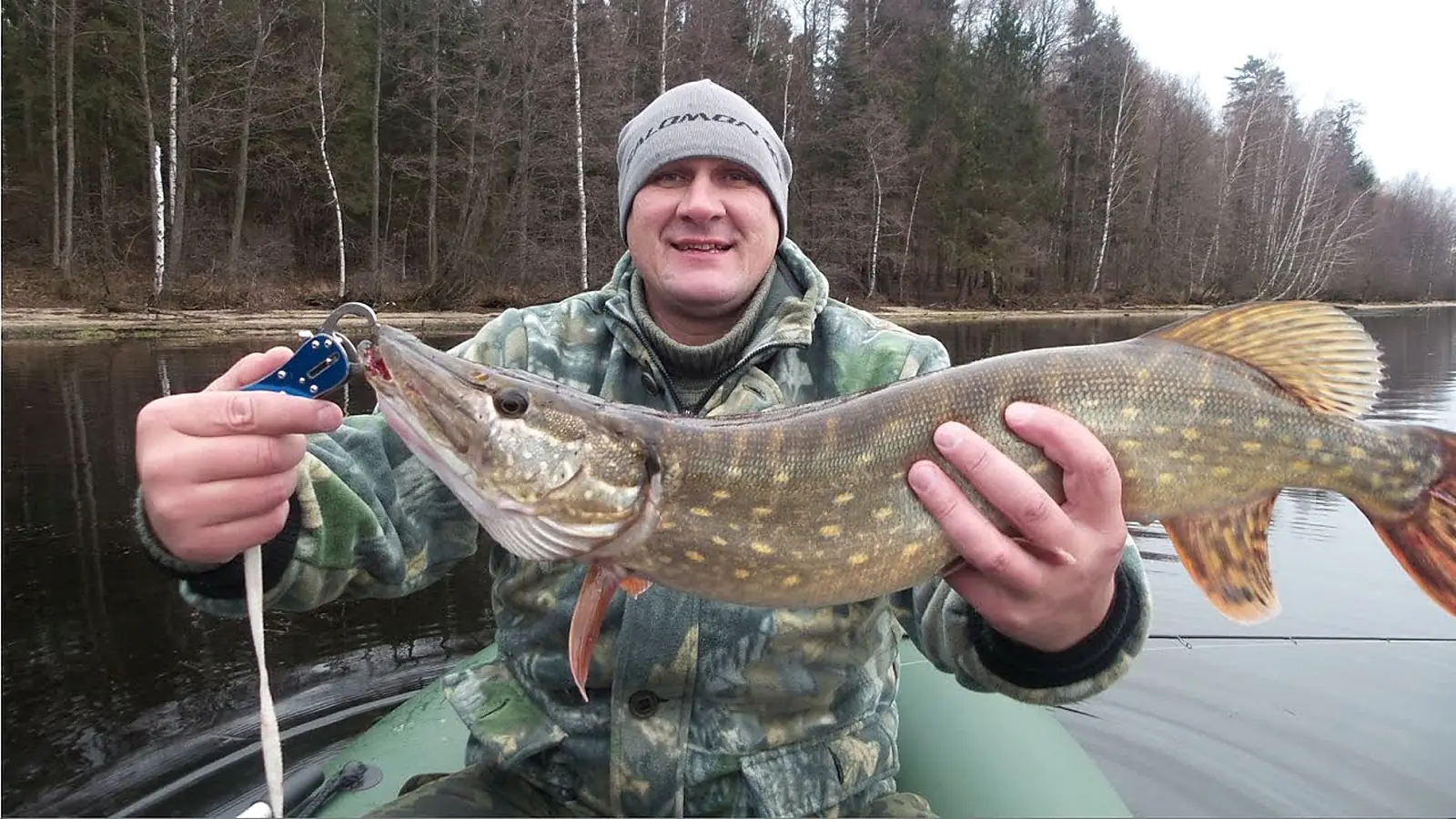
Carry a large knotless landing net, a padded unhooking mat, long forceps or pliers and cutters capable of cutting your hooks. Arrange them before the first cast so that a hooked fish does not leave you searching through a bag. Keep handling brief, support the pike’s body and return it promptly; if you are new to pike, learn the handling technique with an experienced angler.
Get the Depth and Retrieve Working Together
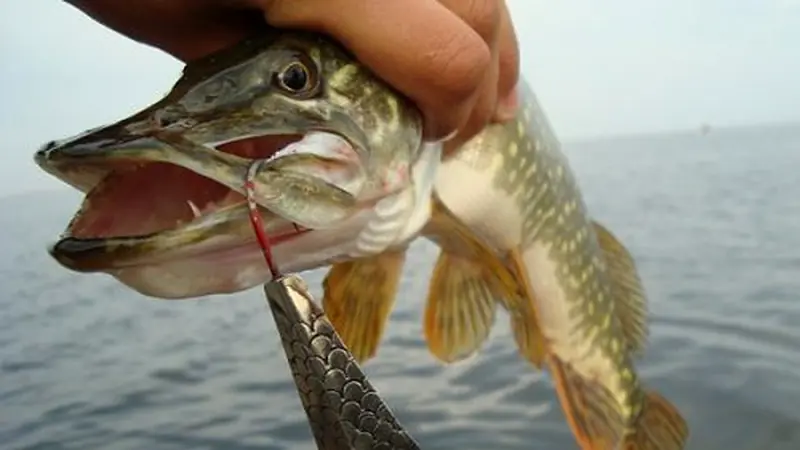 Start a new swim with a steady retrieve that keeps the lure above the cover. When pike strike decisively or chase the bait, maintain that purposeful pace and cover more water. Use an occasional short acceleration or pull to break the rhythm. Fish that are already responding do not need you to replace an effective retrieve with a laborious bottom crawl.
Use a countdown to explore deeper water systematically. With the same lure, casting distance and rod position, allow a short sink on the first cast, then add a couple of seconds on the next. Continue until you find the useful level above the weed or bottom. Seconds let you repeat a presentation; converting them into depth requires knowing how that particular rig sinks.
Over clean bottom, try the lift-and-drop retrieve that makes jig fishing so effective along autumn slopes. Let the jig settle, lift it with two or three turns of the handle, then pause and follow the fall with the rod tip, recovering excess slack. Keep enough contact to notice a tap, a sudden stop or the line moving sideways. Sweep the rod firmly into a take and maintain pressure; artificial lures call for a prompt response.
When fish follow without taking, slow the lure as it reaches the feature and give them a clear pause or change of direction to attack. A suspending minnow is especially useful here because it stays in view while you stop working it. With a jig, use a lighter head to lengthen the fall rather than adding a long pause after a heavy bait has already buried itself in the lake bed. Make one adjustment at a time so that a response tells you something useful.
Finish each retrieve under control. Keep watching the lure as it approaches the bank or boat, and lead it into a smooth turn if you see a follower. A sudden lift out of the water ends the opportunity just when the fish has come close enough for you to see it.
A Practical Plan for Fishing a November Bank
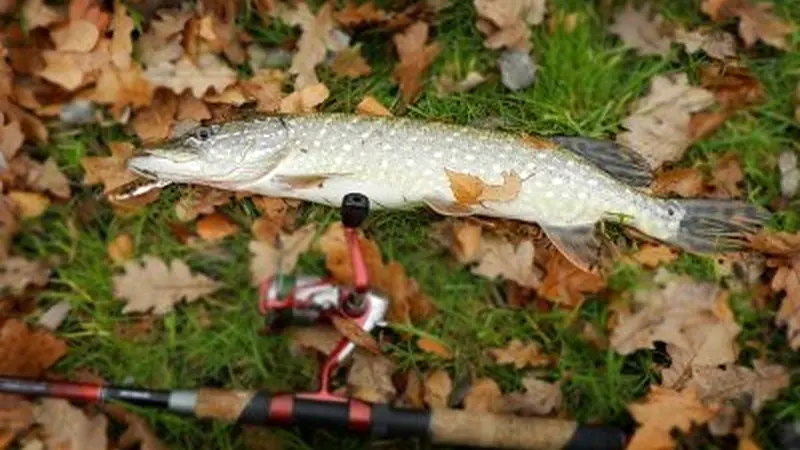 Choose a route with several distinct features and leave time to return to the strongest ones. At each new swim, stay back from the edge and cover the near margin before making longer casts. Then fan the casts across the feature, changing the countdown to check its outer edge and the water beyond. On a straightforward swim, about 10–15 minutes of purposeful coverage is a useful starting allowance; a follow, strike or visible shoal earns it more time.
Before leaving attractive water, make a few casts with a contrasting lure. Follow the shad with a spoon, or put a suspending minnow through the line where a fish followed. Cover the feature from another angle if access allows. Once those checks are done, move to fresh water rather than repeating the same cast simply because the swim looks good.
A caught pike changes the plan. Return it promptly, then give the surrounding water proper attention: the same concentration of food and useful cover can attract several fish. Work the adjacent edge, repeat the successful depth and try a different lure when responses stop. Leave once you have covered that productive water thoroughly, rather than moving on as soon as the first fish is released.
Mark productive locations and record water level, clarity, remaining weed and the successful casting line. Return to them on later trips and in future autumns, checking that the features and baitfish are still there. A remembered spot becomes much more useful when you know why it produced.
A few well-fished features make better use of a short November day than a long walk filled with hurried casts. Keep moving until you find activity, then give that water the attention it has earned. As autumn gives way to winter, our December pike fishing guide follows the next stage of the season.