
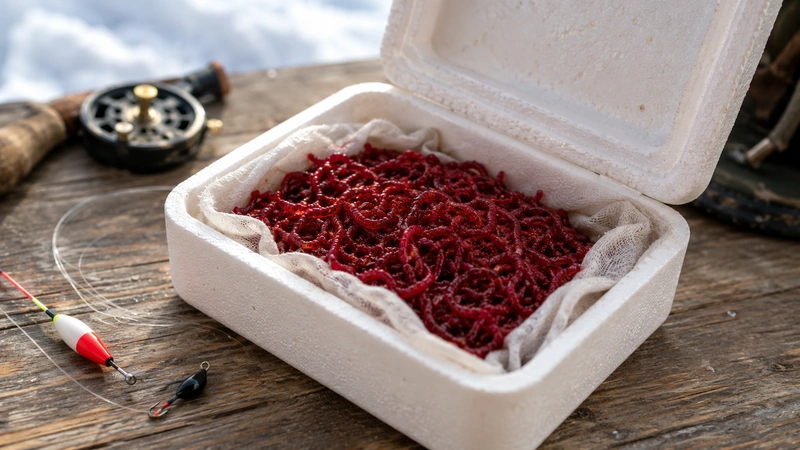
Bloodworms are one of the best natural baits for coarse fishing and ice fishing. They are effective throughout the year, but in winter they become a staple bait for baited ice jigs, attracting perch, roach, bream, and many other freshwater fish. The problem is simple: if bloodworms are stored badly, they quickly spoil and become useless.
The good news is that keeping them fresh is not complicated. Bloodworms need three things: moisture, cool temperatures, and regular removal of dead larvae. If you keep them damp but not soaked, cool but not frozen, and clean them regularly, they can stay usable much longer.
How to Separate Live Bloodworms from Dead Ones
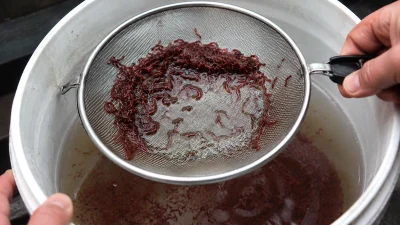 Before storing bloodworms, sort them so that only live larvae go into the bait box. Dead larvae spoil quickly and can start a chain reaction that ruins the whole batch.
A useful trick is that live bloodworms naturally try to wriggle through small openings. To use this behaviour, prepare a large bowl or bucket with clean water and a fine metal sieve or mesh with holes around 2–3 mm.
Place the bloodworms on the mesh and lower it slightly into the water so the larvae are submerged. After about 15–20 minutes, most live bloodworms will pass through the mesh and collect at the bottom of the container. Dead or weak larvae usually remain on the sieve and can be discarded.
If you do not have a suitable mesh, you can make a simple version from a plastic lid by piercing many 2–3 mm holes with a heated nail or wire. If the holes are too large, dead larvae may pass through with the live ones; if they are too small, even healthy bloodworms may be unable to get through. However, it can still help separate most of the dead larvae from the live ones.
Important: Avoid using chlorinated water straight from the tap for this job. Pond water, rainwater, melted snow, or properly dechlorinated tap water is safer. If tap water is your only option, let it stand first, or freeze and thaw it before use.
What to Store Bloodworms In
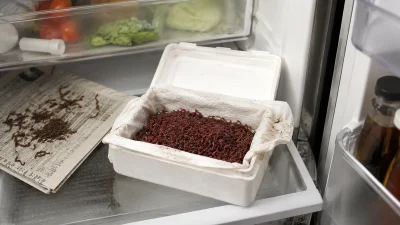 For home storage, use a small bait box, plastic tub, wooden box, or foam bait box. A foam box is especially useful for winter fishing because it insulates well, feels warmer in the hand, and is less likely to freeze up outdoors.
Put a slightly damp cloth in the bottom of the box. The cloth should be moist, not dripping wet, so wring it out well before use. Spread the bloodworms over the cloth and fold the spare cloth over them so the bait is loosely wrapped.
After rinsing and sorting the bloodworms, let them dry briefly on newspaper or plain paper before placing them into the cloth. This removes excess water, which helps prevent the bait from spoiling in the fridge and freezing on the bank.
Store the closed box in the fridge, ideally in the door or on the lower shelf where the temperature is cool but not freezing. A steady temperature around 0–4°C is usually suitable. Do not place live bloodworms directly against the freezer wall or in a section that may ice up.
To keep bloodworms alive longer, repeat the sorting and rinsing process every day or every few days. With careful handling, live bloodworms can often be kept for more than two weeks.
Storing Bloodworms in a Potato
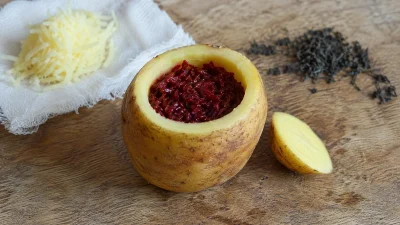 Some anglers store bloodworms in a potato, believing that the starch helps keep the larvae in good condition. There are two common ways to do this.
First method: Take a medium or large raw potato, cut off the top, and hollow out the middle with a knife. Place the bloodworms inside the cavity and keep the potato in the fridge door or on a cool lower shelf. Some anglers mix the bloodworms with used tea leaves before placing them in the potato, believing this helps keep the larvae alive a little longer.
Second method: Grate a raw potato finely and place a layer of it on a damp cloth. Add the bloodworms, cover them with another thin layer of grated potato, fold the cloth, and store the bundle in a bait box in the fridge.
A potato can help with moisture control, but it does not remove the need for care. Check the bait regularly and remove dead larvae. That is still the key to long storage.
Storing Bloodworms in Newspaper
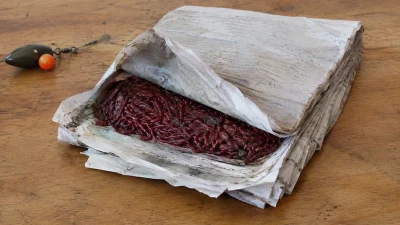 Another simple and accessible method is damp newspaper. Fold a sheet of newspaper into several layers and moisten it lightly. It should be damp, not falling apart. Place the bloodworms inside, wrap them gently, and then wrap the parcel in a dry outer layer of newspaper.
Keep the parcel in the fridge and check it regularly. This method is good for keeping bloodworms fresh until the next fishing trip and sometimes for more than a week. Handle the larvae as little as possible: warm hands and rough handling shorten their life.
Freezing Bloodworms
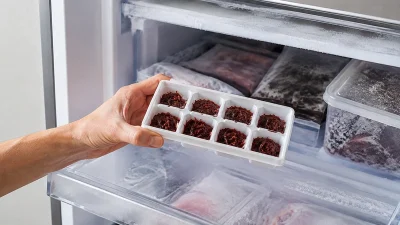 Frozen bloodworms keep very well. Put small portions into a matchbox-sized container, a bait tub, or an ice cube tray, then place them in the freezer. This method can preserve bait for more than two months and is convenient if you want ready-made portions for future trips.
After thawing, frozen bloodworms will still have value as bait, but they will not come back to life. This is a rougher storage method, but it is effective when long-term preservation matters more than keeping the larvae alive.
Storing Bloodworms Through Winter
If you want to keep live bloodworms for a long winter period, use a larger container with water, such as a bucket. Pond water is best, and a small amount of natural silt can help keep conditions more stable. If pond water is not available, use melted snow or ice. Dechlorinated tap water is a last resort.
Keep the bucket in a cool place such as a balcony, shed, garage, or unheated utility room. The key condition is that the water must remain above freezing. If it freezes solid, the bloodworms will die. If the temperature remains cool but above freezing, this method can keep bloodworms alive throughout the winter.
How to Store Bloodworms While Fishing
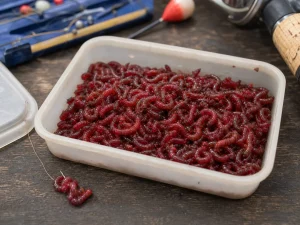 On the bank or on the ice, the main danger is freezing. Keep bloodworms in an inside jacket pocket rather than an outside pocket or open tackle box.
Before leaving home, dry the larvae slightly by spreading them in a thin layer on newspaper for about 10 minutes. Then place them in a foam bait box or another insulated container. If the larvae are too wet, they can freeze quickly in cold weather and become difficult to use.
During the session, take out only a small amount at a time and keep the rest protected. This is especially important during ice fishing and in windy conditions.
These are our main tips for keeping bloodworms fresh and usable for longer. If anything is unclear—or if you have your own bait-storage tricks to share—leave a comment below. Tight lines!