
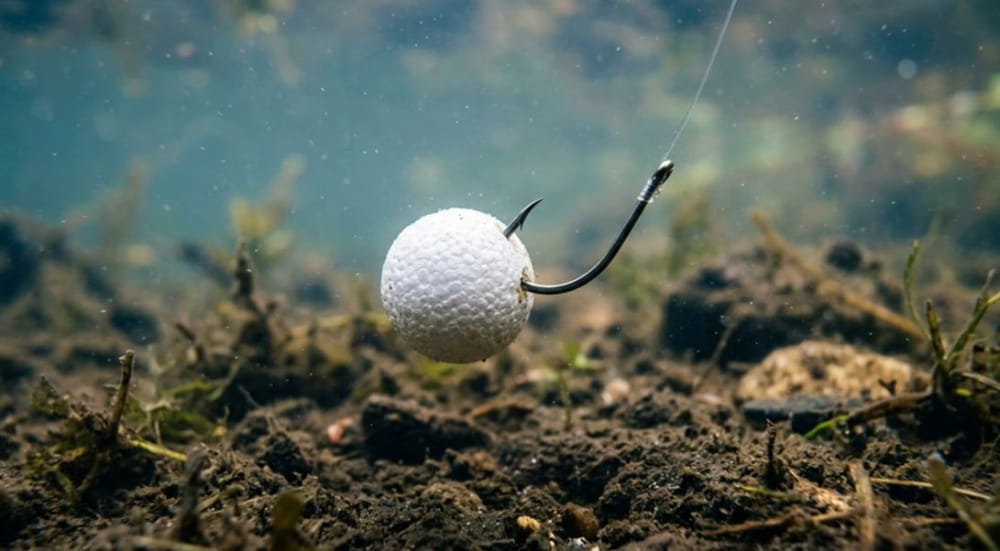
Foam bait might look unusual if you have never tried it, but it is one of the most productive ways to target crucian carp when paired with the right feeder rig. The secret isn’t just floating a piece of foam under a float-foam works because it is buoyant, durable, highly visible, and presented directly above a feeder full of groundbait.
Unlike soft natural baits that crumble or fall off, high-density foam is practically indestructible. A single foam ball can stay on your hook through dozens of casts and easily survive relentless peckings from small nuisance fish, making it an invaluable tool when targeting cautious, wild crucians.
Responsible Angling Note: Always use purpose-made fishing foam or clean, non-toxic buoyant rig foam rather than loose industrial packaging waste. Dispose of used foam responsibly, and always check local fishery regulations regarding hook limits and artificial bait rules.
Understanding the Underwater Physics
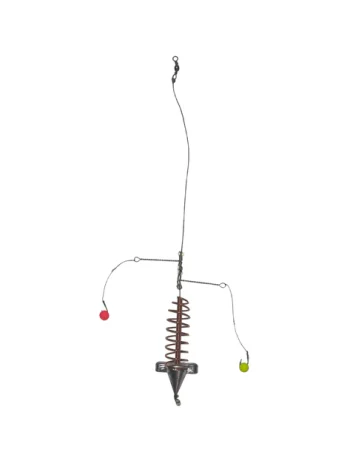 The foundation of this method rests on a weighted spring feeder (coil feeder) resting securely on the lakebed while releasing a dense, enticing cloud of particle groundbait. Tied on short hooklinks measuring just 2-5 cm (1-2 inches), the floating foam balls lift the bare hooks a fraction above the bottom, suspending them precisely in the floating food cloud right over the feeder.
Crucian carp feed through a natural filtering reflex-they hover over the feeder, vacuuming up debris, sift out edible morsels, and blow away unwanted particles. As they work through the groundbait cloud, the bright foam balls naturally drift into their path. When a crucian attempts to clear the foam by sucking it in and blowing it out, the weight of the feeder combined with the exposed hook point causes the hook to take an instant, solid hold in the mouth tissue.
Tackle and Gear Specifications
To fish foam bait effectively, your tackle must strike a balance between delicacy for subtle bites and control when fish run toward cover.
- Rod: Feeder rod or light spinning rod, 2.7–3.1 m (9–10 ft) with a sensitive tip to register soft bites.
- Reel: Fixed-spool reel in size 2500–3000 with a smooth, reliable drag system.
- Mainline: 0.25–0.30 mm (8–12 lb test) monofilament, offering essential stretch near the bank.
- Hooklinks: 0.15–0.20 mm (4–6 lb test) mono or fluorocarbon kept short (2–5 cm / 1–2 in) to stay near the feeder.
- Hooks: Fine-wire, razor-sharp hooks (Sizes #10 to #14) matched to the buoyancy of your foam ball.
Note: Stick to two hooks maximum. Three-hook rigs tangle frequently during the cast and are restricted on many managed fisheries.
Fine-Tuning Buoyancy and Selecting Colors
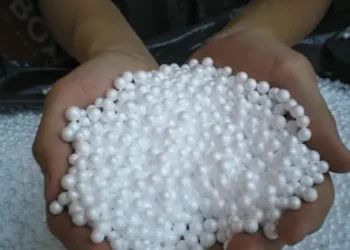 A common pitfall in foam fishing is using a foam ball that lacks the buoyancy to support the hook weight. If your hook lies flat on the lakebed next to the spring feeder, your catch rate drops drastically.
Before casting out into deep water, always perform a simple test in shallow water along the bank. Lower your fully rigged feeder into 20–30 cm (8–12 inches) of clear margin water and observe the hooks. The foam must lift the hook entirely off the bottom, even if it hovers just 2 cm (1 inch) high. If the hook remains pinned to the sand or mud, switch to a slightly larger foam ball, add a second micro-ball, or step down to a lighter fine-wire hook.
While plain white foam remains the gold standard due to its high visibility against dark, muddy lakebed silt, color choice can be adapted to water conditions. Bright yellow and orange foams work wonders in murky, clay-laden waters where visual contrast is crucial. In contrast, red and pink foams excel when crucian carp are actively feeding on bloodworms or small aquatic larvae.
How to Bait the Hook: The Golden Rule
The single most critical technical detail when fishing with synthetic foam is ensuring that the hook point remains completely exposed.
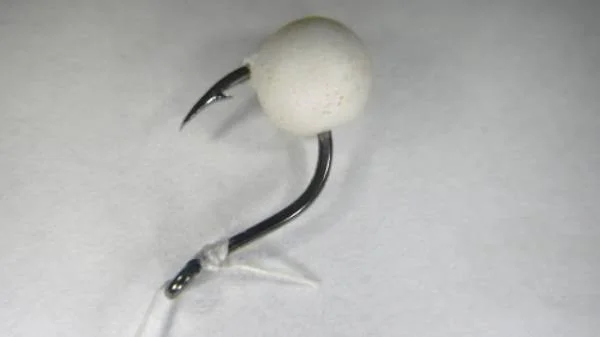
Threading the foam ball onto the bend or shank of the hook leaves the point and barb entirely open. Because crucian carp take the foam into their mouths and immediately try to eject it upon realizing it isn’t food, an exposed hook point grabs hold instantly. Burying the hook point inside the foam prevents penetration, allowing the fish to suck in and blow out the bait without ever registering a bite on your rod tip. Since this functions as a self-hooking bolt rig, there is no need for a violent strike-simply lift the rod and wind smoothly once the tip bends firmly over.
Elevating Foam Bait: Flavors, Dips, and Attractants
Because synthetic foam possesses no natural odor, adding liquid attractants can dramatically increase your bite rate on pressured waters. High-density fishing foam features a micro-porous structure that absorbs thin oil- or alcohol-based liquids, releasing a lingering scent trail directly into the water column over time.
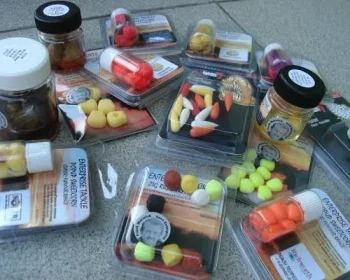
Soaking your loaded hook in a concentrated dip for 10–15 seconds before packing your feeder ensures maximum scent release. Garlic is arguably the single best all-around attractant for crucian carp, particularly in cool water or heavily fished venues. In early spring, warm spice scents like aniseed and coriander stimulate feeding, while sweet flavors such as honey, vanilla, and strawberry become unbeatable during the warm summer months.
Groundbait Strategy: Creating the Perfect Cloud
Your groundbait needs to break down rapidly upon hitting the water, creating a dense, fragrant cloud rather than a hard, sticky mound. Mixing 200–250 g (7–9 oz) of finely ground sweet biscuit crumb per 1 kg (2.2 lbs) of dry groundbait significantly increases cloudiness and adds a rich, attractive aroma.
Always mix your groundbait using water taken directly from the lake, as the chlorine present in tap water can easily scare off cautious wild fish. Once on the water, use the line clip on your reel to cast to the exact same spot repeatedly. Building a concentrated feeding station keeps crucian carp actively feeding around your elevated foam baits.
Seasonal Tactics: Spring vs. Summer
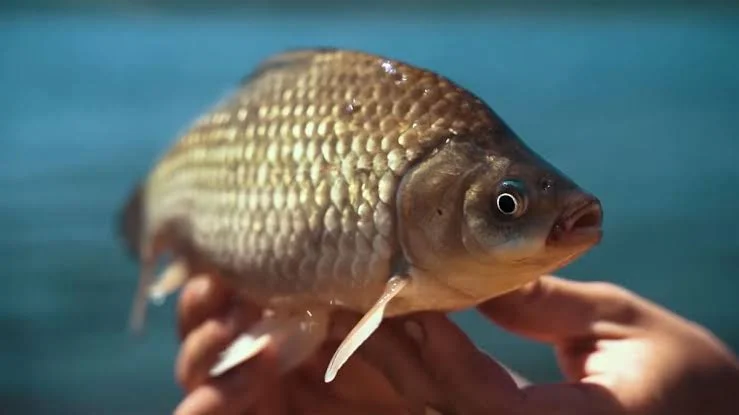
Crucian carp behavior changes significantly with water temperature, requiring subtle adjustments to your rig presentation and flavor profile.
| Feature | Early Spring Tactics | Summer Tactics |
| Water Temp | Below 12°C (54°F) | Above 16°C (61°F) |
| Foam Size | Micro-foam (2–3 mm / 0.1 in) | Medium to Large (5–7 mm / 0.2–0.3 in) |
| Hook Size | Fine-wire #14–#12 | Standard-wire #10–#8 |
| Best Flavors | Garlic, Anise, Spice | Honey, Sweetcorn, Strawberry |
| Feeder Type | Small, light spring feeders | Large capacity spring feeders |
Specialized Tactics for Silty Bottoms and Rivers
On waters with deep, soft silt, traditional bottom baits often sink completely out of sight. If you notice bites only occur immediately after twitching your line, your hookbait is likely buried in mud. You can solve this by creating a foam-sandwich presentation: thread a small buoyant foam ball onto the hook shank first, followed by a piece of sweetcorn, a maggot, or a worm. The foam lifts the natural bait, suspending it cleanly right on top of the silt where fish can spot it.
Foam bait combined with sweetcorn on a hook forming a buoyant sandwich rig for silty lake bottoms
Although spring feeders are primarily designed for stillwater venues, you can adapt them for slow-flowing rivers. Step up your hooklink material to a 0.20 mm (6 lb test) stiff fluorocarbon to prevent current tangles, and shorten the hooklinks down to 2 cm (1 inch) so the foam hovers tightly behind the main feeder weight.
Troubleshooting Common On-Water Issues
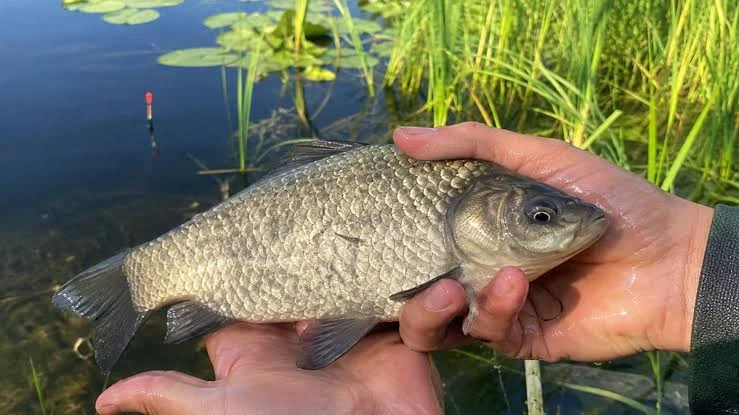
When line twitches occur without solid hookups, small nuisance fish like roach or bleak are likely nibbling at the foam ball. Switching to a smaller foam size, shortening the hooklink to 2 cm, or applying a strong garlic flavor usually deters smaller fish while continuing to attract crucians.
If your hooklinks frequently tangle around the feeder during the cast, practice “feathering” your line. Just before the feeder impacts the water surface, gently place your finger against the spool edge to slow down the line flight. This simple action straightens the rig in mid-air, ensuring the short hooklinks land cleanly away from the spring.
Frequently Asked Questions (FAQ)
Can you reuse foam bait after catching a fish?
Yes. High-density fishing foam is extremely durable and can be reused multiple times. However, if the foam gets squished, loses its buoyancy, or becomes saturated with mud, replace it with a fresh piece to ensure your hook remains properly elevated.
What is the best foam color for crucian carp?
Plain white foam is the most versatile and effective color across almost all venues because it provides maximum visual contrast against dark, silty lakebeds. In murky or stained water, bright yellow or fluorescent orange are excellent secondary choices.
Is foam bait legal on commercial fisheries?
Regulations vary by venue. While synthetic foam is widely accepted on wild waters and public lakes, some commercial fisheries restrict artificial baits or multi-hook rigs. Always consult fishery rules before setting up.
How long does flavor dip stay on foam bait?
Standard liquid dips typically wash off after 15–20 minutes in still water. Re-dip your foam hookbaits every few casts to maintain a strong scent trail near your groundbait cloud.
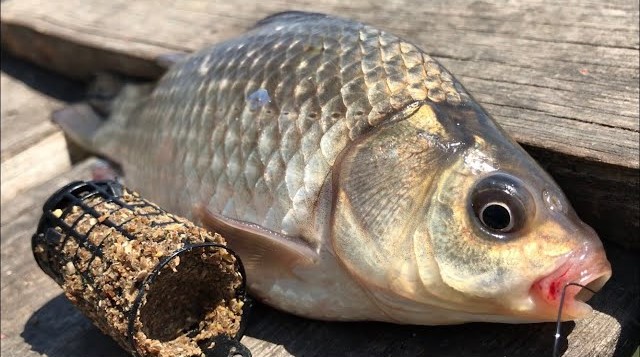
Bonus Species Warning: Foam and foam-sandwich presentations regularly attract larger specimen fish-including tench, bream, and heavy common carp. Keep your reel drag set properly so an unexpected run doesn’t pull your rod off the rests!
