
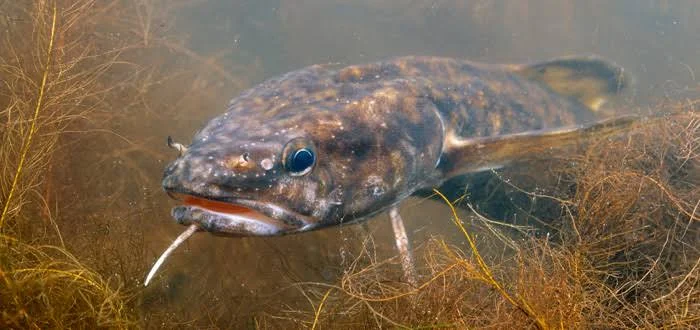
The burbot (Lota lota) occupies a unique space in freshwater angling. As the only freshwater member of the cod family (Gadidae), it defies almost every convention of typical predatory fish. While other species slow down and head for deeper winter dormancy as autumn temperatures plummet, the burbot awakens. Cold, stormy, and pitch-black conditions that drive most anglers indoors are precisely when this secretive predator reaches its peak feeding activity.
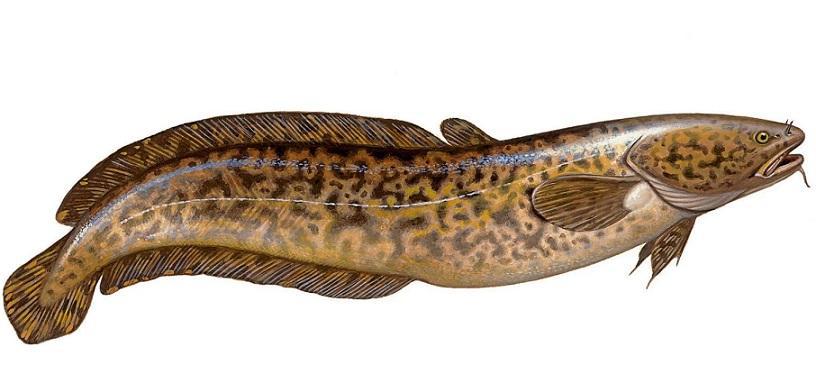
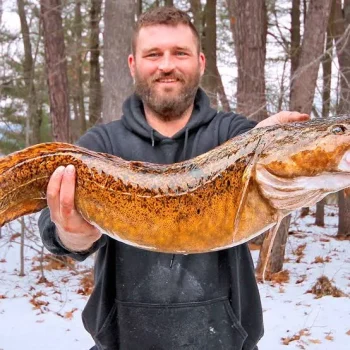
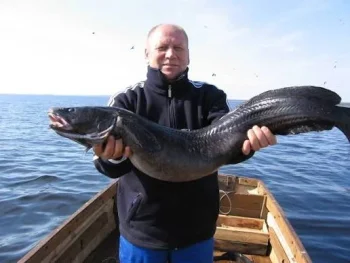
Reaching lengths of over 1 m (3.3 ft) and weight well past 8 kg (18 lbs) in optimal northern habitats, catching a sizable autumn burbot is a badge of honor. Beyond its impressive appearance and catfish-like profile, the burbot is renowned for its firm, lobster-like white flesh and rich, delicate liver. Mastering the art of targeting burbot on bottom rigs (ledgering) in October offers some of the most thrilling night-angling opportunities of the entire year.
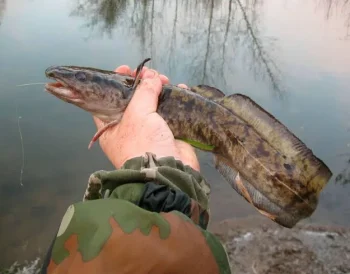
Responsible Angling & Conservation Note: Burbot growth rates are exceptionally slow in cold waters, and populations in southern or heavily urbanized river systems can be vulnerable. Always adhere to local size limits, practice selective harvest, and handle fish intended for release with wet hands to protect their delicate slime layer.
The Biology and Weather Physics of Autumn Burbot
Understanding burbot behavior requires throwing out standard warm-water angling logic. Burbot are cold-water stenotherms, meaning their metabolism and feeding triggers are directly tied to low water temperatures.
During the hot summer months, when water temperatures rise above 18-20 C (64-68 F), burbot enter a state of estivation – a summer form of hibernation. They retreat into deep, spring-fed holes, undercut banks, or rocky crevices, refusing food and becoming lethargic. In warmer river stretches where summer temperatures exceed 25 C (77 F), burbot simply cannot survive.
The arrival of October changes everything. As heavy autumn rains fall and air temperatures drop, water temperatures steadily fall below 10-12 C (50-54 F). This thermal shift acts as a massive metabolic green light for the burbot. Driven by the need to build up energy reserves before their winter spawning season, burbot begin roaming aggressively in search of calorie-dense food.
There is an old angler’s proverb: “The worse the weather for the fisherman, the better the fishing for burbot.” Dark, overcast nights accompanied by cold rain, howling winds, and falling atmospheric pressure consistently produce the highest catch rates.
The Hunter’s Anatomy
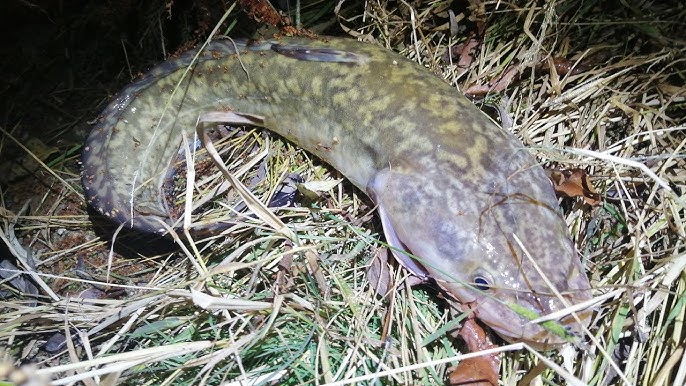
Burbot rely heavily on smell, their lateral line, and a unique physical feature – a single barbel located under their lower jaw. This barbel acts as a highly sensitive tactile organ and, according to many seasoned anglers, functions as a lure to attract small, curious fish in the pitch dark. When a smaller fish comes close to investigate the twitching barbel, the burbot inhales its prey in a fraction of a second.
Locating Burbot: Finding the “Burbot Highways”
 Burbot are strict night hunters. They spend the daylight hours hiding in deep water or under heavy structure, but as dusk falls, they leave their sanctuaries and travel along highly specific underwater paths known as burbot highways.
Finding these feeding corridors is the most crucial step in autumn angling. Once you discover a productive burbot route, you can return to that exact spot year after year.
Prime October Target Zones
- Tributary Mouths and Confluences: Where small cold creeks or side-streams flow into the main river, nutrient-rich water attracts forage fish, making the mouth and adjacent eddies prime hunting territory.
- Gravel and Pebble Bars: Burbot prefer firm, clean substrates such as gravel, hard clay, or stone beds. They actively avoid deep, stagnant mud where their food gets buried.
- Deep Pools and Eddies: On larger rivers, look for deep holes featuring reverse currents (back-eddies). Burbot rest in the deep core during the day and move up the sloping edges toward the shallow shelf at night.
During the early evening hours, set your baits along the drop-offs leading into deep water. As night advances into total darkness, burbot frequently move surprisingly close to the bank, patrolling shallow gravel bars in as little as 0.5-1 m (1.5-3 ft) of water.
The Best Baits for October Burbot
Burbot are opportunistic carnivores, but they possess a strong preference for fresh, oily, or scented animal protein.
1. Fish Baits (Live, Dead, or Cut Bait)
Small, bottom-dwelling fish species make up the vast majority of a wild burbot’s diet.
- Ruffe, Gudgeon, and Sculpin: Considered the ultimate burbot baits. Their spiny fins do not deter burbot in the slightest, and their strong natural odor draws fish from long distances.
- Perch Fingerlings: Highly durable and easy to secure on the hook.
- Cut Bait Slices: Fresh strips or fillets of oily fish (such as herring or mackerel) release a dense scent cloud that travels far downstream in moving water.
2. Large Earthworms and Nightcrawlers
 A generous cluster of fresh earthworms or large nightcrawlers (Lumbricus terrestris) is a close second to fish bait. The key is volume – do not thread a single small worm onto a hook. Thread 3 to 5 large nightcrawlers onto a wide-gap hook, puncturing them multiple times so their fluids bleed into the water column.
Pro Angler Tip (Gut Inspection): The single fastest way to master a specific venue is to inspect the stomach contents of your first harvested burbot at home. Learning whether your local population is feeding primarily on freshwater shrimp, small sculpins, or drowned worms gives you a huge tactical advantage.
Building the Ultimate Burbot Bottom Rig
Burbot are not line-shy, nor are they spooked by heavy terminal tackle. Your gear must simply be durable enough to withstand sharp stones, sub-zero night temperatures, heavy leads, and snags.
Recommended Gear Specifications
- Rods: Heavy feeder rods, carp rods, or sturdy deadbait rods (2.4-3.0 m / 8-10 ft) with casting weights between 60-150 g (2-5 oz).
- Reels: Size 4000-6000 fixed-spool reels featuring a smooth drag or baitrunner (free-spool) system.
- Mainline: Heavy monofilament in 0.35-0.45 mm (15-20 lb test) is strongly preferred over braided line. Monofilament offers superior abrasion resistance against sharp rocks and prevents line freeze on late-autumn cold nights.
- Hooklinks (Leaders): 0.30-0.35 mm (12-15 lb test) mono or fluorocarbon. Keep leader length to about 50 cm (20 in) to allow the bait natural movement.
- Sinkers: Flat pear or inline leads weighing 40-150 g (1.5-5 oz) depending on river current.
- Hooks: Strong, sharp, single wide-gap hooks in sizes #2 to #2/0 with long shanks. Long shanks make hook removal significantly easier when fish engulf the bait deeply.
Tactical Execution: Night Setup and Bite Registration
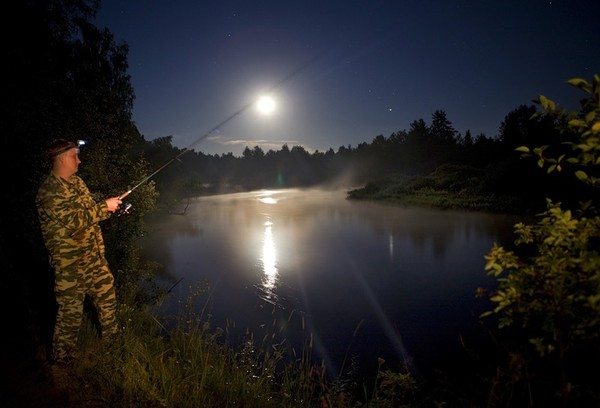
Successfully targeting burbot requires a methodical approach to venue coverage. The bite window typically opens at twilight and can last steadily until 9:00 AM the next morning.
1. The Fan-Cast Fan-Out Method
Since finding the burbot highway requires active searching, never cast all your rods to the exact same distance. Deploy multiple rods (where legal) fan-cast across different depths and distances from the shore:
- Rod 1: Positioned far out into the deep channel or river bend.
- Rod 2: Placed halfway down the main channel drop-off.
- Rod 3: Dropped near the shallow gravel shelf close to the bank margin.
2. Understanding the Deceptive Burbot Bite
 Burbot bite mechanics differ from almost all other freshwater predators. When a burbot encounters your bait, it rarely bolts off on a high-speed run. Instead, it hovers over the bait, inhaling it deeply into its cavernous mouth while remaining almost stationary on the bottom.
Because of this, bite alarms or bells may remain completely silent at first. Initial bite registration often appears as subtle, rhythmical taps or slow, heavy nods on the rod tip. Give the fish 30 to 60 seconds after the initial indication to swallow the bait before picking up the rod. Once you engage the reel, wind firmly to set the hook – a violent strike is unnecessary.
Troubleshooting On-Water Challenges
- Issue: Burbot Swallowing Hooks Extremely Deep
- Solution: Because they swallow baits on the spot, hooks often end up deep in the stomach. Always carry long-nosed pliers. If a hook cannot be safely removed without injuring a fish intended for release, cut the fluorocarbon leader as close to the hook eye as possible. To prevent deep hooking, check your rods more frequently.
- Issue: Constant Nuisance Bites from Small Fish
- Solution: Switch immediately from soft worm clusters to large, tough cut bait sections or whole live ruffe. Small fish struggle to strip tough fish skin, leaving your hook active when a larger burbot arrives.
Frequently Asked Questions (FAQ)
Can you catch burbot during the daytime?
Daytime catches are exceedingly rare in clear, shallow waters. However, during heavy autumn floods when river water turns thick and turbid, or in extremely deep lakes (over 20 meters / 65 feet deep), burbot will occasionally feed throughout the day.
Do I need to use wire leaders for burbot?
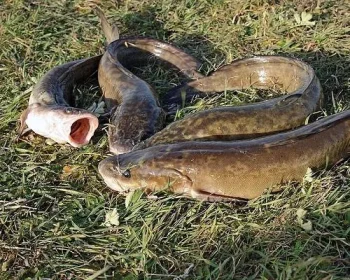
No. Unlike pike, burbot do not possess sharp, cutting teeth; instead, they have broad bands of small, rasp-like sandpaper teeth. Heavy monofilament or fluorocarbon leaders (0.30-0.35 mm) provide more than enough abrasion resistance.
What is the best weather condition for autumn burbot fishing?
Overcast skies, cold north or north-western winds, heavy rain, and rapidly falling air temperatures create the absolute ideal atmospheric conditions for active night feeding.