
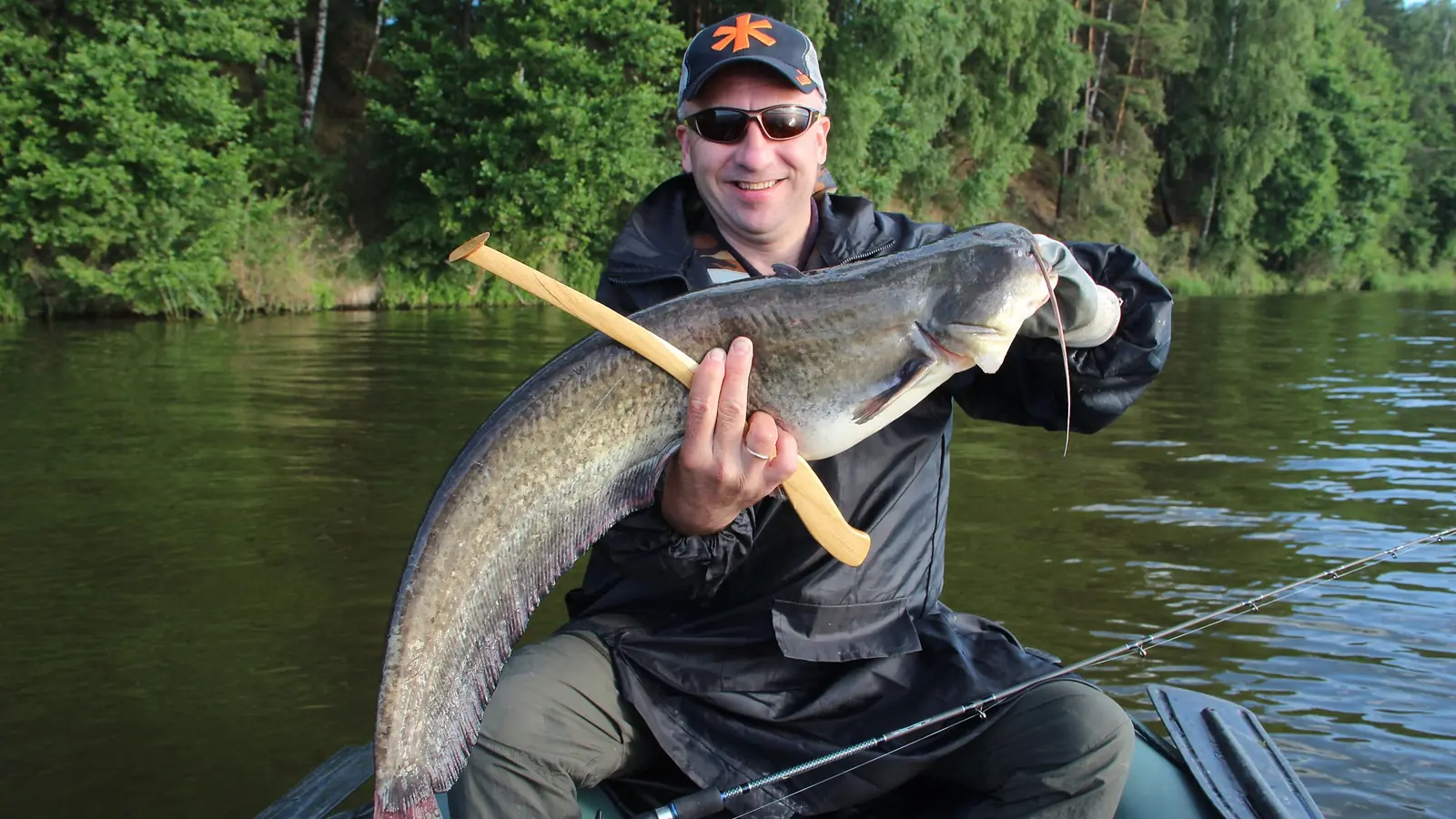
A clonk brings an extra dimension to vertical fishing for wels catfish: a clean surface sound, a bait held beneath the boat and the chance to watch a fish rise towards it on the sounder. The clonk attracts attention; the bait and its presentation complete the job. Learning to coordinate those three elements is the key to making this method work.
Clonking is particularly useful for searching deeper water during daylight. Work a promising drift with short series of clean sounds, then pause and watch the bait. This guide focuses on European wels catfish, Silurus glanis, and the practical decisions that matter from a boat: choosing a clonk, finding fish, balancing the tackle and responding when a catfish approaches.
Choosing a Catfish Clonk: Buy Online or DIY
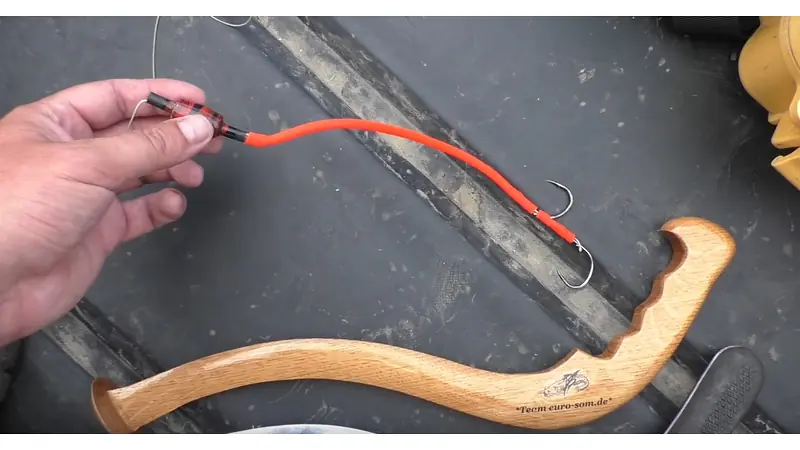
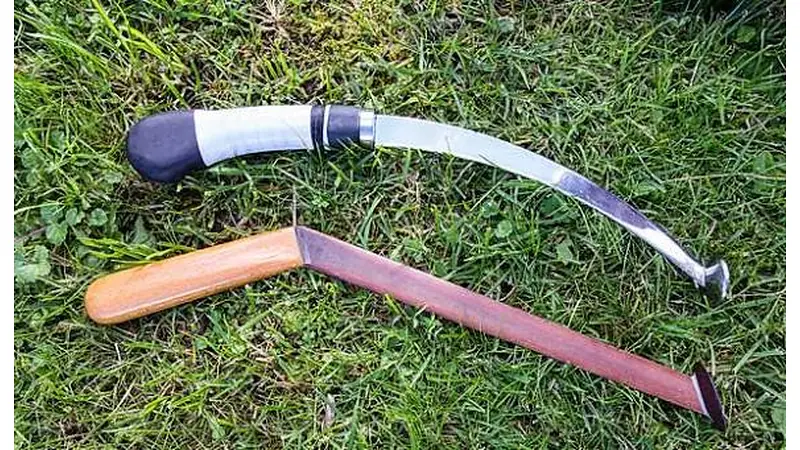 For your first trips, buy a well-made clonk with a comfortable handle rather than trying to learn the technique with an untested homemade tool. A standard model that you can work consistently is enough to get started. Making your own becomes a more useful project once you recognise the sound and feel you are trying to reproduce.
Check the finish, the security of the head and the reach of the shaft from your normal seated position. The foot, also called the heel, must enter and leave the water cleanly without forcing you to lean over the side. Wooden models need a sound waterproof finish; metal and composite designs also deserve careful inspection for rough edges and loose fittings.
Head shape and size change how a clonk handles. Choose a clonk for catfish fishing that suits your seating position and water conditions, then practise until you can produce a repeatable sound. Add another shape later if it offers a useful change. Owning several clonks will not compensate for an inconsistent stroke.
How to Produce a Clean Clonk Sound
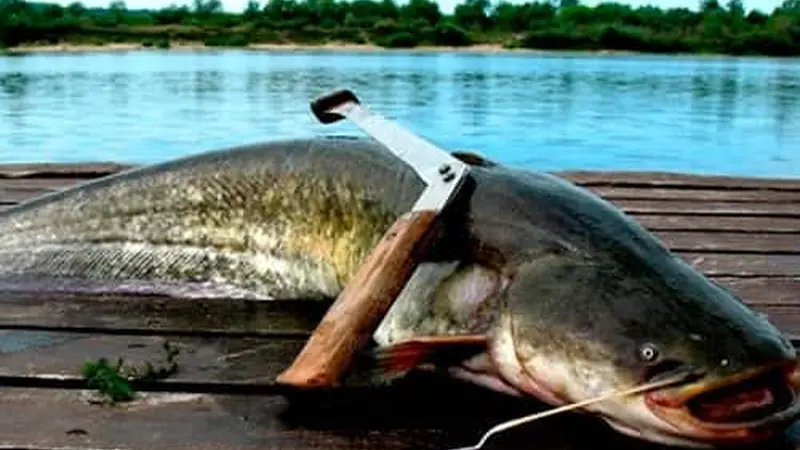 Practise on calm water from a stable seated position, wearing a suitable lifejacket. Hold the clonk comfortably and use a smooth arc of the wrist and forearm. Let the foot enter the water, travel through a short submerged stroke and leave it cleanly. You are aiming for a distinct hollow pop rather than a hard slap followed by a shower of spray.
Start with isolated strokes. If the foot splashes across the surface, smooth out the entry; if it drags through the water without a clean finish, adjust the exit angle and shorten the stroke. Watch a demonstration of the particular head shape you use, because flat and curved feet handle differently. Once the movement is repeatable, try two or three strokes followed by several seconds of silence. Keep the rhythm comfortable enough to maintain while watching the line or sounder. Watch the clonk technique in action in the video below.
When to Target Catfish with a Clonk
 Plan your first clonking sessions for the warmer part of the year, when you can find active fish and practise in manageable conditions. Late spring, summer and early autumn provide a useful starting season across much of continental Europe. Follow the water temperature, local catches and the fishery’s seasonal pattern rather than treating a particular date as the start or end of the method.
Use the warming trend and recent local catches to plan your first search. In northern waters, the productive boat-fishing season is concentrated around the warmer months; on southern waters, fish remain active for a longer part of the year. During sustained heat, prioritise areas with suitable oxygen conditions and follow fishery advice on fishing and handling.
Daylight is a good choice for learning: you can read the water, control the boat and coordinate the clonk with the tackle. Dawn and dusk also deserve attention, particularly where fish move between resting areas and feeding routes. Check the local spawning period and any seasonal restrictions before arranging a trip, especially in late spring and early summer.
Where to Locate Wels Catfish
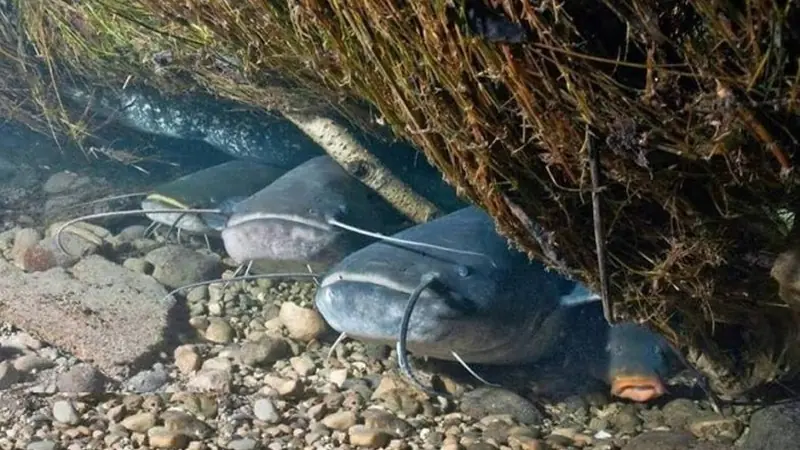
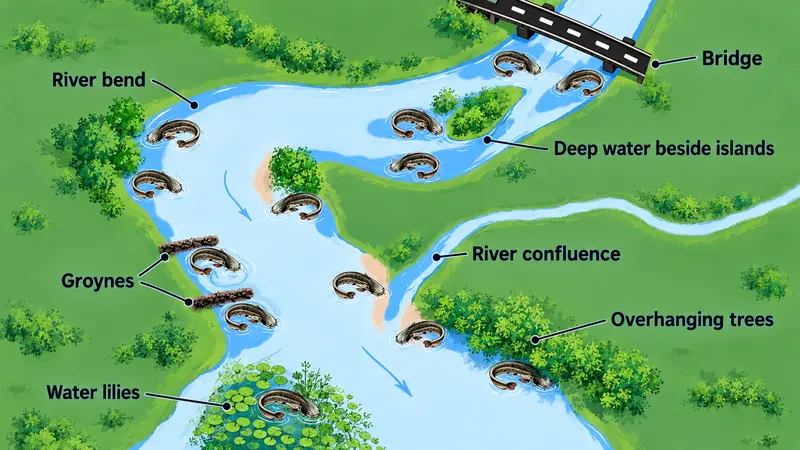 Begin with a feature that brings shelter and feeding opportunities together. A deep pool beside a shallower feeding area, a submerged channel edge or the boundary of a snag field gives you a sensible drift to investigate. The deepest point is not automatically the best place: the useful depth is the one where fish are holding and where you can present the bait effectively.
Check the following features, choosing a route that leaves room to manoeuvre and play a fish:
- Pool entrances, exits and the slopes along a submerged channel.
- Current seams and quieter water beside stronger flow.
- The edges of submerged timber and other substantial cover.
- Depth changes along river bends and steep banks.
- Underwater humps, basin edges and prey concentrations in lakes and reservoirs.
Use the sounder to check the actual contour before committing to a drift. Follow the channel edge or slope at the depth where you mark fish, adjusting your position as the feature changes. Check access restrictions and keep clear of bridge structures, weirs, navigation routes and other hazards.
On lakes and reservoirs, use a controlled wind drift or permitted boat positioning to cover useful features. On rivers, concentrate on manageable flow rather than trying to fish directly into the strongest current. Plan an exit from each drift before lowering the tackle, particularly near timber or a steep drop.
Top Baits for Catfish Clonk Fishing
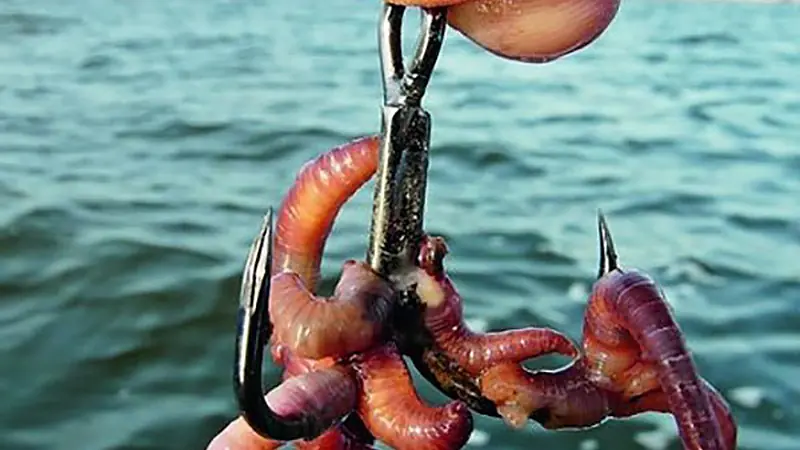 A bunch of large earthworms is a practical first choice. Start with three to five worms on a suitable strong hook, adding more only while the point and hook gap remain clear. The bait should move freely and hold together as you lower it. Check it after missed takes and replace damaged worms rather than fishing an untidy cluster with little movement.
Where permitted, fish baits offer another useful presentation. Roach, small crucian carp and small bream are examples of baitfish used by catfish anglers. Select a size that the rig can control, and follow local rules on livebaiting, deadbaits, sourcing and movement between waters. Keep a worm presentation ready as an alternative when you want a compact bait or the fish respond poorly to a larger fish bait.
A worm-baited vertical teaser is also worth carrying. Its weighted body helps hold the presentation at depth, while the dressing and bait provide movement beneath it. Follow the manufacturer’s rigging instructions and check the permitted hook arrangement at the fishery. Begin with a compact, manageable bait and compare the fish’s response before increasing its size.
For a straightforward starting selection, take worms and suitable legally sourced fish baits that the venue allows, and keep them in good condition throughout the trip. Check species protection and collection rules before gathering wild bait. In England, crayfish are prohibited as angling bait.
Essential Gear for Clonk Fishing
 Choose a short catfish rod designed for vertical fishing from a boat. Around 1.6–1.8 metres is a useful working length, giving you room to control the bait without an awkwardly long rod over the side. Look for a comfortable grip, a tip that registers the presentation and enough power through the blank to play the expected fish. A completely rigid rod makes delicate work harder and gives little cushioning close to the boat.
Match the reel, main line, leader, swivels and hooks as a complete catfish outfit. Check their ratings and the finished knots rather than choosing line solely by the weight of fish you hope to catch. Abrasion near snags, the drag setting and the strength of the terminal tackle all matter. Use a catfish-grade abrasion-resistant leader and replace it when roughened or damaged.
Choose the hook around the bait and its intended use. Numbering varies between manufacturers, so inspect the actual gape and wire strength. A worm presentation and a large fish bait do not need identical hooks. Keep every point sharp and exposed, and learn the hook-setting technique for the pattern you choose: a circle hook is loaded by steady pressure rather than a sweeping strike.
For a simple suspended bait rig, use a purpose-made catfish leader and strong hook below a suitable swivel, with a free-running lead on the main line above a protective bead. A ready-rigged teaser provides an alternative. In either case, choose enough weight to maintain contact and keep the presentation reasonably vertical. If the line streams far behind the boat, correct the drift or increase the appropriate weight within the rod’s rating.
Keep long unhooking pliers, a suitable landing arrangement and a large wet unhooking mat ready before the first drift. Secure loose equipment and plan how you and your partner will land and support a fish. Never wrap braid or a leader around your hand, and keep everyone clear of loaded tackle and exposed hooks.
Control the Drift and Respond to the Fish
 A sounder helps you follow depth changes, keep the bait in the transducer beam and watch fish approach. Begin by checking that you can see the presentation; adjust its position beneath the boat and the unit’s settings before interpreting every missing trace as a lack of fish. Without electronics, measure the depth carefully and work known features, accepting that you have less information about approaching catfish.
On a first pass over a clear bottom, starting roughly one to two metres above it gives you a useful reference. Where the sounder shows fish higher in the water, lift the bait to just above their level rather than continuing to fish underneath them. Recheck the clearance as the depth changes, and keep hooks safely above timber and other obstructions.
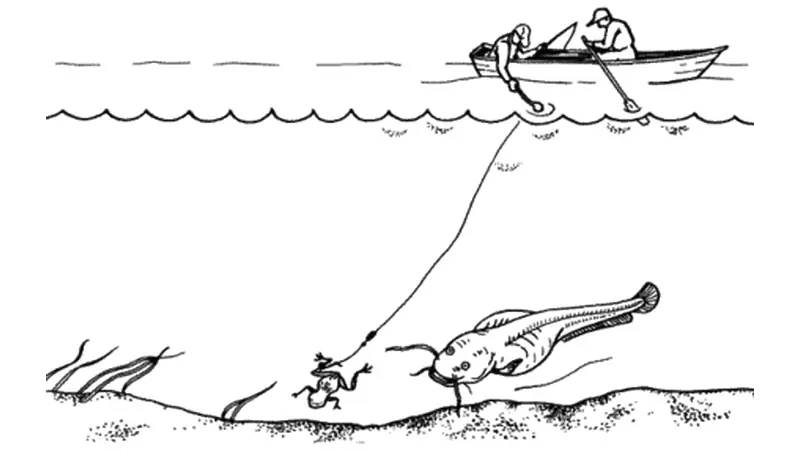
Make two or three clean clonk strokes, then pause and watch. When a fish rises towards the bait, reduce the disturbance and hold the presentation steady. If it stops below the bait, try a small, controlled lift; if it turns away after a large movement, use less movement on the next approach. Avoid repeatedly dropping the bait onto a rising fish.
| What you see | First adjustment |
|---|---|
| The bait trails well behind the boat | Improve drift control or use more suitable weight to regain contact. |
| A fish rises and stops beneath the bait | Pause the clonking and try a small lift while keeping the bait above the fish. |
| Fish turn away after sharp bait movements | Hold the bait steadier and reduce the next lift. |
| Several passes produce no approaches | Check the presentation and sounder, then investigate another depth or feature. |
Keep a useful drift repeatable by noting its starting position, depth and the point where fish appeared. Return along a safe route rather than running the engine directly over the working area unnecessarily. If wind makes boat control or a clean clonk stroke difficult, move to sheltered water or finish the session. Return to shore before a thunderstorm reaches you; surface activity is never a reason to remain exposed on the water.
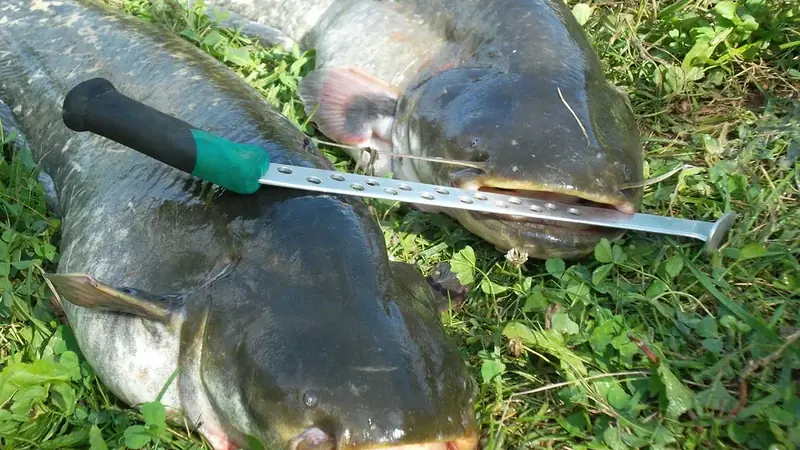 At the take, respond to the hook pattern and keep controlled pressure as the fish loads the rod. Let the drag and the rod absorb surges, keeping the line away from the hull, propeller and anchor rope. Have your landing plan ready before the fish reaches the boat. Support its weight properly and follow local rules for handling, release or retention.
The most useful progress comes from repeating a good stroke and learning what happens beneath the boat. Choose a feature, keep the bait under control and let the fish’s reaction guide your next adjustment. A clean sound, a well-presented bait and an organised drift give you a solid foundation for successful clonk fishing.
Tight lines!