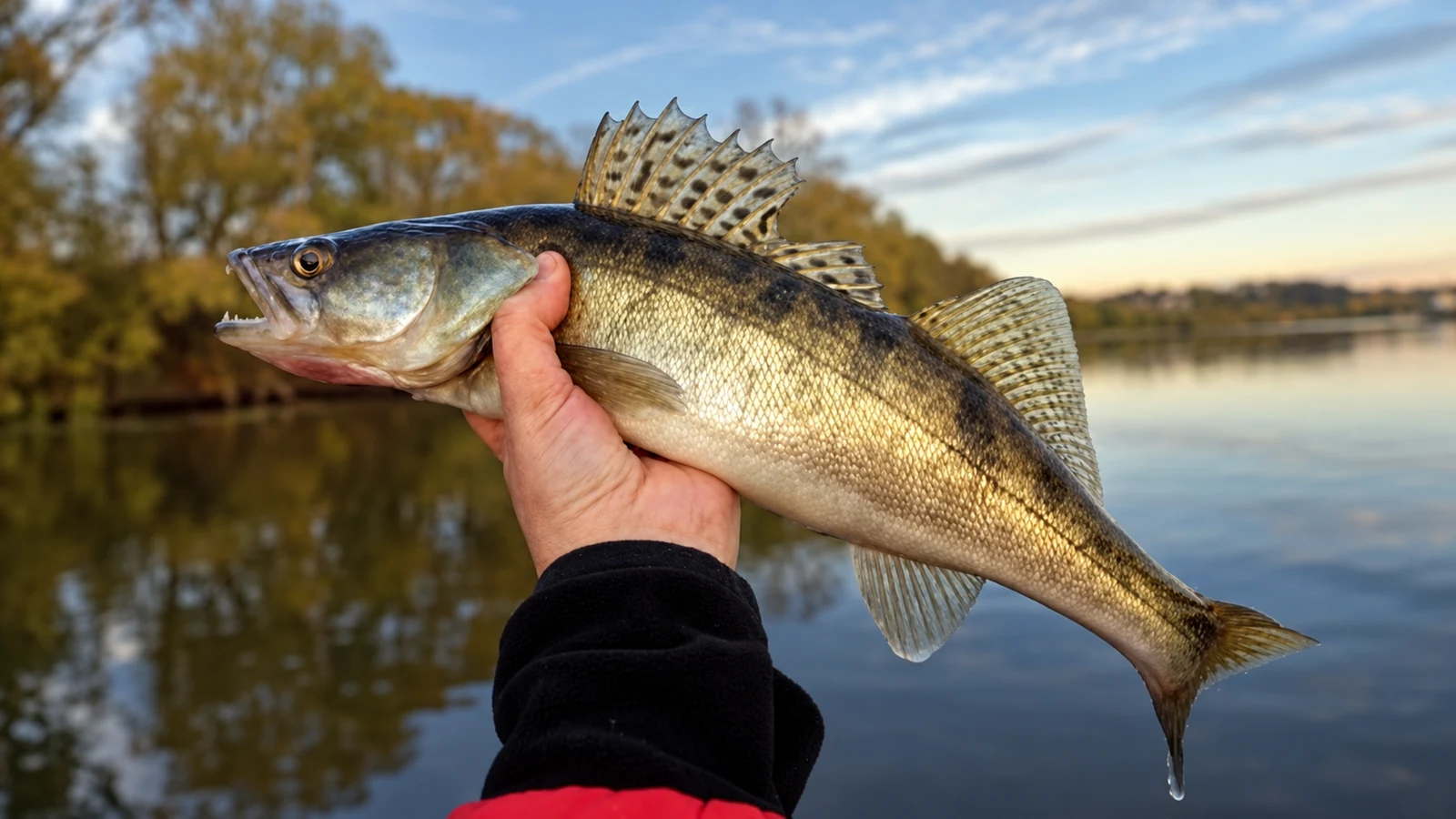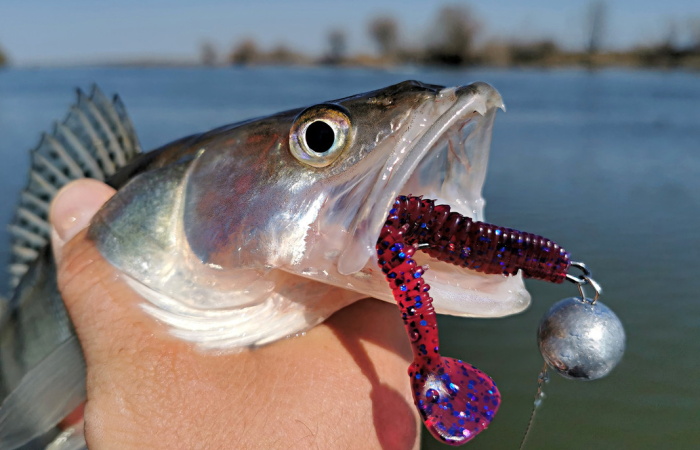
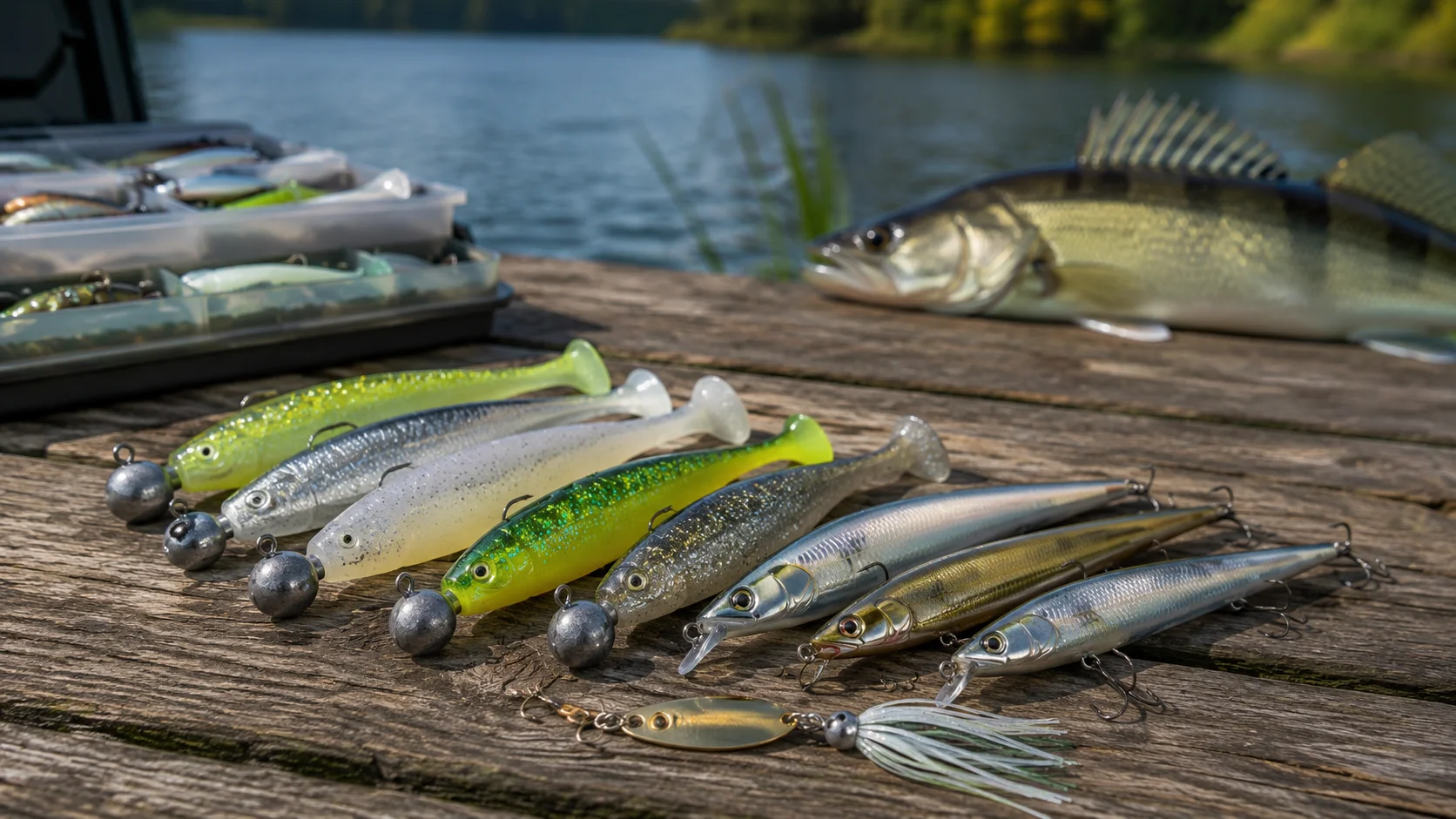
A 10 cm paddle tail on a suitable jig head is an excellent starting point for zander. It casts well, covers different depths and lets you work close to the bottom with a clear sense of what the lure is doing. But when zander move onto a shallow shelf after dusk, a slowly worked minnow plug gives you a different advantage: it stays in their feeding zone without constantly dropping to the bed.
Build your selection around those differences. You need a few lures that cover distinct jobs, rather than a box full of models that all behave much the same way. The eight picks below cover everyday jig fishing, subtle presentations, shallow feeding areas and situations that demand more vibration or casting distance.
The focus is European zander in UK and continental waters. Anglers targeting North American walleye will recognise several of these lures and techniques, although the two fish are separate species.
Which Zander Lure Should You Start With
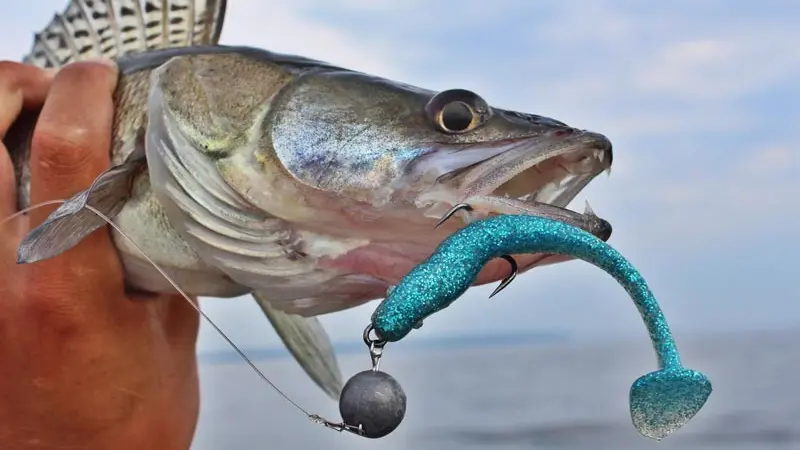 Choose the fishing depth and presentation first, then the lure. For a first visit to a canal or river, start with a 9–12 cm soft plastic and enough jig-head weight to follow its descent. Add a fork-tail bait for a quieter presentation and a shallow-running minnow if you intend to fish into darkness.
Use this table to narrow the choice before buying another packet or tying on another lure.
| Lure | Recommended starting size | Main reason to choose it | Starting presentation |
|---|---|---|---|
| Fox Rage Zander Pro Shad | 10 or 12 cm | Straightforward paddle tail for everyday jig fishing | Short lifts followed by a controlled fall |
| Keitech Easy Shiner | 4 in, approximately 10 cm | Tail movement at slow retrieve speeds | Slow swimming retrieve or gentle lifts |
| Westin ShadTeez | 9 or 12 cm | Deeper profile with a rolling, flashing action | Steady swimming with occasional pauses |
| Lunker City Fin-S Fish | 4 or 5 in, approximately 10 or 13 cm | Subtle fork-tail alternative to a paddle tail | Small twitches, short lifts or a drop-shot presentation |
| Rapala Shadow Rap SDR11 | 11 cm, 13 g | Working shallow feeding areas | Gentle twitches and pauses |
| Salmo Hornet 5 Floating | 5 cm, 7 g | Compact crankbait for covering moderate depths | Steady retrieve with pauses around features |
| Rapala Rippin’ Rap RPR06 | 6 cm, 14 g | Strong vibration and a compact casting profile | Short lifts with a controlled descent |
| Acme Kastmaster | ½ or ¾ oz, approximately 14 or 21 g | Reaching distant features from the bank | Measured lift-and-drop retrieve |
The soft plastics are supplied in different sizes and packaging options, so check the exact version when ordering. The same applies to hard lures: a standard Shadow Rap and a Shadow Rap Deep do not cover the same water.
Soft Plastic Lures That Cover the Core Jobs
Soft plastics deserve most of the space in a practical zander box. Changing the jig head lets you fish the same body in shallow margins, along canal shelves or across deeper river channels. Changing the body shape then alters the movement without forcing you to abandon a productive depth.
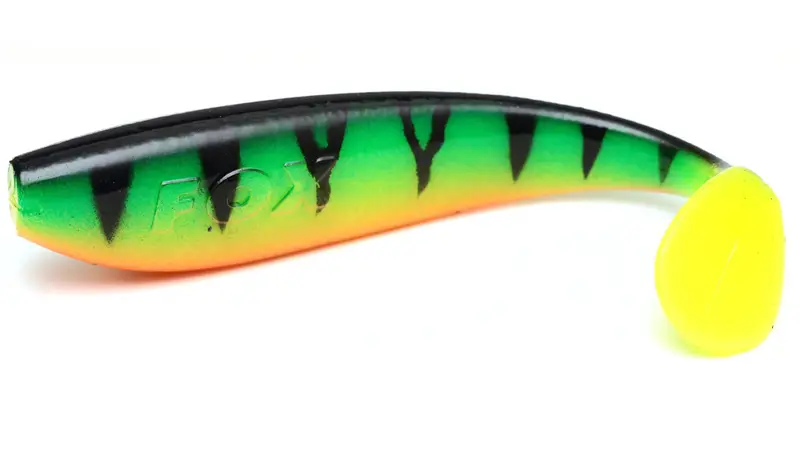
Fox Rage Zander Pro Shad: An Everyday Jig-Fishing Choice
The Zander Pro Shad is a sensible first purchase for anglers who want a straightforward paddle tail. Start with the 10 cm version for a manageable all-round presentation, or choose 12 cm when you want a larger profile. The range also includes 7.5 and 14 cm options, giving you room to adjust without changing the basic lure style.
Rig it straight on a jig head and begin with short lifts rather than forceful upward sweeps. Let the lure descend on a controlled line, note the bottom contact and repeat. On a river, cast across and slightly upstream to give it time to sink before the current carries it through the target area. If the head keeps wedging between stones, shorten the drop and swim the lure just above them.
Choose this one when you want to establish a repeatable presentation and learn the contours of a swim. Once you have that foundation, changes in lure shape and retrieve become much easier to judge.
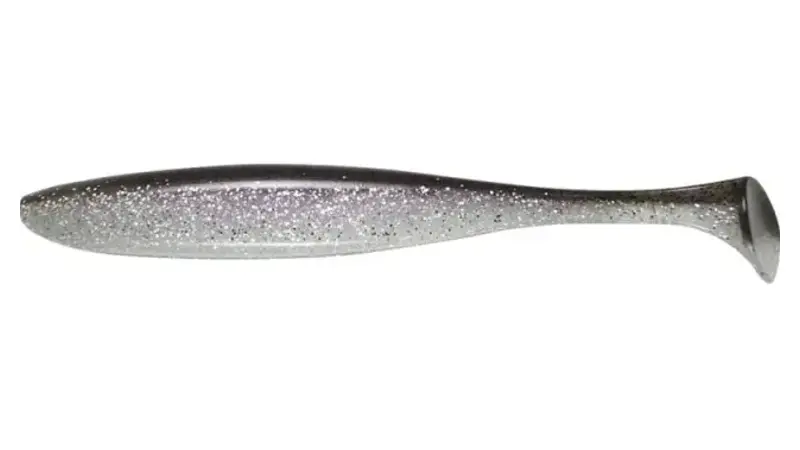
Keitech Easy Shiner: For Slow, Controlled Swimming Retrieves
The Easy Shiner earns its place through its supple paddle tail and rolling swimming action at low speed. The 4-inch model is a useful starting size, with 3.5 inches offering a smaller presentation and 5 inches providing more length. Its salted plastic contains squid scent, but the main practical attraction is the action you can maintain while moving it slowly.
Use it when you want to swim a lure along a canal shelf, above a gravel edge or through the lower part of the water column without an aggressive hopping action. After the initial sink, wind slowly enough to keep it near the chosen depth. Add a brief pause or a small lift as it approaches a change in the bottom.
Check the body after every fish and after repeated casts into cover. A torn head or a crooked mounting spoils the presentation. Keep spare bodies in their original packaging so the tails retain their shape, and replace a damaged lure before spending another half-hour trying to make it swim properly.
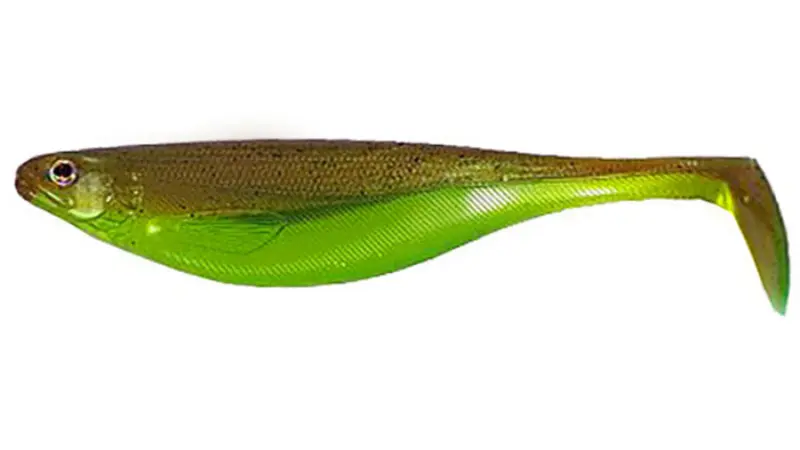
Westin ShadTeez: A Fuller Profile with More Body Roll
The standard ShadTeez offers a deeper body than a slender minnow-style soft bait, together with a pronounced rolling action and belly flash. The 9 and 12 cm versions are the most useful starting choices here. Westin lists the unrigged bodies at 7 and 15 g respectively, so remember to include that weight when choosing your jig head and checking the rod’s casting range.
Choose it when zander are feeding on deeper-bodied prey or when you want a more conspicuous swimming action. Fish it across open gravel, along the outside of weed or over the upper edge of a drop-off. A steady retrieve makes good use of the body roll; introduce short pauses where the lure crosses a feature.
The broader body creates more resistance than a slim soft plastic. In a strong river flow, compare it with a narrower bait before simply adding more lead. A slimmer profile can give you better control with a more manageable total weight.
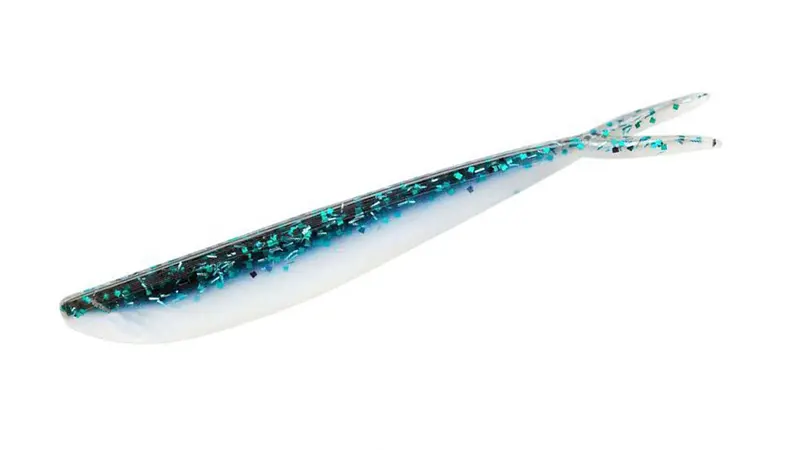
Lunker City Fin-S Fish: A Subtle Fork-Tail Alternative
The Fin-S Fish has a forked tail rather than a paddle. Choose the 4-inch version for a compact presentation or the 5-inch version when you want a longer baitfish profile. It gives you a useful change from the continuous tail beat of a shad, and the manufacturer specifically identifies jigging among its intended applications.
On a jig head, work it with short lifts and small changes of direction. Avoid trying to make it behave like a strongly kicking paddle tail. Its value lies in the restrained movement of the body and tail as it rises, settles and responds to the current.
It is also a useful choice for a drop-shot rig when you have located fish beside a steep bank, canal wall or other confined feature. Set the bait roughly 20–40 cm above the weight as a starting point, take up the slack and introduce small movements without constantly lifting the lead. Check local rig restrictions before using this approach.
Hard Lures for Shallow Water and Active Searching
Hard lures expand your options when a jig does not give you the presentation you need. A minnow plug can stay over a shallow shelf, a crankbait can repeatedly cover a productive depth, and a sinking lipless lure lets you combine casting distance with strong vibration.
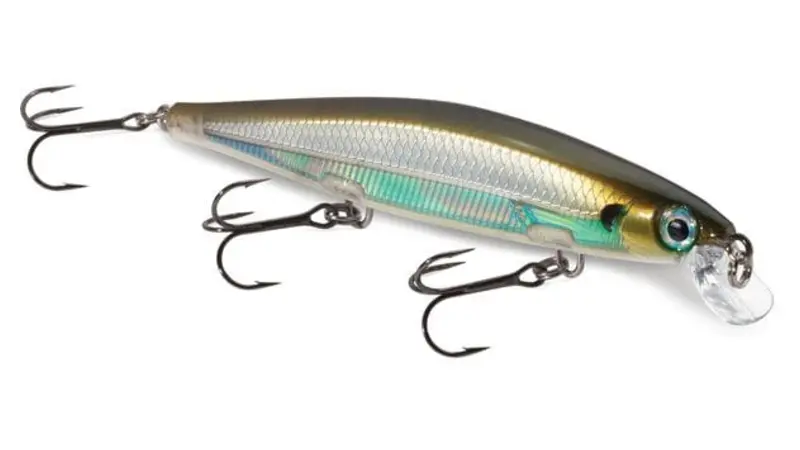
Rapala Shadow Rap SDR11: For Shallow Feeding Areas
The standard Shadow Rap SDR11 is 11 cm long, weighs 13 g and has a stated running depth of 0.6–1.2 m. It is a slow-sinking minnow, with a turning action on the twitch and a sinking movement during the pause. Those characteristics make it a useful choice for shallow shelves, harbour margins and river edges where zander move in to feed.
Start with a slow retrieve interrupted by one or two gentle twitches. Give the lure a short pause beside a likely ambush point, then continue without a violent pull. At dusk and after dark, cast along the bank as well as out towards deeper water: the fish you are trying to reach are sometimes following the edge beneath your feet.
Keep track of the pause over very shallow ground. This lure sinks rather than remaining suspended indefinitely, so leaving it stationary for too long increases the chance of catching the bottom. Use it to cover the shallow feeding route, rather than trying to force it into the role of a deep-diving plug.
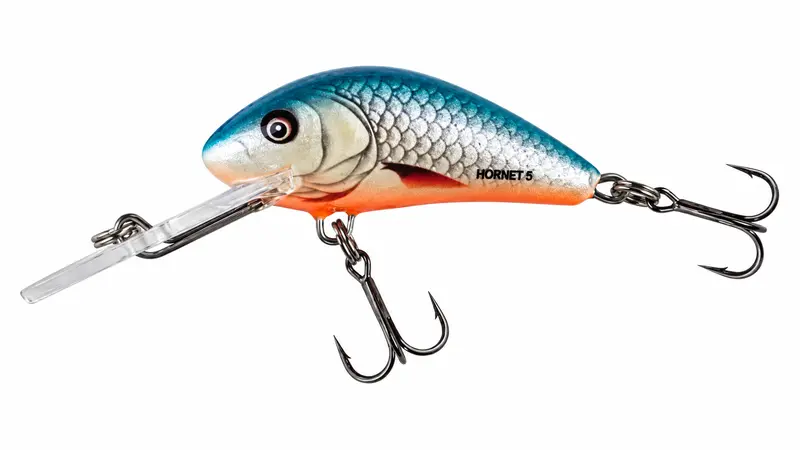
Salmo Hornet 5 Floating: A Compact Crankbait for Covering Water
The floating 5 cm Hornet weighs 7 g and gives you a compact, diving alternative to a long minnow. Its buoyancy is particularly useful around changes in depth: stop winding and it rises, helping you adjust the presentation before continuing through the swim. Salmo also produces sinking and Super Deep Runner versions, so check that you are buying the floating model described here.
Use it to search moderate-depth river runs, the outside of canal shelves and clean areas where you can bring the lure close to the bottom. Establish its working depth on a steady retrieve, then pause briefly beside a ledge or after light contact with the bed. Around 2 m is a useful initial casting application; line diameter, casting distance, current and rod position all affect the depth you actually achieve.
A small crankbait is especially handy when zander are feeding on compact prey. Its short body does not make it a lure only for small fish. Choose it for the combination of profile, vibration and running depth, rather than judging its usefulness by length alone.
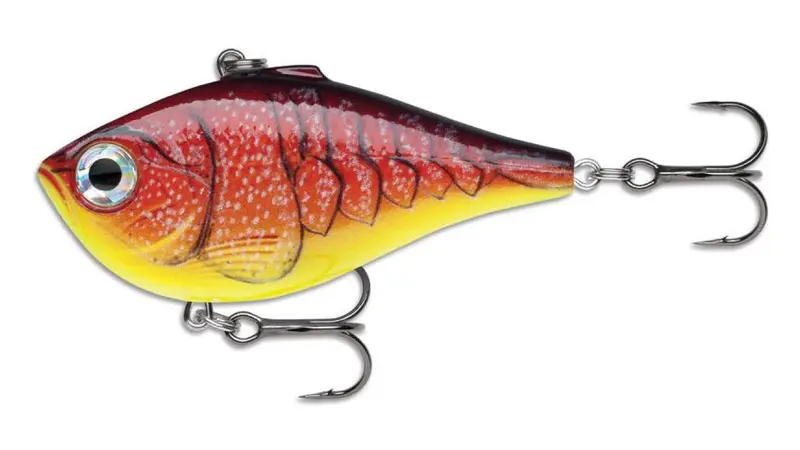
Rapala Rippin’ Rap RPR06: For Vibration and a Faster Search
The Rippin’ Rap is a sinking lipless crankbait with a tall, narrow body, a strong vibrating action and an internal rattle. The RPR06 is 6 cm long and weighs 14 g. Unlike a diving plug with a lip, its fishing depth is controlled through the initial sink and the way you retrieve it.
Choose it for covering open water, searching a broad drop-off or giving fish a more forceful signal in coloured water. Let it reach the chosen depth, lift until you feel the vibration and follow it down under control. Begin with short movements; a powerful upward rip is unnecessary for establishing whether fish will respond.
It is best used over reasonably clean ground. Exposed trebles are vulnerable among branches, heavy weed and broken rock, so switch to a suitable soft-plastic presentation when the bottom repeatedly catches the hooks. Once the lure has helped you locate fish, work the productive area more carefully instead of continuing to race through it.
A Metal Lure for Reaching Distant Features
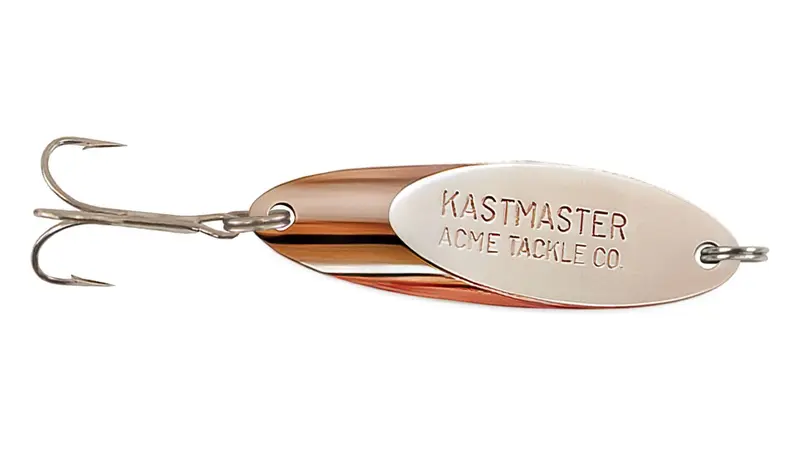
Compact metal lures are useful when you need to reach a distant channel edge or keep a relatively small bait working at depth. Their weight and casting efficiency give them a distinct role alongside soft plastics and diving plugs. For this selection, the Kastmaster covers that job.
Acme Kastmaster: When Casting Distance Matters
The Kastmaster remains useful because its compact metal body carries well through the air. The ½ and ¾ oz versions, approximately 14 and 21 g, are practical starting points for bank fishing where a channel edge or feeding area lies beyond the comfortable range of a lightly weighted soft bait. Acme’s range includes both weights.
Allow it to sink to the target depth, then use measured lifts followed by a controlled descent. Keep enough contact to notice an interruption in the fall, but avoid pulling the lure towards you so tightly that it cannot drop naturally. Over clean ground, an occasional touch of bottom helps you judge where it is travelling.
Carry it as a distance and depth option rather than making every swim a spoon-fishing exercise. For a wider selection of summer metal lures for zander, including spoons and spinners, see the dedicated guide.
Choose the Jig Head Before Changing the Lure
A good soft plastic on the wrong weight is difficult to fish well. Too little weight leaves you unsure whether the lure is near the bottom or being swept above the fish. Too much turns each drop into a hard plunge and makes the lure more likely to wedge into the bed.
Use the following weights as starting points for jig heads, with a roughly 9–12 cm soft plastic. They are not fixed depth ratings: current, wind, line thickness, lure shape and casting angle all affect control.
| Situation | Starting jig-head weight | What to check |
|---|---|---|
| Short casts in a shallow, calm canal | 3–7 g | The lure descends clearly without burying itself in silt |
| Stillwater edges and moderate depths | 5–12 g | You can follow the fall and identify bottom contact |
| Deeper stillwater or a river with moderate flow | 10–20 g | The lure reaches the feature before moving past it |
| Stronger current, greater depth or long casts | 20–30 g and upwards | The head provides control without making the presentation unnecessarily heavy |
Make a few casts and adjust. If the line keeps travelling without a readable touch-down, add weight or shorten the cast. If the lure repeatedly crashes into the bed and snags, reduce the weight, shorten the lift or change the casting angle.
Hook length matters too. The point should emerge far enough back to give a clean hook hold while leaving the moving section of the body free. As a starting guide, jig hooks around 1/0–3/0 cover many slim 9–10 cm bodies, while larger or deeper bodies often need 3/0–5/0. Compare the actual hook with the lure: sizes differ between manufacturers, and an oversized hook can stiffen a good soft bait.
For most of these presentations, a fast-action spinning rod around 2.1–2.7 m provides useful control, with the longer end helping bank anglers manage line over margins. Select the casting range around the complete rig. A 15 g soft plastic on a 15 g head is already a 30 g presentation before the hook and fittings are included.
Use a fine, reliable braid and check the leader after contact with stones or mussels. Where pike are a realistic possibility, fit an appropriate wire or titanium trace; fluorocarbon should not be treated as bite-proof protection.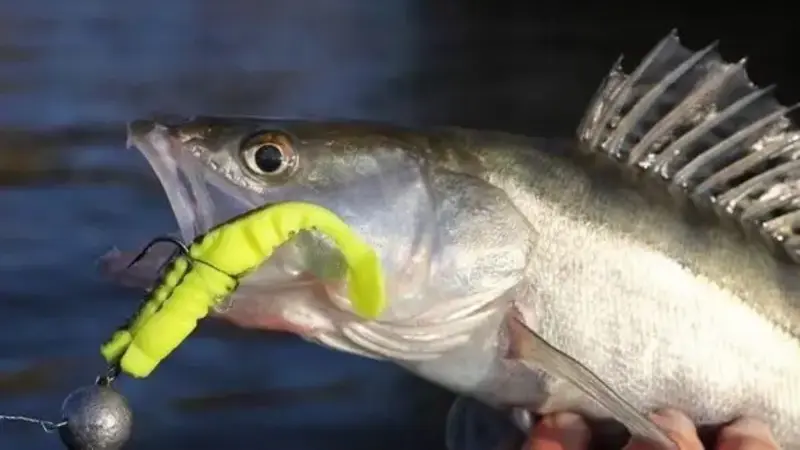
Getting the Size and Colour Right
For general zander lure fishing, start with a soft plastic around 9–12 cm. Drop to 7–8 cm when the fish are feeding on small prey or when you need a compact presentation in a canal. Move towards 12–15 cm when larger baitfish are present or when you want a bigger profile over open water.
Length alone is a poor comparison between different lure types. A 5 cm crankbait has a substantial body, a diving lip and a strong vibration, while a 10 cm fork-tail soft bait presents a much slimmer shape. Judge the whole profile and the way it moves.
Keep the initial colour choice simple:
- Clear water and daylight: start with translucent baitfish patterns, silver-grey, olive or a natural perch pattern.
- Coloured water: try pearl, chartreuse or a contrasting dark back and pale belly.
- Dusk and darkness: compare an opaque pale bait with a dark silhouette, keeping the same depth and retrieve.
These are useful starting choices rather than a reason to buy every colour. Carry two contrasting options in a lure you understand, then change colour after you have established control of the presentation. Switching from a natural shad to a bright shad tells you little if you also change its weight, depth and speed.
Scented soft plastics are a useful part of the selection, particularly when worked slowly. Keep them in their original packs and make sure the body is mounted straight. A scent label does not compensate for a bent tail or a hook that prevents the lure from moving properly.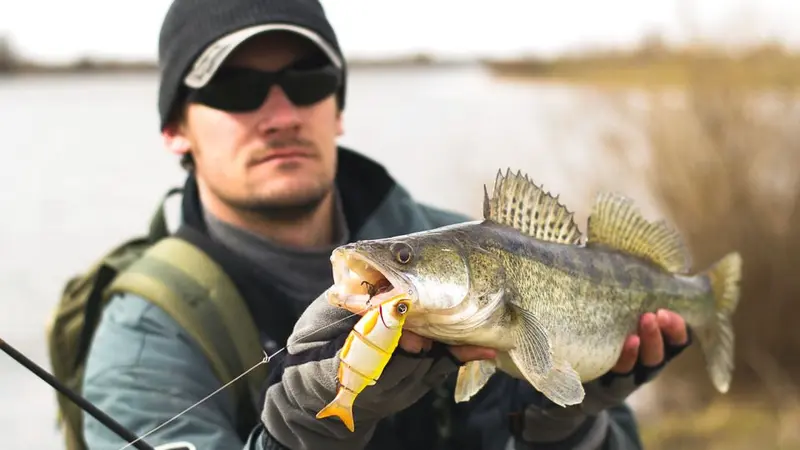
Work the Lure Where the Fish Are Feeding
During daylight, begin with defined features: the foot of a drop-off, a channel edge, bridge shade, a current seam or a firm patch beside softer ground. Use a jig to establish the depth and then work the feature from more than one angle. A lure travelling along an edge stays beside potential holding fish longer than one that crosses it at right angles.
The basic jig retrieve is straightforward. Let the lure sink, lift it a short distance and follow the fall with controlled line. Watch for the line stopping early, flicking sideways or tightening before the expected bottom contact. Take up slack and set the hook promptly; avoid waiting for a second pull while the fish holds the lure.
When repeated hopping produces no response, try a slow swimming retrieve just above the bed. This keeps a paddle tail moving while removing the repeated rise and drop. For cold-water location and seasonal adjustments, the guide to zander jigging in March develops that approach further.
At dusk, check the top of the shelf and nearby shallow feeding routes. A minnow plug is valuable here because you can retrieve it slowly through a narrow depth band. Keep noise and unnecessary light down, fish the near margin before walking to the water’s edge, and confirm that night fishing is permitted on the venue.
If a promising area remains quiet, make changes in a deliberate order:
- Check depth and control. Establish where the lure is travelling and whether you can read its descent.
- Change the angle. Cast along the feature or approach it from the opposite direction.
- Alter the movement. Replace sharp hops with low lifts or a steady swim; try a fork-tail bait if the paddle tail is being ignored.
- Check a different feature. Move to the next shelf, seam or shaded area instead of changing colours indefinitely in empty water.
This sequence makes each change useful. You learn whether the problem was the position of the lure, its movement or the location itself.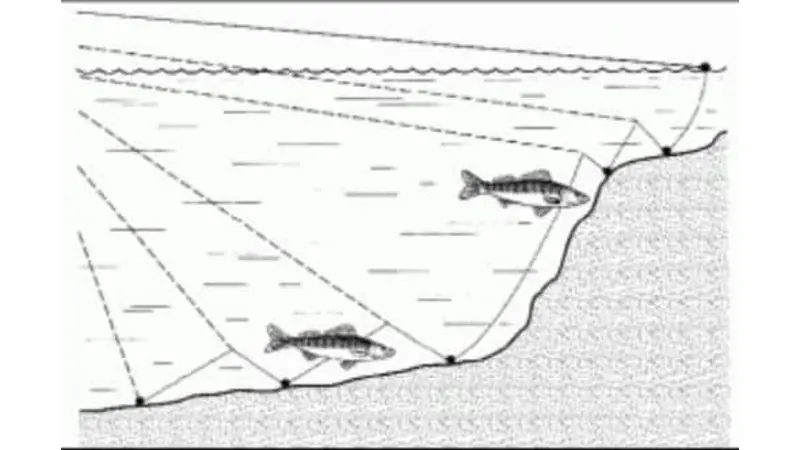
Build a Small Box You Can Fish Well
You do not need all eight models to start. A 10 cm paddle tail, a similarly sized fork-tail bait and a shallow-running minnow cover a strong range of everyday situations. Add suitable jig heads and two contrasting colours before buying several more bodies with almost identical actions.
Expand the box when a specific gap becomes clear. Choose a ShadTeez for a fuller swimming profile, a Hornet for a compact diving presentation, a Rippin’ Rap for vibration or a Kastmaster to reach a distant feature. The best zander lures earn their place by solving a problem on the water—and by helping you repeat a presentation once the fish respond.