
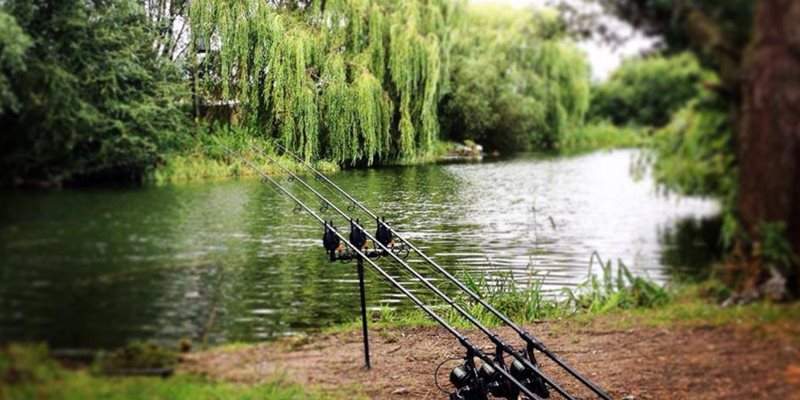
Carp fishing is a slow, deliberate discipline. The fish are strong, wary, and often hooked at long range, meaning your rod has to do much more than just cast a rig. A good carp rod helps you place a lead and bait accurately, control a hard-fighting fish near weed or snags, and play it smoothly without tearing the hook hold.
This guide explains how to choose the ideal carp rod for typical European venues: commercial carp lakes, gravel pits, canals, slow rivers, reservoirs, and estate waters.
Why Carp Rods Are Different
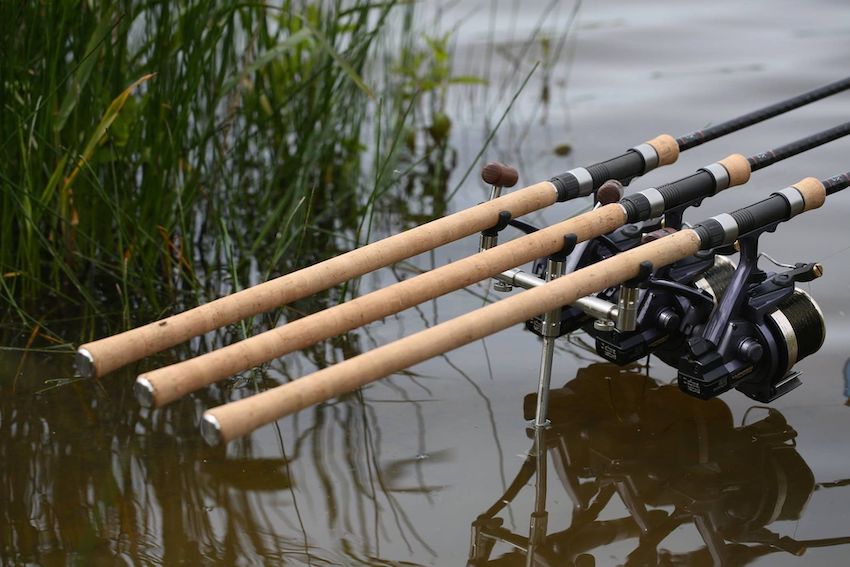
At first glance, a carp rod might resemble a heavy spinning rod: it features guides, a reel seat, and a handle. In practice, however, it is built for a completely different job. Carp rods are engineered to cast heavy leads and PVA bags, sit on rod pods or banksticks with bite alarms for hours, and manage intense battles with powerful fish.
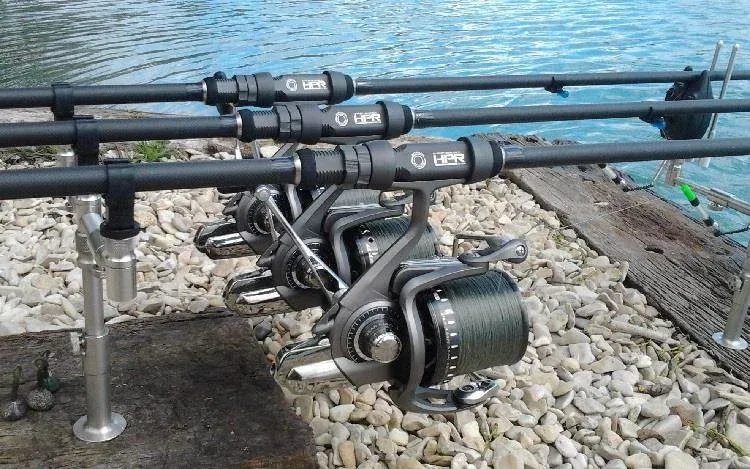
The handle is significantly longer than on predator rods to give you crucial leverage during long-range casting and when steering a carp into the landing net. The guides are also larger—frequently starting with a 50 mm butt guide and ending with an anti-frap tip ring—to allow thick lines and shock leaders to flow smoothly off large big-pit reels without tangling.
Note on Measurements: In European carp fishing, rod test curves are traditionally measured in pounds (lb), while rod lengths are universally referenced in feet (ft). Distance, lead weights, and venue sizes generally use the metric system.
Choosing the Right Test Curve
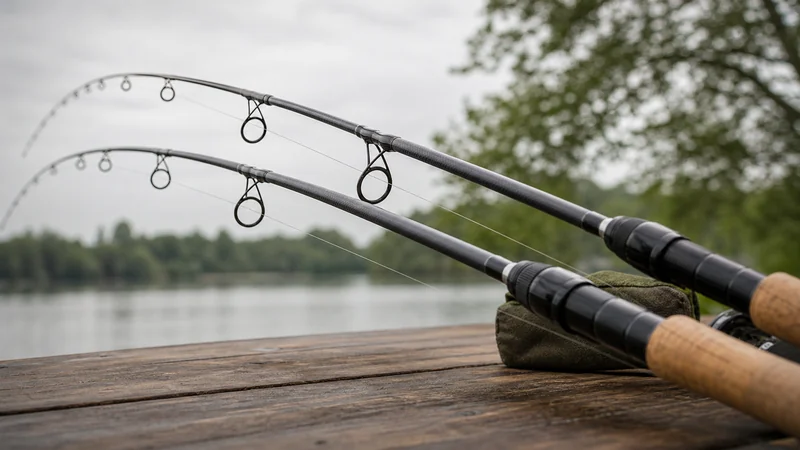 The test curve indicates the power of the rod blank (the weight required to bend the tip to a 90-degree angle to the butt). While it isn’t the same as casting weight, it gives a clear picture of what the rod can handle:
- 2.25 – 2.75 lb (Light / Playing Rods): Ideal for close and medium-range fishing on clean lakes and small ponds. These softer rods offer maximum enjoyment when playing smaller carp, forgive mistakes, and work best with lighter leads.
- 3.00 – 3.25 lb (All-Round Performers): The standard choice for modern European carp fishing. These blanks cast standard 70–100 g leads with ease, handle solid PVA bags or method feeders, and retain enough cushion under the rod tip to prevent hook pulls.
- 3.50 – 3.75 lb (Distance & Heavy Cover): Built for long-range casting, large open reservoirs, strong side winds, heavy weed, or snaggy margins. They provide maximum casting power and control, but demand good technique as they are stiffer when playing fish close in.
Angler’s Tip: Don’t confuse standard carp rods with Spod/Spomb rods. Spod rods usually feature test curves of 4.5 lb to 5.5 lb and are designed strictly for casting heavy bait rockets, not for playing fish.
Understanding Rod Action: Fast, Progressive, or Soft
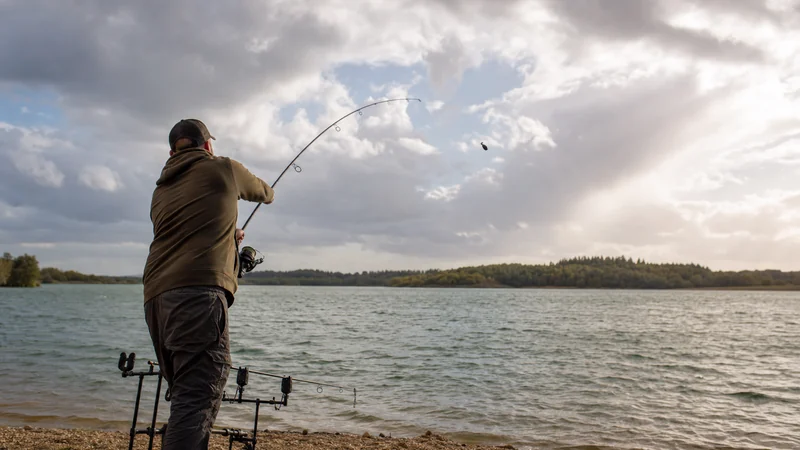 Rod action describes how the blank bends under pressure and how quickly it recovers after a cast.
- Fast Action (Tip Action): Bends mostly in the top third. Excellent for distance casting and punching through headwinds, but can feel rigid when landing fish at short range. Best suited for experienced casters.
- Soft or Through Action: Bends right through to the handle. Highly enjoyable for fighting fish and very forgiving for beginners, though limited in casting distance and power near snags.
- Progressive Action: The ideal middle ground. The rod acts stiffer during casting, but bends deeper as load increases during a fight. A progressive 3.00–3.25 lb rod is the safest first purchase for most European waters.
Rod Length, Transport, and Handle Styles
Choosing the right rod setup depends on your venue type, transport setup, and personal style.
Length & Blank Type
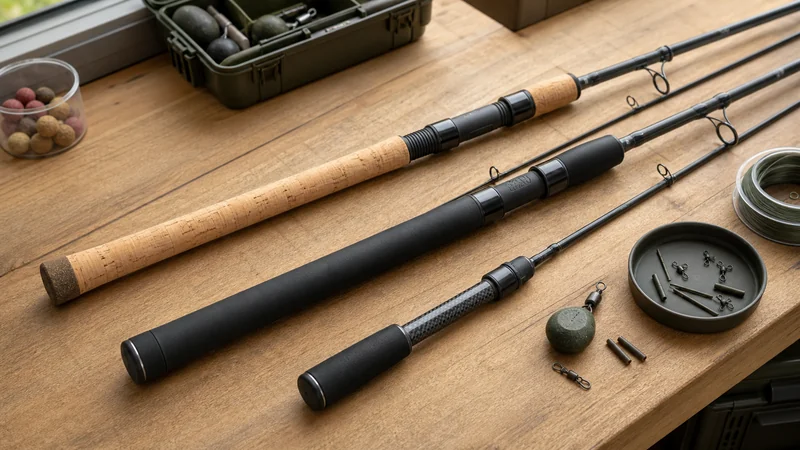
- 10 ft (3.0 m) – Short & Retractable Rods: Hugely popular across Europe for short sessions, tight overgrown swims, urban venues, and boat work. Models with retractable butt sections (like the Sonik Xtractor or Nash Scope/Dwarf) pack down extremely short, making them ideal for small car boots.
- 12 ft (3.6 m) – The Industry Standard: The most versatile length for European carp fishing. Easy to manage for anglers of all heights, offering a perfect balance between casting distance and playing control.
- 13 ft (3.9 m) – Distance Specialists: Preferred on large gravel pits and reservoirs where maximum distance is required. Requires good technique and sufficient clearance behind the swim to compress the blank properly.
Handle Aesthetics
- Full Japanese Shrink Wrap: A slim, sleek, rubberized finish that provides excellent grip and a modern “stealth” look.
- Abbreviated: A minimalist handle with bare carbon between split foam or shrink grips at the butt and reel seat.
- Full Cork: A classic, traditional look favored by anglers fishing historic estate lakes or looking for a retro aesthetic.
What Should a Beginner Buy?
 If you are buying your first proper carp rod for European waters, look for this balanced setup:
- Length: 12 ft (3.6 m) — or 10 ft if you fish small waters, canals, or have limited car space.
- Test Curve: 3.00 lb (or 3.25 lb if your venue has heavy weed or requires PVA bag casting).
- Action: Progressive action.
- Guides: 50 mm butt guide paired with an anti-frap tip ring.
- Build: 2-piece (or a retractable-butt 10 ft rod for compact travel).
Recommended Brands and Budget Breakdown
Avoid unbranded or extremely cheap tackle; heavy lead casting puts immense stress on blanks, reel seats, and ring inserts. Stick to established brands with proven quality control:
- Entry-Level & Mid-Range: Shimano (Tribal TX series), Daiwa (Black Widow / Crosscast), Sonik (Xtractor / VaderX), Fox (Horizon X3), Prologic (C-Series), and Wychwood offer exceptionally reliable rods across entry and mid-price points.
- Premium & Specialist: Korda (Kaizen series), Century, Free Spirit, Greys, and Avid Carp cater to high-performance casting, ultra-light carbon blanks, and custom finishes.
Expected Costs in Europe
- EUR 40 – 70: Basic entry-level rods. Functional for casual fishing on small waters.
- EUR 70 – 150: The sweet spot for quality. Reliable blanks, sleek designs, 50 mm guides, and strong components that last years.
- EUR 180 – 350+: High-modulus carbon blanks engineered for extreme distance casting and specialist applications.
Final Verdict
The best carp rod is never simply the most expensive or the most powerful option on the rack. It is the rod that fits your target water, your transport setup, your casting style, and the size of fish you are targeting.