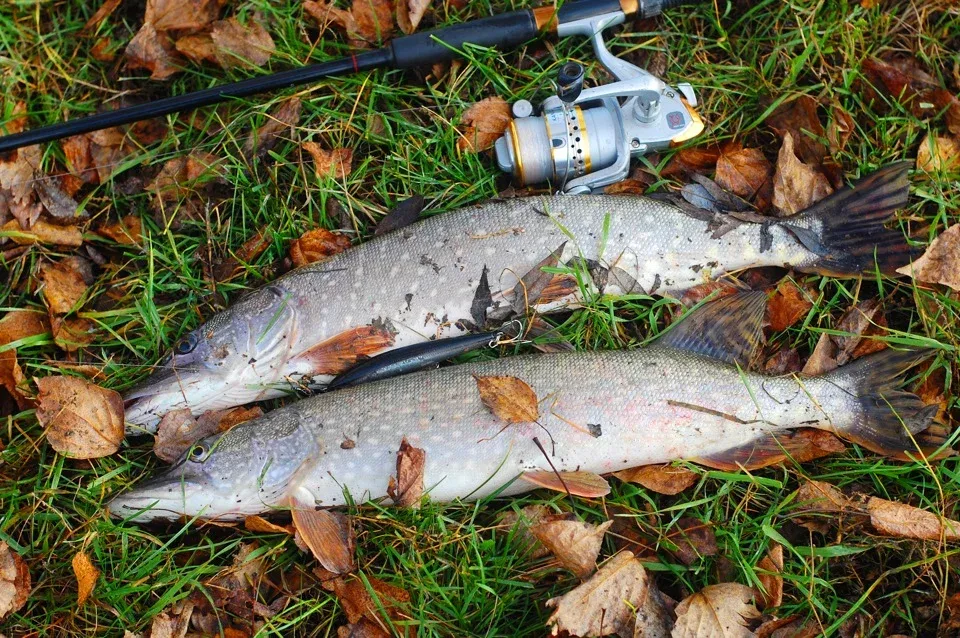
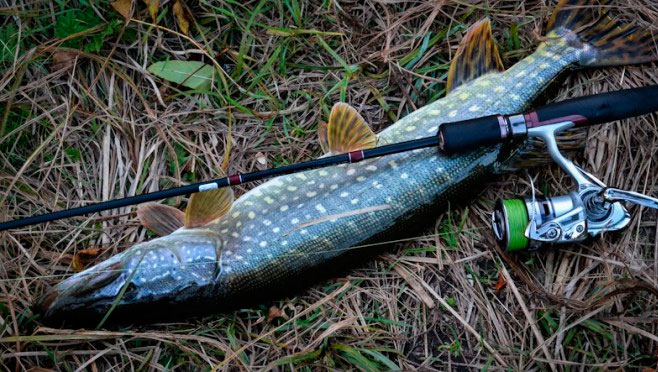
Pike are among the most targeted freshwater predators in Europe. They inhabit lakes, canals, reservoirs, and slow-moving rivers across the continent. While finding them is relatively straightforward, selecting the appropriate gear depends heavily on your specific venue and conditions.
This guide covers four standard methods for targeting pike: spinning, livebait float fishing, traditional floating discs, and winter tip-ups. While some of these methods are universal, others require specific local context and may be restricted in certain regions. Always check local regulations regarding livebaiting, multi-rod limits, and ice fishing before heading out.
The four setups include: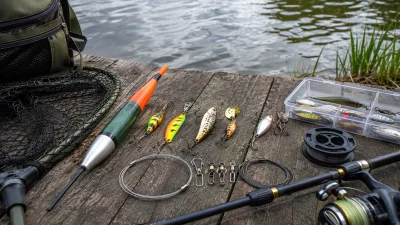
- Spinning tackle
- Livebait float tackle
- Traditional floating pike discs
- Winter tip-ups
Spinning Tackle
Spinning is an active method for pike fishing, effective from both the bank and a boat in still or moving water. This approach allows you to cover large areas of water efficiently by casting artificial lures into likely holding zones rather than waiting for a fish to find a stationary bait.
For most European venues, a medium-heavy spinning outfit is standard. A 2.1–2.7 m rod with a fast action and a casting weight of 20–60 g handles average-sized pike lures. For large soft plastics and heavy jerkbaits, many anglers use dedicated rods rated to around 80–150 g. Pair the rod with a strong fixed-spool reel or a baitcasting reel spooled with braided main line. A bite-proof trace is essential, with wire remaining the safest all-round choice for pike.
Pike lures trigger strikes through flash, vibration, or erratic action. Mainstream lure groups include:
- Hard baits: Wobblers, jerkbaits, crankbaits, and minnow lures.
- Spoons and spinners: Heavy metal spoons and inline spinners.
- Soft plastics: Shads, paddle tails, grubs, and various jigging lures.
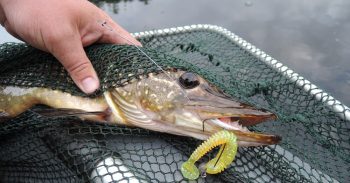
Select your lure based on water depth, weed cover, and current fish activity levels. Shallow reed edges require floating or slow-sinking lures, while deeper drop-offs call for jigged soft plastics. If pike follow the lure without striking, try varying the retrieve speed, adding pauses, or changing the profile size.
Focus on reed lines, weed beds, submerged structures, bridge shadows, and areas holding small baitfish.
Livebait Float Tackle
A float setup presenting live or dead bait works well in heavily pressured waters where pike have grown cautious around artificial lures. Note that livebaiting is strictly regulated across Europe; certain regions ban it entirely or restrict bait selection to fish caught from the same water.
To rig this presentation, suspend a baitfish below a large, buoyant float along reeds, weed beds, or margins. The float must carry enough buoyancy to prevent the baitfish from pulling the rig under or dragging it into heavy cover. Inline pike floats are widely available, though any high-visibility float with sufficient buoyancy works.
A standard pike float rig consists of:
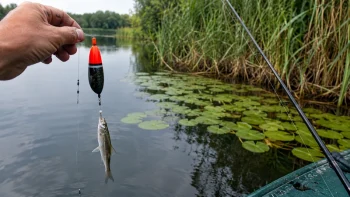
- Main line (braid or heavy monofilament)
- Sliding or fixed inline float
- Stop knot or rubber bead (for sliding setups)
- Sliding lead or inline lead
- Ball-bearing swivel
- Bite-proof wire trace
- Treble or single hook setup
A wire trace provides the safest protection against a pike’s sharp teeth. While some modern anglers use heavy fluorocarbon, it must be exceptionally abrasion-resistant to avoid cut-offs.
Position your baitfish roughly 15–20 cm above the bottom or just over the top of the weeds in dense vegetation. In shallow margins during warmer months, a mid-water presentation is preferable, whereas freezing conditions require fishing close to the river or lake bed.
Recast and reposition the rig every 20–30 minutes if you do not get a take. Target reed edges, pockets in lily pads, bay entrances, and deeper drop-offs near shallow shelves. Watch for sudden splashes or scattering baitfish, as these often reveal an actively hunting pike.
Traditional Floating Pike Discs
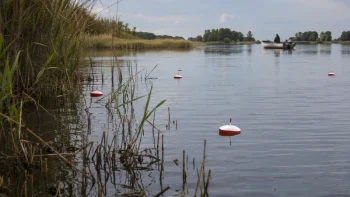 A traditional floating pike disc is a flat, buoyant disc with a groove around the edge for holding the line and a central peg that acts as a bite indicator. When a pike takes the bait, the line slips from the peg, allowing the disc to flip over. This action exposes a contrasting colour on the underside, indicating a strike. While common in Eastern Europe, this method is rare in Western Europe, yet it remains an efficient way to manage multiple live baits from a boat.
Anglers typically deploy these discs in groups, organising a small fleet of rigs across a targeted area from a boat. The baitfish swims at a preset depth above the bottom or weed line.
A boat is necessary to deploy the rigs and retrieve them once a disc flips. After checking the water depth, set the line stopper so the bait swims at your target level—usually 15–20 cm above the lake bed.
The two sides of the disc use contrasting colours, typically red and white. The red side faces upward when set. A strike flips the disc to show the white side, identifying the run from a distance.
On still waters, the discs stay near the drop zone. On rivers or during windy days, they drift across the venue, covering a large area of water. Keep track of bottom topography, as sudden depth changes can cause the bait to snag or foul in weeds.
Winter Tip-Ups
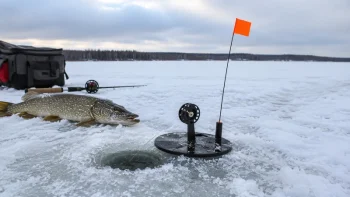 Tip-ups are specialised tools for targeting winter pike through the ice where conditions are safe and legal. The design is simple, reliable, and well suited to freezing conditions. When a pike runs with the bait, the rotating spool releases a spring-loaded flag to indicate the bite.
The setup is built for sub-zero environments, often featuring a base plate that covers the ice hole to slow down freezing, alongside a sub-surface spool and a high-visibility orange or red flag.
Always run a heavy wire trace on winter rigs. Position the bait close to the bottom or just above winter weed beds. On unfamiliar ice, space multiple tip-ups across different depths to locate active fish.
Approach the hole calmly and watch the spool. It may start, stop, and then turn again as the pike adjusts the bait in its jaws. Once it begins turning steadily, wait around 5–10 seconds before setting the hook. With a large bait, you may wait up to 15 seconds, but avoid a longer delay that could allow the pike to swallow the rig deeply.
Ice safety overrides all gear choices. Never fish alone on questionable ice, and always verify local guidelines for minimum ice thickness. Be aware of club or regional rules governing the number of active lines allowed per angler and proper winter fish handling.
Selecting Your Pike Setup
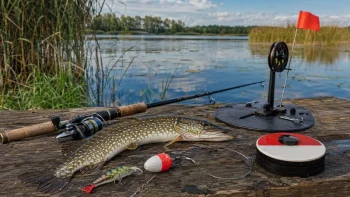 Spinning remains the most practical choice for mobility and open-water flexibility throughout the season. A livebait float setup fits targeted sessions on highly pressured waters or days when pike ignore fast-moving artificials. Floating pike discs offer an alternative approach for covering large areas, provided you have a boat and venue rules permit them. Tip-ups are strictly reserved for safe, legal ice fishing conditions.
Regardless of your chosen method, always use a bite-proof trace, adequate main line, and proper fish-care equipment. Pike are strong but vulnerable to poor handling out of the water. Carry long forceps, unhooking tools, a large landing net, and a padded unhooking mat. Always wet your hands before handling the fish and return them to the water promptly.