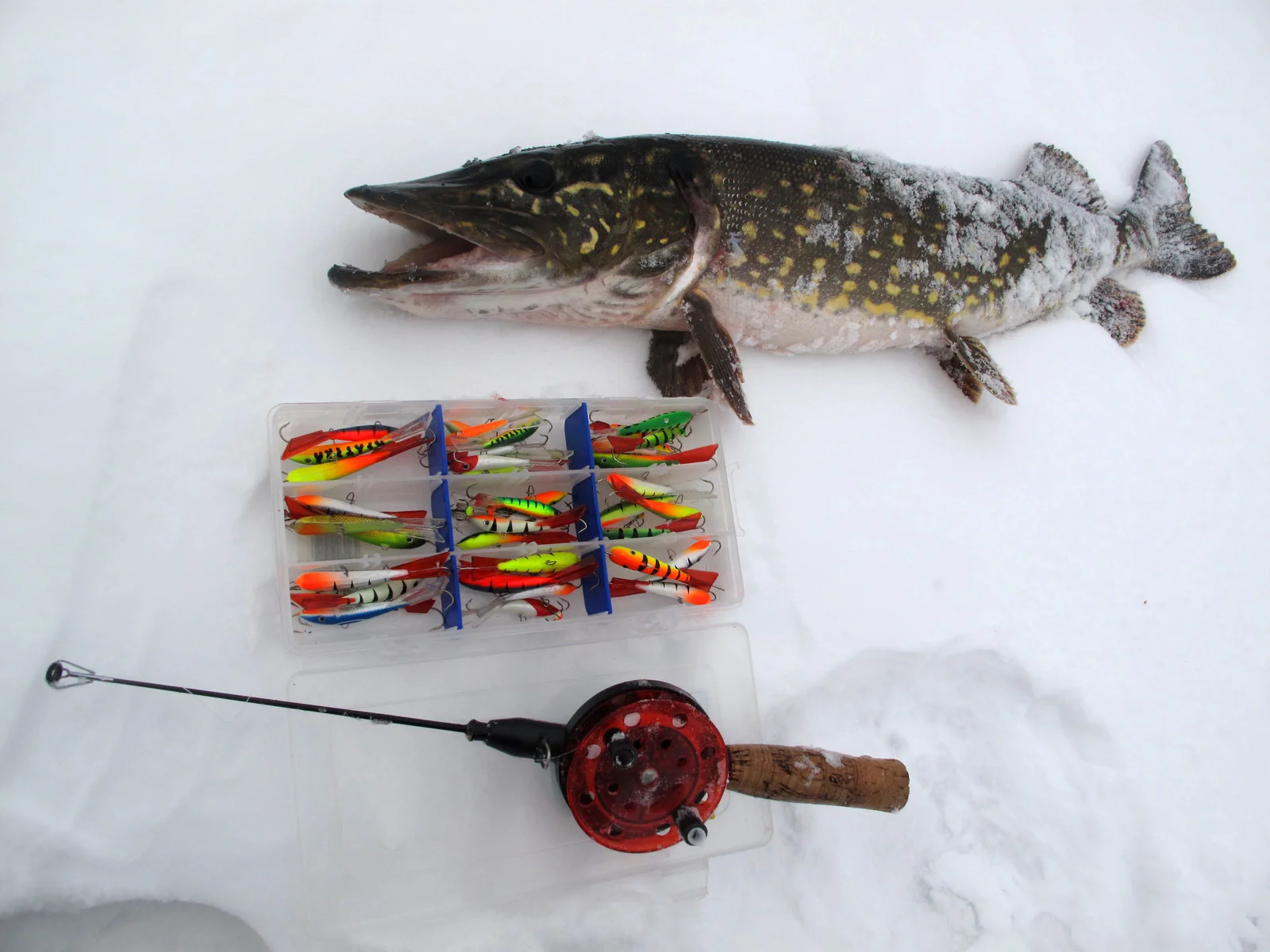
Pike are among the most exciting predators to target during winter. These powerful fish can put up an impressive fight even in freezing conditions, and the possibility of hooking a trophy is one of the reasons anglers venture onto frozen lakes year after year.
Another attraction of winter pike fishing is that these predators remain active beneath the ice. Although their feeding patterns change as water temperatures fall, pike continue to hunt and respond to suitable baits and artificial lures. A carefully presented lure or well-positioned bait can produce a memorable catch even during the coldest part of the season.
Ice fishing also offers methods quite different from conventional spinning. Anglers can use stationary tip-ups with natural bait or actively search for fish with short winter rods, balancing jigs, vertical spoons and modern soft-plastic lures. Both approaches have their advantages, and learning when to use each can make winter fishing considerably more productive.
Experienced anglers usually know which areas hold pike, how to choose suitable tackle and when to change their presentation. For beginners, however, catching pike through the ice can seem complicated. Understanding a few basic principles will help you approach the water with greater confidence.
In this guide, we will cover the main methods of ice fishing for pike, including tip-up fishing, winter rods and artificial lures. We will also look at where to find pike at different stages of winter, how weather and prey movements affect their behaviour, and which techniques can improve your chances of success.
The methods described here are particularly relevant to northern and eastern Europe, including Finland, Sweden and the Baltic region. They are also familiar to anglers targeting northern pike in the United States and Canada. In the UK, winter pike fishing usually takes place on open water, so ice-fishing techniques are mainly applicable when travelling to destinations where frozen-water fishing is permitted and conditions are safe.
If your local waters remain open in December, our December pike fishing guide explains how to target pike before the ice arrives, as well as the tactics to use once the first ice forms.
Tackle for Ice Fishing for Pike
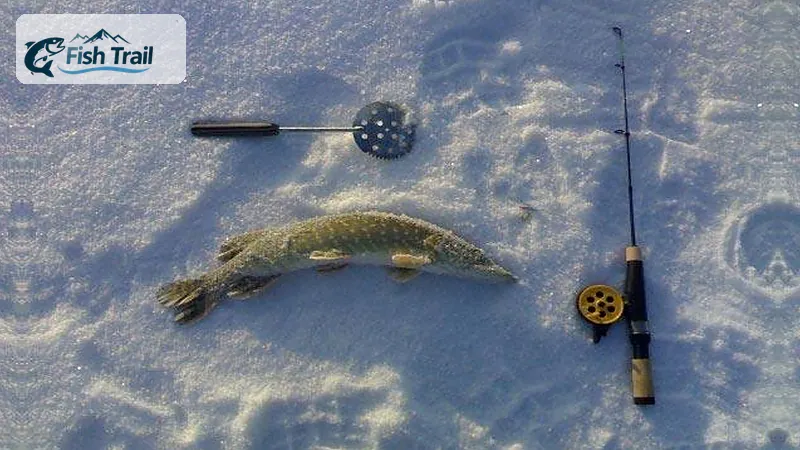 Before heading onto the ice, the first decision is which fishing method you want to use. There are two main approaches: active lure fishing with a short winter rod and stationary bait fishing with ice-fishing tip-ups.
A short winter rod is used to work artificial lures vertically through a drilled hole. Popular choices include balancing jigs, vertical spoons and soft-plastic lures. This method allows anglers to search different depths, experiment with presentations and move regularly between fishing spots.
Tip-ups take a different approach. These stationary devices suspend a natural bait beneath the ice and use a flag or another indicator to signal when a fish takes the bait. Where regulations allow multiple lines, tip-ups can help anglers investigate several locations or depths simultaneously.
Neither method is inherently better. Some anglers enjoy the anticipation of watching a tip-up flag rise, while others prefer the direct contact and active searching involved in lure fishing. Both can be highly effective, and many experienced winter anglers choose their approach according to the venue and conditions.
Whichever method you prefer, reliable tackle is essential. Pike have powerful jaws and sharp teeth, so the main line, hooks, traces and connections must be strong enough for the expected fish. Suitable unhooking equipment and an ice auger capable of making a sufficiently large hole are equally important.
Pike Fishing with Ice-Fishing Tip-Ups
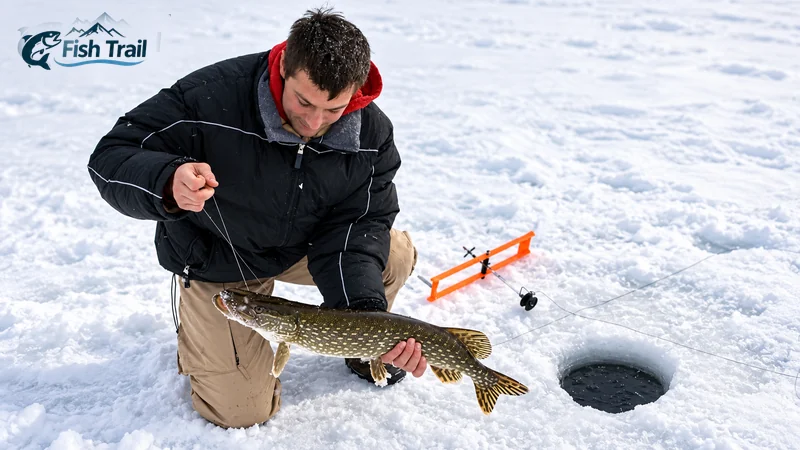 An ice-fishing tip-up is a stationary device placed over a prepared hole. Traditional models normally consist of a base or support, a spool of fishing line and a spring-loaded flag, usually red or orange. When a pike takes the bait and pulls line from the spool, the mechanism releases the flag and alerts the angler.
This method is widely associated with northern European and North American ice fishing. In Sweden, stationary bait fishing through the ice is commonly referred to as ismete, while American anglers usually call the devices tip-ups.
On some waters, anglers traditionally use several tip-ups at once, sometimes around ten per person. However, this should never be treated as a universal recommendation. The permitted number of lines varies considerably between countries, states and individual fisheries, and in some locations stationary bait fishing requires specific authorisation.
Tip-ups are normally distributed across a promising section of a frozen lake. Once the baits are in position, the angler watches for raised flags and responds to any takes. Although the method may appear passive, successful tip-up fishing requires observation, experimentation and a willingness to reposition the rigs when necessary.
Where and How to Set Tip-Ups
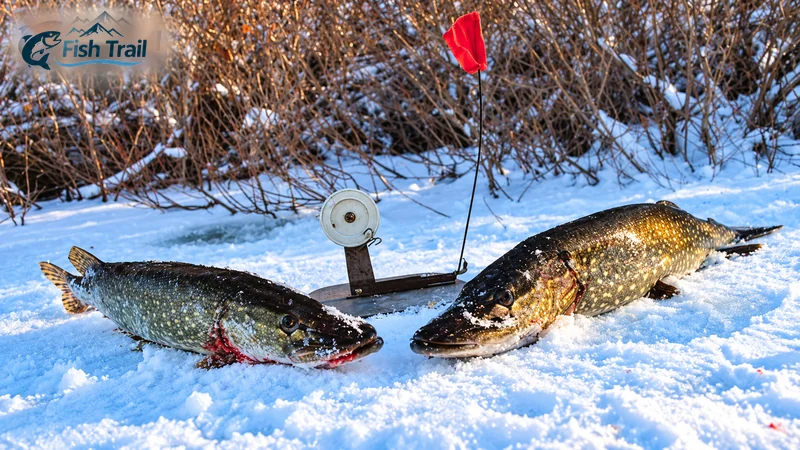 The first step is to identify areas that may hold pike. Weed edges, underwater drop-offs, submerged trees and transitions between shallow and deeper water are all worth investigating. If you are unsure where the fish are feeding, placing permitted rigs across several depths can help you locate them.
A practical starting point is to position tip-ups approximately 10 metres apart along a depth contour or from shallower water towards a drop-off. Rather than arranging every rig in a perfectly straight line, a slightly curved layout may make it easier to keep all the flags visible from one observation point.
If several tip-ups begin producing takes in one particular area, consider moving some of the remaining rigs closer to the productive location. In suitable circumstances, the distance between devices can be reduced to around 3-5 metres, provided they remain far enough apart to prevent crossed lines and allow fish to be played safely.
Pike frequently use favourable ambush positions, and more than one fish may visit the same productive area. Catching a substantial pike does not necessarily mean the location has stopped being worth fishing. If a particular weed edge, drop-off or submerged feature consistently attracts prey, other predators may also use it.
Large pike can dominate favourable feeding locations, but it would be incorrect to assume that one big fish will never tolerate another nearby. The important lesson is to remember where bites occur and investigate those positions again when conditions are similar.
Tip-up fishing should never involve setting the equipment and then ignoring it for hours. If several rigs remain untouched for a prolonged period, try changing their positions or adjusting bait depth. Sometimes moving a bait only a short distance can bring it into the path of a hunting fish.
For North American anglers, the same principle applies when spreading tip-ups along weed lines and underwater contours. The Minnesota Department of Natural Resources, for example, recommends experimenting with different depths when targeting northern pike rather than suspending every bait at the same level.
Choosing Bait for Pike Tip-Ups
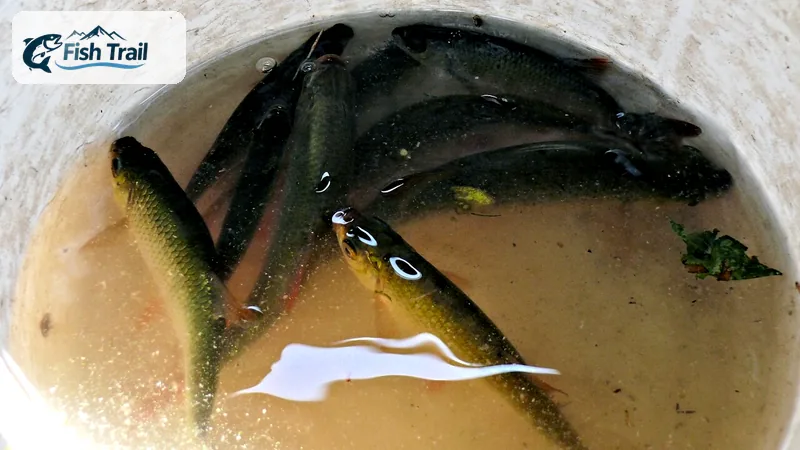 Natural fish baits have long been used for stationary winter pike fishing. Depending on the country and venue, anglers may use livebait or deadbait, although the legality of these methods varies considerably.
Where permitted, using baitfish naturally present in the lake can be a sensible starting point. Pike regularly hunt small fish that share their habitat, and choosing a familiar prey species may help match what local predators are feeding on.
Traditional European pike-fishing methods have involved a wide range of freshwater species, including:
- Crucian Carp – a hardy freshwater fish historically used as livebait in parts of eastern Europe.
- Gudgeon – a small bottom-dwelling fish found in many European rivers and lakes.
- Roach – one of the most familiar prey species for European pike.
- Weather Loach – a fish historically used as bait in some regions, although its conservation status makes collection inappropriate or unlawful in certain areas.
- Ruffe – a small freshwater fish that pike may encounter in suitable habitats.
- Perch – particularly smaller individuals that form part of the natural prey available to larger pike.
- Bleak – a slender, silvery fish common in many European freshwater systems.
- Rudd – another familiar prey species, especially in lakes with abundant aquatic vegetation.
This list describes species associated with traditional bait-fishing practices. It does not mean that every species can legally or responsibly be collected and used as bait. Conservation status, local fishing rules and restrictions on transporting live fish must always take priority.
Crucian carp, for example, are the focus of conservation efforts in parts of Britain, while weather loach populations have conservation significance in several European countries. These fish should not be regarded as routine bait choices simply because they have been used historically.
In North America, northern pike anglers often use different baitfish, including suitable shiners and suckers where state or provincial regulations permit. These can be effective on tip-ups, but the rules governing bait collection, transport and use vary between jurisdictions.
Using a species that naturally occurs in the water is often a good starting point, but pike are opportunistic predators. There is no reliable rule that a pike will refuse an unfamiliar baitfish simply because it does not normally occur in that particular lake.
The more important factors are bait presentation, location, size and the feeding behaviour of the fish.
Regional Restrictions on Livebait and Deadbait
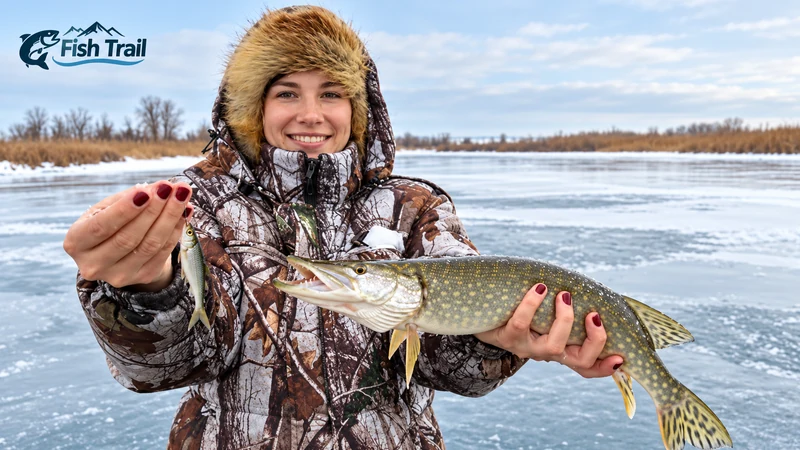 Before using natural fish baits, check the rules for your country and the specific water you intend to fish.
- England: Livebaiting is allowed under certain conditions, but baitfish must be caught and used in the same water. Some local byelaws and fishery rules prohibit livebaiting entirely. Moving fish between waters requires appropriate authorisation.
- Norway: Using live fish as bait is prohibited. Norwegian law also restricts the use of dead fish as bait in inland waters, generally allowing dead fish only when they originate from the same watercourse. Local rules and permits must still be checked.
- Finland: Ordinary ice fishing with one short rod is generally covered by public fishing rights, subject to restrictions. Fishing with multiple rods requires the relevant fisheries management fee and permission from the water-area owner. Stationary bait-fishing methods may be subject to additional requirements.
- Sweden: Stationary tip-up fishing is not automatically permitted under general public-access or free-fishing rights. The appropriate fishing licence or other authorisation is required, and rules vary between waters.
- United States: Regulations are determined by individual states and sometimes by specific lakes. For example, Minnesota generally allows two lines through the ice, with exceptions, and requires anglers using tip-ups to remain within sight and within the prescribed distance of their equipment.
Deadbait should not automatically be assumed legal wherever livebait is prohibited. Always check the local rules concerning both methods, permitted bait species, hook arrangements and the number of lines.
Responsible bait fishing also requires prompt bite detection. Pike may initially seize a bait sideways before repositioning it, but deliberately waiting until a fish has swallowed the bait can lead to deep hooking and serious injury.
Use appropriate hooks and rigs, remain close enough to respond to takes and keep every tip-up under active supervision.
Pike Fishing with a Short Winter Rod
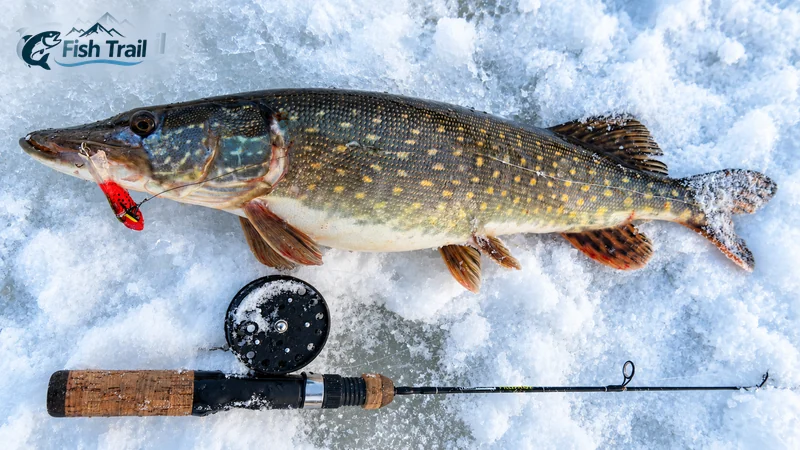 Fishing with a short winter rod offers a more active approach to catching pike beneath the ice. Instead of waiting for a predator to discover a stationary bait, you lower an artificial lure through a hole, control its movements and search for feeding fish.
For this method, anglers use a compact ice-fishing rod with enough backbone to work relatively heavy lures. Some traditional rods have simple reels and stiff bite indicators, while more modern designs resemble miniature spinning rods with line guides and fixed-spool or inline reels.
A rod with a firm action is useful when fishing heavy balancing jigs, vertical spoons or large soft-plastic lures. It should be strong enough to control the presentation and set the hook, while retaining sufficient flexibility to absorb the movements of a powerful fish.
A suitable reel is particularly convenient when frequently changing depth or moving between holes. It allows the angler to adjust line length quickly without repeatedly handling large amounts of cold, wet line.
Choosing Fishing Line and Traces
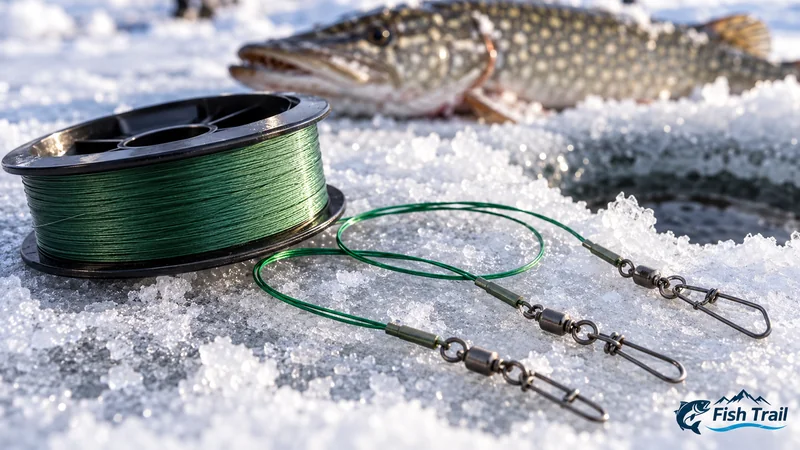 Traditional winter pike-fishing guides often mention monofilament diameters around 0.20-0.35 mm. However, the most suitable line depends on its actual breaking strain, the lure being used, the size of fish expected and the conditions at the venue.
The lighter end of this range may be unsuitable for substantial pike or heavy lures. Stronger line may be required when targeting large fish or fishing around underwater structure.
Using excessively thick line with a small lure can interfere with its action, while line that is too weak increases the risk of breakage. The goal is to achieve a sensible balance between strength and effective lure movement.
Monofilament remains popular because it is relatively easy to handle and has some stretch to cushion sudden movements. Braided line is another option, particularly when sensitivity is important, although certain braids can retain water and become difficult to manage in freezing conditions.
Whatever main line you choose, a reliable bite-resistant trace is essential when targeting pike.
Steel traces are a dependable option, and titanium traces are also widely used. Tungsten traces can be found in some European predator-fishing setups, although their construction and durability vary.
Some anglers prefer heavy fluorocarbon because it is less conspicuous underwater. However, fluorocarbon should not automatically be regarded as bite-proof. Even a 0.55 mm fluorocarbon trace can be damaged or cut by pike teeth, so a suitable wire or titanium trace is generally a more reliable choice for dedicated pike fishing.
Always inspect the trace, knots, swivels and lure clips before fishing. Cold conditions can make small problems harder to notice, and a damaged connection is an unnecessary risk when playing a strong fish.
How to Search for Pike with a Winter Rod
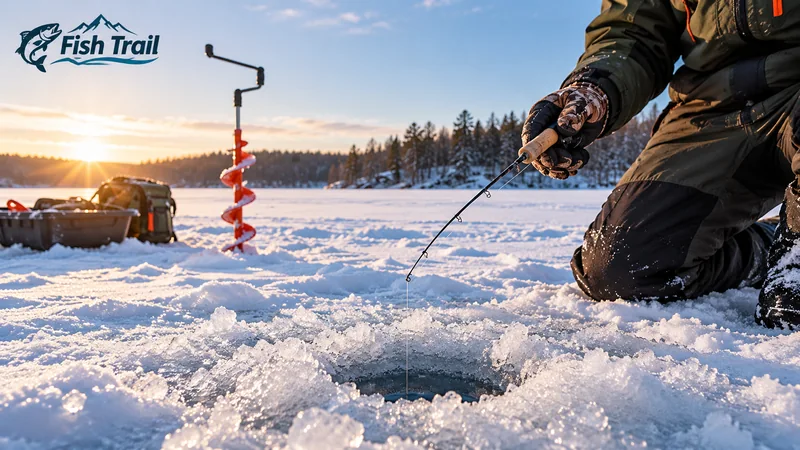 One of the main advantages of active lure fishing is mobility. Rather than spending the entire session in one place, it is often better to prepare several holes and investigate them systematically.
A practical approach is to drill approximately ten holes along a promising weed edge, depth contour or another area containing suitable structure. Once the holes are ready, return to the first one and begin fishing.
At each hole, try several lure presentations before deciding whether to move. Experiment with fast and slow lifts, different movement heights, short pauses, longer pauses and changes in fishing depth.
You should also try different lure shapes and colours. A balancing jig that works well on one day may attract little attention on another, even when the fishing location is unchanged.
If there are no bites or signs of interest after approximately 10-15 minutes, changing holes may be worthwhile. This is only a practical guideline: a known pike-holding location can sometimes reward additional patience, particularly when fish are reluctant to chase.
If a pike strikes, follows or is hooked at one hole, remember the location. It may be worth continuing to fish there for a little longer or returning later in the session. Productive areas can remain useful throughout winter when underwater structure and prey distribution are favourable.
The traditional artificial lures for this method are balancing jigs and vertical spoons. Both remain highly effective, but modern soft-plastic jigs have added another useful option to the winter pike angler’s tackle box.
Ice Fishing for Pike with Balancing Jigs
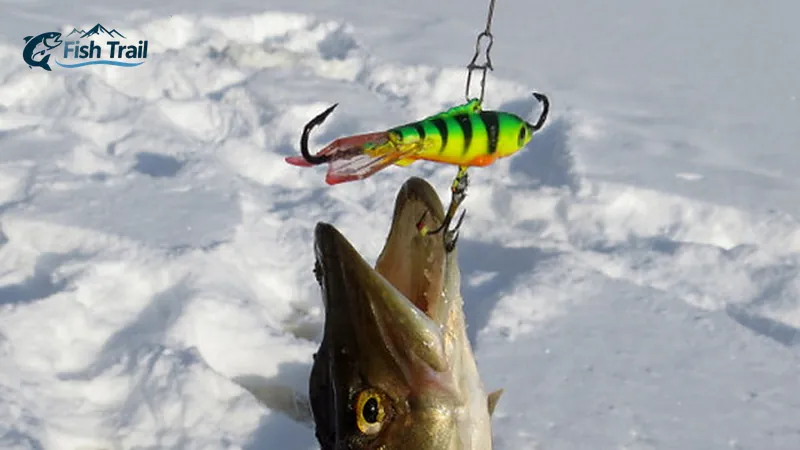 Balancing jigs are among the most popular artificial lures for catching pike through the ice. They come in many shapes, sizes and colours, allowing anglers to experiment with different presentations depending on water depth, visibility and fish behaviour.
A balancing jig normally hangs horizontally beneath the line. When lifted and allowed to settle, it glides away from the centre of the hole before returning towards its original position. This movement can resemble a small baitfish darting sideways, changing direction or attempting to escape.
Understanding this action is one of the keys to success. Rather than lifting the lure continuously, allow it to complete its glide before starting the next movement. Sometimes a pike will follow a lure for several seconds before striking as it slows down or changes direction.
What Size Balancing Jig Is Best for Pike?
A balancing jig measuring approximately 7-9 cm is a useful starting point for many winter pike situations. This size is substantial enough to attract larger predators while remaining manageable on suitable ice-fishing tackle.
Large perch may also attack balancing jigs of this size, although smaller perch are generally less likely to take them.
On smaller waters where pike do not usually reach substantial sizes, balancing jigs around 5-6 cm can also be effective. Conversely, larger lures may be worth trying when targeting big pike that regularly hunt sizeable baitfish.
There is no single perfect size. The best choice depends on local prey, water depth and how willing the fish are to chase an artificial lure.
Carrying several sizes allows you to adapt without relying on one presentation throughout the day.
Choosing the Right Balancing Jig Colour
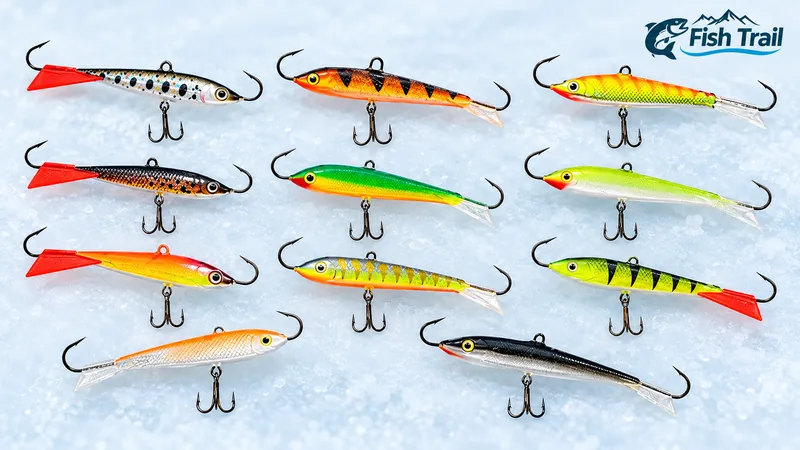 Colour selection should take account of underwater visibility and light conditions.
In stained water or at greater depths, bright colours such as fluorescent green, yellow and orange can help create a noticeable target. In clearer water, natural patterns resembling roach, perch or other baitfish are often a sensible starting point.
However, this is not an absolute rule. Pike may respond to bright colours in clear water or natural patterns in poor visibility, depending on the circumstances.
Carrying a small selection of contrasting colours is usually more useful than relying on a single favourite. If one lure produces no response, changing colour or presentation can sometimes make a difference.
Reliable Balancing Jig Manufacturers
Choosing your first balancing jigs can be difficult because of the large number of models available.
Several established manufacturers have produced popular balancing jigs for winter predator fishing, including:
- Rapala
- Nils Master
- Lucky John
These are useful names to consider, but a recognised brand does not guarantee success. Swimming action, balance, hook quality and suitability for the venue are more important than the label.
Begin with a few well-made models in different sizes and colours, then gradually develop your collection as you learn which lures perform best on your local waters.
Ice Fishing for Pike with Vertical Spoons
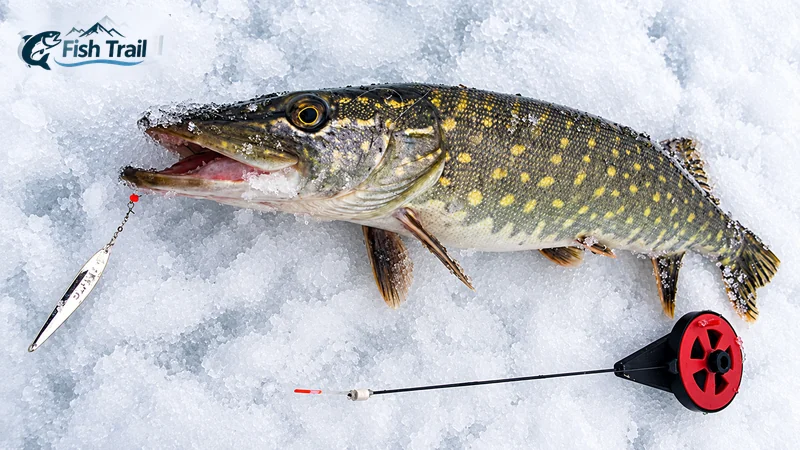 Vertical spoons are another classic choice for catching pike through the ice. Their main advantages are simple construction, a wide range of available designs and, in many cases, a lower price than more complex balancing jigs.
A lower price does not mean lower effectiveness. In experienced hands, a well-presented spoon can produce excellent results, even when pike are reluctant to chase other artificial lures.
Different vertical spoons behave differently underwater. Some fall almost directly beneath the hole, while others flutter, swing or glide away from the line. These variations can be important when selecting a lure for particular depths or feeding conditions.
How to Work a Vertical Spoon
Before fishing seriously with a new spoon, take some time to understand how it behaves. In shallow, clear water, you may be able to watch its movement directly. Even testing a lure in a large container of water can reveal how it falls, how far it moves sideways and how long it takes to settle after a lift.
A basic presentation involves lowering the spoon to the required depth, lifting it with a controlled movement and allowing it to fall naturally. Once the spoon has completed its movement, pause before lifting it again.
The pause is one of the most important parts of vertical spoon fishing. Pike often attack when a lure slows down, changes direction or appears to become an easy target. If the spoon is lifted again too quickly, the angler may interrupt the movement that would otherwise have triggered a strike.
When pike are actively feeding, quicker movements and shorter pauses may work well. During slower periods, controlled lifts and longer pauses can be worth trying. The ideal timing varies, so experiment rather than following one fixed pattern.
Good hooks and secure connections are equally important. Check the spoon’s hooks regularly, replace damaged components and ensure the trace remains in good condition.
Modern Ice Fishing for Pike with Soft-Plastic Jigs and Stinger Hooks
Although balancing jigs and vertical spoons remain popular, modern soft-plastic lures have become another valuable option for winter pike fishing.
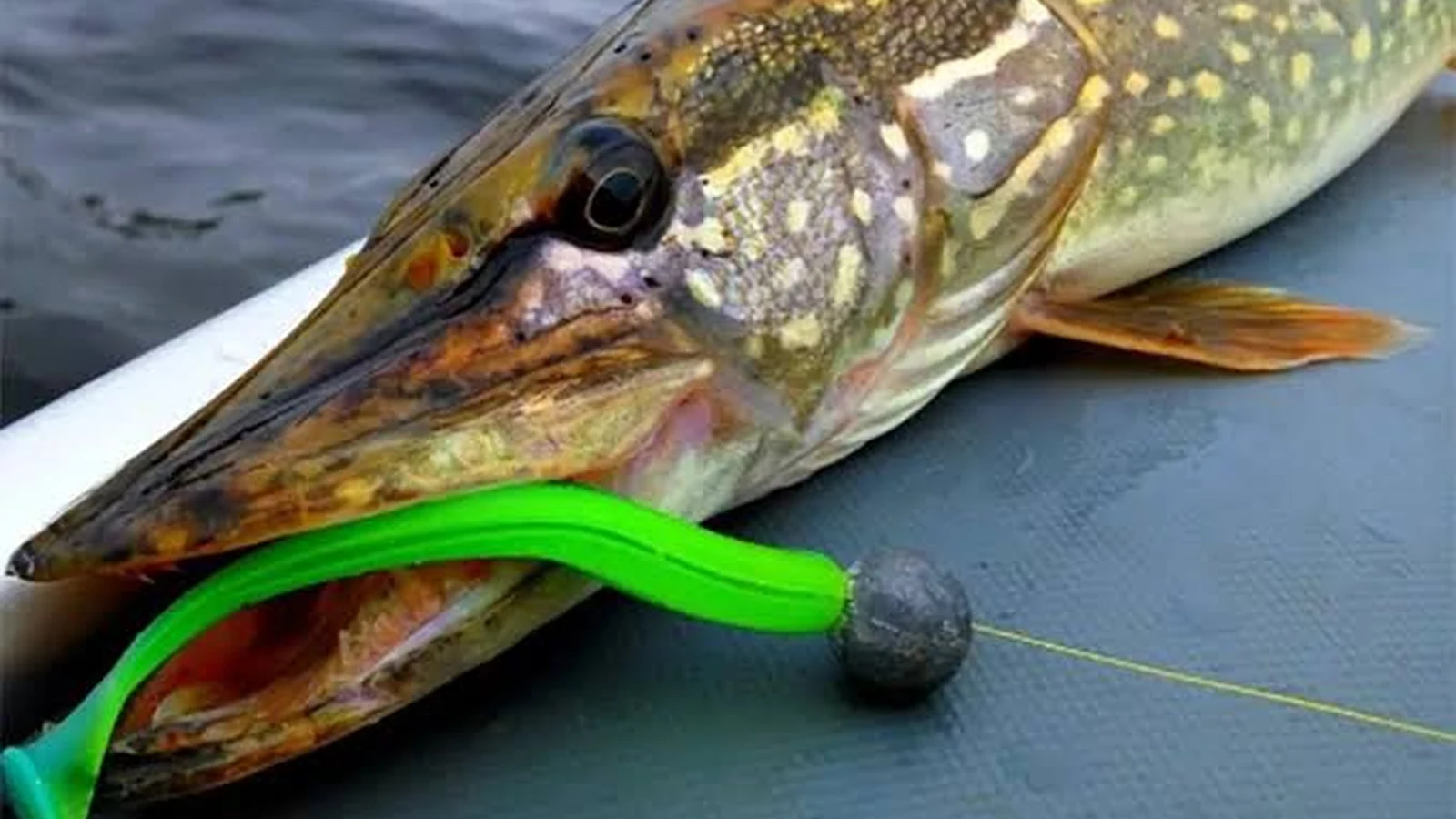
Large soft-plastic fish imitations, often called softbaits or swimbaits, can be presented vertically beneath the ice. Their flexible tails and relatively natural movement offer an alternative to the wider gliding action of a balancing jig or the fluttering fall of a metal spoon.
This method is used by European predator anglers, including those fishing in Finland, and it is also familiar to North American anglers who use soft-plastic swimbaits and jigging presentations for northern pike.
How to Rig a Soft-Plastic Lure for Pike
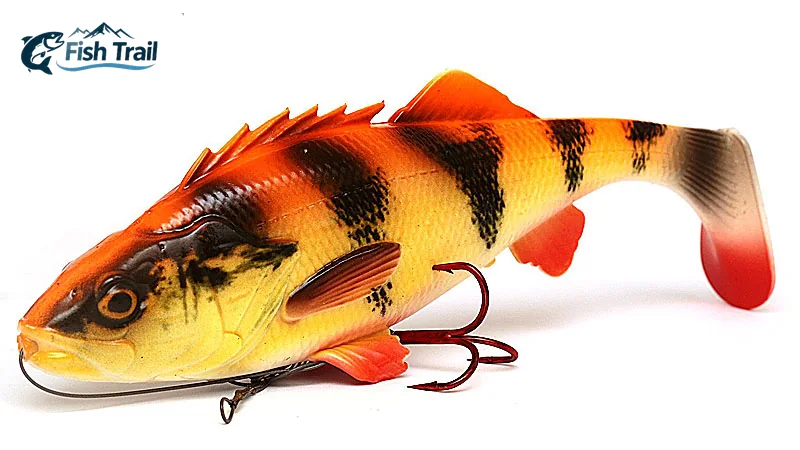 Large soft-plastic lures can be mounted on weighted jig heads or screw-in lure heads designed for softbaits.
A conventional jig head carries a fixed hook, while a screw-in system secures the lure at the nose and allows additional hooks to be attached using a short wire or suitable rigging arrangement.
For larger soft-plastic lures, anglers sometimes use a stinger hook, which is an additional hook positioned farther along the lure’s body. It can improve the chance of hooking a pike that strikes the rear or middle section without taking the lure completely into its mouth.
A typical setup may include:
- A soft-plastic baitfish imitation – often around 12-18 cm as a practical starting range for larger pike.
- A suitable weighted jig head or screw-in lure head – chosen to match the lure, depth and desired sinking speed.
- A short, securely attached stinger rig – positioned so the hook can engage a fish without restricting the lure’s movement.
- A reliable bite-resistant trace – usually suitable wire or titanium for protection against pike teeth.
The exact arrangement depends on the lure’s design and the hooks permitted at the venue. Some softbaits work well with a single main hook, while others are designed specifically for screw-in heads and separate stinger systems.
Avoid using more hooks than necessary. Additional hooking points may increase the chance of foul hooking and make unhooking more difficult. Choose a simple, proportionate rig that allows the fish to be handled safely.
How to Fish Soft-Plastic Jigs Through the Ice
Soft-plastic lures can be effective with relatively restrained movements. Lower the bait to the desired depth, lift it gently and allow it to settle while maintaining enough control to recognise a take.
Unlike some balancing jigs, a large softbait may not need sharp, aggressive movements to attract attention. A soft tail can continue moving after the lure stops, creating a subtle presentation that may appeal to a pike reluctant to chase faster-moving prey.
Start with controlled lifts and pauses, then experiment with larger movements if fish are not responding. You can also hold the lure at a particular depth with only slight rod-tip movements, allowing the tail to move naturally.
The best approach depends on lure design. Some softbaits have active paddle tails that respond to relatively small movements, while others rely on body movement or a slower fall.
When can soft-plastic jigs be particularly useful? They are worth trying when pike show little interest in balancing jigs or vertical spoons, when fish appear reluctant to chase fast-moving lures, or when you want to offer a larger baitfish profile with a different swimming action.
They are not automatically better than traditional winter lures. Their value lies in giving the angler another way to present a realistic target beneath the ice.
Where to Find Pike in Winter
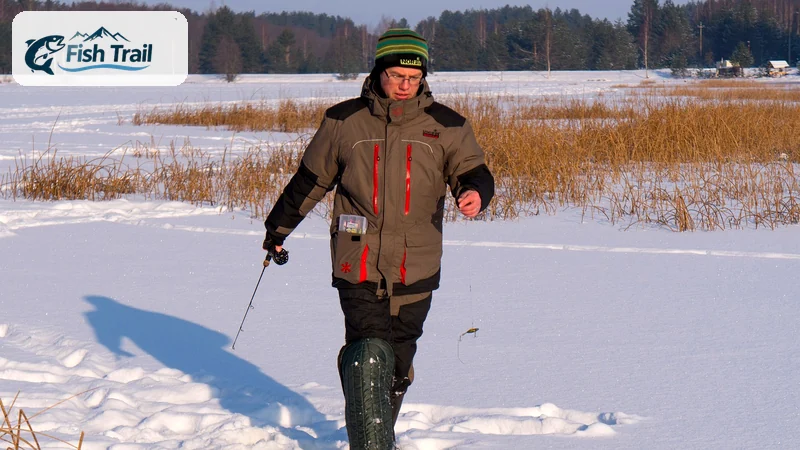 Finding productive locations is often more important than selecting the perfect lure. Even an excellent balancing jig, spoon or softbait is unlikely to catch fish if it is presented in an area where no pike are feeding.
The best places to search depend partly on the stage of winter. Pike may remain near shallow vegetation during early winter, use deeper structure during colder periods and return towards shallower feeding areas as spring approaches.
However, their movements are not identical on every lake. Water depth, oxygen availability, vegetation, underwater structure and the distribution of prey fish all influence where pike spend their time.
Where to Find Pike on First Ice
At the beginning of winter, pike often remain in the same general areas they occupied before the lake froze. Shallow bays, shoreline vegetation, reed beds and underwater drop-offs close to the bank can all provide attractive feeding locations.
These areas offer cover and opportunities to ambush prey fish. Weed edges can be especially productive because they form a natural boundary between vegetation and open water, allowing pike to patrol along the edge.
On some European lakes, the first ice forms during December, while farther north it may appear much earlier. For this reason, the actual stage of winter is more important than the calendar month.
Try investigating several holes along a weed line or depth transition rather than concentrating on one isolated spot. Pike may remain close to cover, but they can also move into nearby open water when hunting.
Where Pike Go During Midwinter
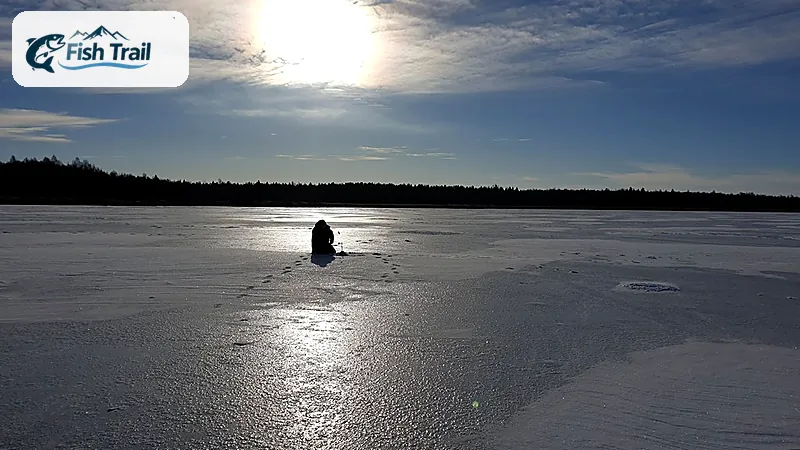 As winter progresses, pike may move towards deeper structure, particularly when prey fish leave the shallows or conditions become less favourable around decaying vegetation. Underwater slopes, deeper weed edges, channel margins and transitions between different depths can become productive places to search.
Some anglers associate midwinter pike with deeper holes or wintering areas used by other fish. Such locations are certainly worth investigating, especially when baitfish gather nearby. Larger pike, including fish weighing around 4-5 kg or more, may repeatedly use favourable deep-water feeding areas.
However, it is incorrect to assume that every large pike stays close to the deepest part of the lake throughout winter. Fish can move between habitats, and some remain in surprisingly shallow areas when suitable prey and oxygen are available.
The most useful approach is to investigate several depths and identify where baitfish concentrate. A deep hole with little food nearby may be less productive than a shallower weed edge containing plenty of small fish.
The Best Places to Search for Winter Pike
When exploring an unfamiliar lake, look for underwater features that offer cover, access to prey or a transition between different habitats.
Promising areas include:
- Depth changes and underwater ledges – steep slopes, drop-offs and natural steps along the bottom.
- Reed beds and aquatic vegetation – particularly the edges of remaining weed beds where predators can ambush prey.
- Submerged trees and snags – fallen branches, flooded bushes and other structures that provide cover.
- Underwater and shoreline structures – rocky points, channel edges and suitable areas near man-made features.
- Bays, river bends and channel margins – quieter areas where pike may avoid strong currents while remaining close to prey fish.
On rivers and connected lake systems, pike may also favour sheltered bays and the edges of flowing channels. However, these areas require special caution because moving water can weaken the ice, sometimes without any obvious warning.
Oxygen-Rich Areas in Midwinter
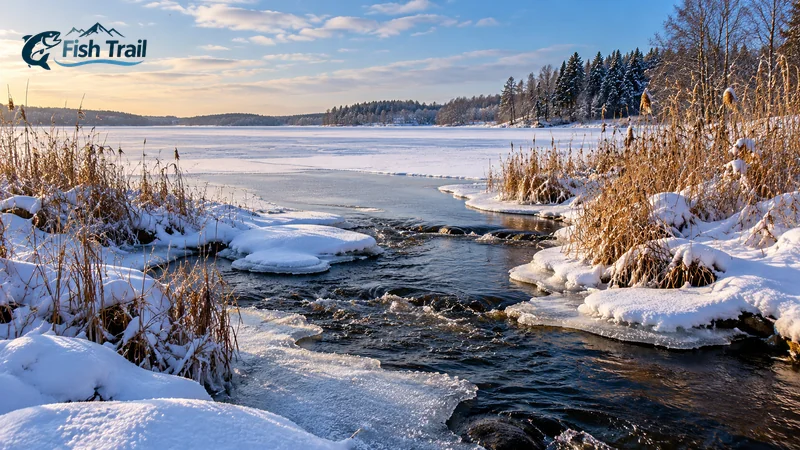 In some shallow or nutrient-rich lakes, prolonged ice cover can contribute to reduced oxygen levels, particularly when snow limits the amount of light entering the water and large quantities of vegetation decay.
Low oxygen can influence where fish gather and how actively they feed. Pike may move towards areas offering more favourable conditions rather than remaining in sections where the water has become unsuitable.
Potential sources of additional oxygen or water exchange include:
- Boundaries between slower and faster currents, where moving water may contribute to local mixing.
- Areas where streams or rivers enter a lake, potentially bringing water with different oxygen conditions.
- Underwater springs or groundwater inflows, which can affect local temperature and water chemistry.
These features do not guarantee higher oxygen levels in every situation. More importantly, they are dangerous places to access through the ice. Flowing water, underwater springs and inlets can create serious weaknesses even when nearby ice appears thick.
Use your knowledge of these features to understand possible fish movements, but never travel across potentially unsafe ice to reach them.
Where to Find Pike on Last Ice
Towards the end of winter, pike may begin moving back towards shallower areas as conditions change and prey fish become more active. Sheltered bays, remaining vegetation and shorelines close to deeper water can become attractive feeding locations.
Small fish, including young fish from the previous year, may increasingly occupy these areas as light and water conditions improve. Pike often follow their prey, so a shallow bay that seemed unproductive during midwinter can become worth investigating again.
Late winter can provide excellent fishing, particularly when pike are actively hunting before the spring spawning period. However, timing varies between regions, and any restrictions intended to protect spawning fish must be respected.
The final part of the ice season is also among the most dangerous. Thaws, melting snow and changing water levels can weaken ice rapidly. Never assume that ice is safe simply because it supported anglers a few days earlier.
Winter Pike Locations at a Glance
Pike do not stay in the same areas throughout winter. This quick-reference table summarises where to start looking as conditions change and how to adjust your approach.
| Winter Period | Where to Look for Pike | What to Try |
|---|---|---|
| First Ice | Shallow bays, reed beds, weed edges and nearby drop-offs | Work balancing jigs around vegetation and cover different depths with permitted tip-ups. |
| Midwinter | Deeper slopes, channel edges, remaining weed beds and areas holding baitfish | Search several depths, slow down your lure presentation and experiment with longer pauses. |
| Last Ice | Sheltered bays, shallower feeding areas and shorelines close to deeper water | Focus on prey-rich areas and try vertical spoons or soft-plastic jigs, but only where ice conditions are confirmed safe. |
These are general patterns, not fixed rules. Pike may remain in shallow water during midwinter or use deeper areas at any stage of the season. Always follow local fishing regulations and ice-safety guidance.
The Best Time for Ice Fishing for Pike
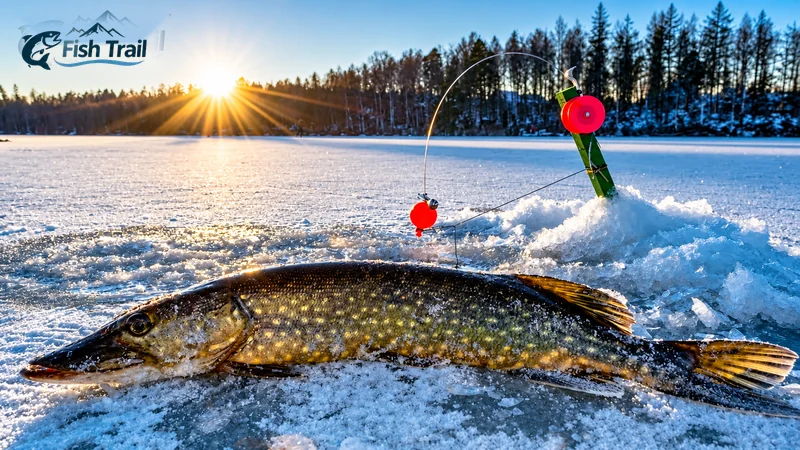 Pike can be caught throughout winter, from the beginning of the ice-fishing season until conditions no longer allow safe access. However, their feeding activity can vary significantly between different periods.
The first ice and late winter are often considered productive times because pike may be hunting actively around suitable feeding areas. Midwinter can be more challenging, particularly when prey fish become less mobile or conditions in shallow lakes deteriorate.
Even during the coldest periods, pike continue to feed. There may be days when they respond reluctantly to bait or artificial lures, while other days produce a short feeding window with several strikes.
A change in weather can sometimes coincide with improved activity. For example, anglers occasionally experience productive sessions during a winter thaw. However, a thaw does not automatically guarantee stronger feeding, and the response depends on conditions beneath the ice.
How Weather Affects Winter Pike Fishing
Weather is worth considering when planning a winter pike session, but its influence is more complicated than many traditional fishing rules suggest.
Overcast conditions can sometimes be productive, particularly when pike are hunting in relatively shallow water. Bright sunlight may change how predators and prey use different depths, while shifts in temperature or weather patterns can coincide with periods of increased activity.
Atmospheric pressure is another factor frequently discussed among anglers. Traditional advice often favours stable pressure lasting several days, sometimes around three, or gradual increases of approximately 1-2 hPa per day. Rapid changes are sometimes associated with less predictable fishing.
These figures should be treated as anglers’ observations rather than proven thresholds. There is no reliable rule that a small rise in pressure guarantees feeding activity or that a sudden pressure change always stops pike from biting.
Instead of relying entirely on the forecast, keep a simple record of conditions during your fishing sessions. Note the weather, approximate fishing depth, lure choice and time of each take. After several trips, you may begin to recognise patterns that are useful on your particular lake.
Watching the Activity of Baitfish
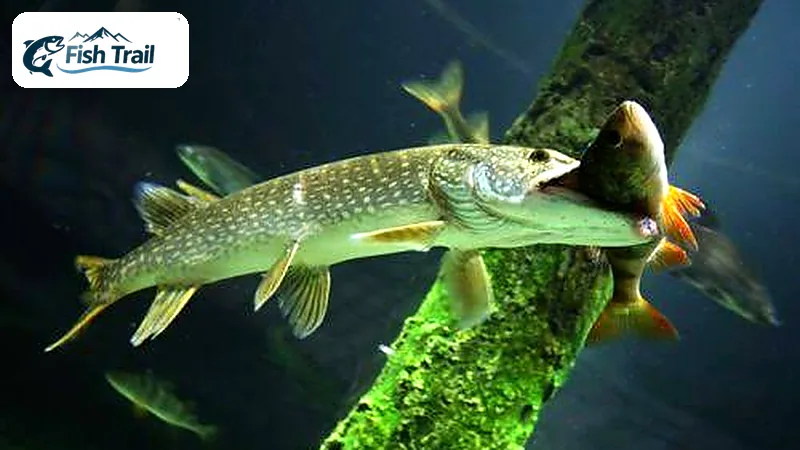 The behaviour of smaller fish can provide valuable information about potential pike locations. Roach, perch and other prey species may gather around particular depths, underwater features or areas containing suitable food.
Where prey fish concentrate, pike are often worth searching for nearby. If you notice repeated activity around a particular depth or structure, investigate the surrounding water with different lure presentations.
Some traditional advice suggests that when smaller, non-predatory fish are feeding actively, pike are less likely to be hunting, and that poor fishing for smaller species indicates increased predator activity.
This is not a dependable rule. Pike and their prey respond to many factors, and strong baitfish activity does not necessarily mean predators are inactive. The location and movement of prey are generally more useful clues than assuming an automatic relationship between the feeding activity of different species.
What Time of Day Do Pike Bite in Winter?
Pike can feed throughout the daylight hours during winter, and it is a mistake to assume that the best opportunities always occur at dawn or dusk.
Morning and evening can be productive, but pike may also become active around midday or during the afternoon. On some winter days, the most successful period occurs well after sunrise, when anglers have already spent several hours searching.
The timing of feeding periods varies between waters, and there may be long stretches with little activity followed by a short period when several fish begin hunting.
Pike can also feed in darkness, so the idea that their feeding completely stops after sunset is incorrect. However, night ice fishing involves additional safety risks and may be restricted by local regulations.
For most anglers, the best approach is to remain patient and flexible. Continue exploring promising areas, vary your lure presentation and pay attention to any signs of fish activity. A quiet morning does not necessarily mean the rest of the day will be unproductive.
Ice Safety and Responsible Pike Fishing
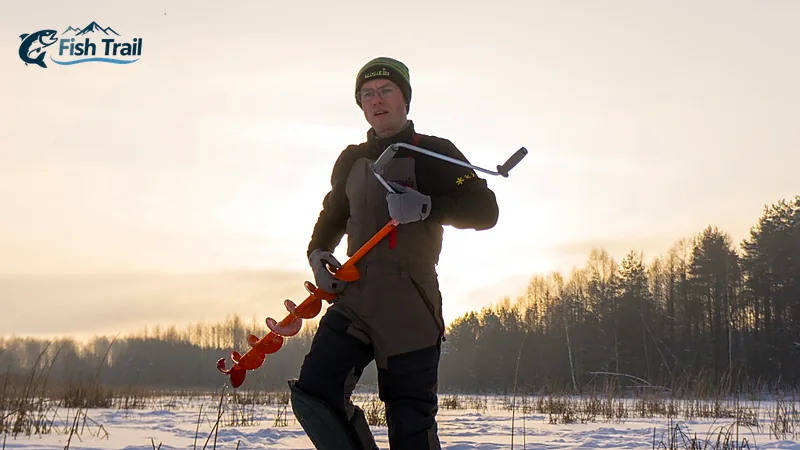 Ice fishing for pike can be highly rewarding, but safety must always come first. Ice conditions vary between countries, waters and even different areas of the same lake. Thickness alone does not guarantee that ice is safe, particularly where currents, springs, inlets or changing weather conditions are involved.
Only venture onto frozen water where access is permitted and reliable local assessments indicate that conditions are suitable. Avoid fishing alone, carry appropriate rescue equipment and make sure someone knows your intended location and return time.
Essential precautions include:
- Carrying ice picks and suitable flotation or rescue equipment.
- Wearing warm, layered clothing and footwear with good grip.
- Checking local ice reports and conditions before setting out.
- Avoiding inlets, outlets, areas with moving water and other potentially weak ice.
- Keeping a charged phone in a waterproof container.
- Having a clear plan for returning safely if conditions deteriorate.
No item of equipment or single ice-thickness measurement can guarantee safety. If conditions are uncertain, stay off the ice.
Responsible fish handling is equally important. Pike are powerful predators, but large fish can suffer unnecessary injury if they are dragged across sharp ice or handled carelessly in freezing temperatures.
Use suitable tackle to land fish efficiently, keep long forceps and cutters readily available, and ensure the hole is large enough for the fish you may encounter.
When releasing a pike, minimise its exposure to freezing air and avoid placing sensitive tissues directly against ice or snow. Wet gills, eyes and skin can be damaged in severe frost, so unnecessary handling and prolonged photography should be avoided.
Be particularly careful when removing multiple hooks from tip-up rigs or soft-plastic lures with stingers. Additional hooks may make unhooking more complicated and increase the chance of accidental injury to both fish and angler.
Finally, check local regulations concerning fishing permits, the number of rods or tip-ups, permitted baits, hook arrangements, catch limits and protected waters. Methods that are legal on one lake may be prohibited on another.
Every Fishing Trip Teaches You Something
Ice fishing for pike is a fascinating combination of patience, observation and practical skill. Whether you enjoy watching a tip-up flag rise or actively searching with a short winter rod, both approaches offer exciting opportunities to catch one of the most impressive freshwater predators found in Europe and North America.
Successful winter pike fishing depends on understanding the fish and adapting to the conditions. Choose reliable tackle, carry different lures, experiment with presentations and remember the underwater features that produce bites.
Balancing jigs and vertical spoons remain excellent options, while modern soft-plastic lures provide additional possibilities when pike respond better to a different profile or swimming action. Learning how to control each presentation is often more important than choosing a particular brand.
Finding the right location can make an even greater difference. Weed edges, underwater drop-offs, submerged trees and areas holding prey fish can all produce results, although the best positions may change throughout winter.
Winter pike fishing takes time to master, and no single article can cover every situation you will encounter on the ice. Nevertheless, these principles provide a strong foundation for selecting tackle, finding fish and developing more effective techniques.
Above all, respect the fish, follow local regulations and never compromise on ice safety. With preparation, patience and a willingness to learn, winter pike fishing can produce some truly memorable experiences.
Tight lines!