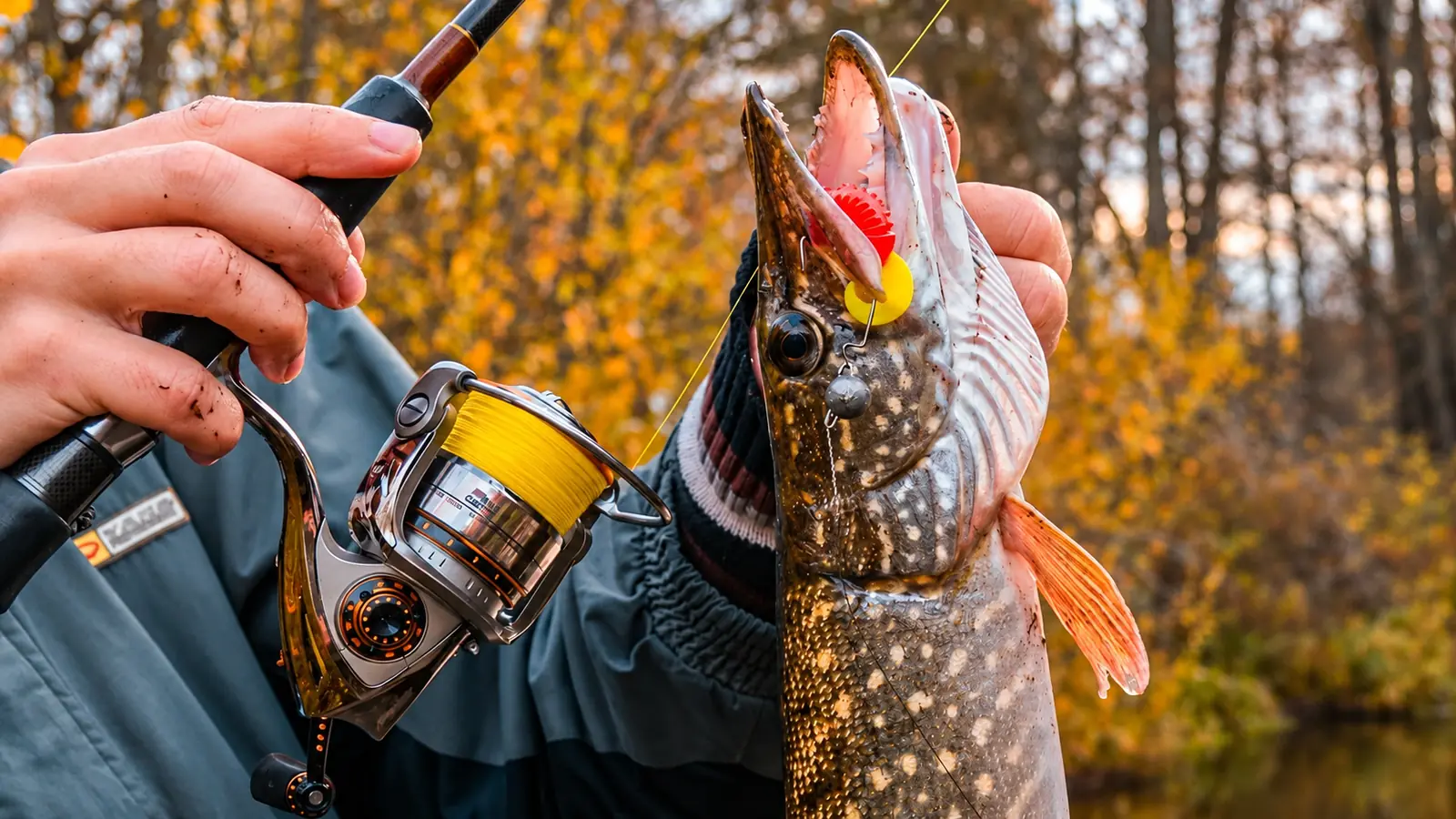
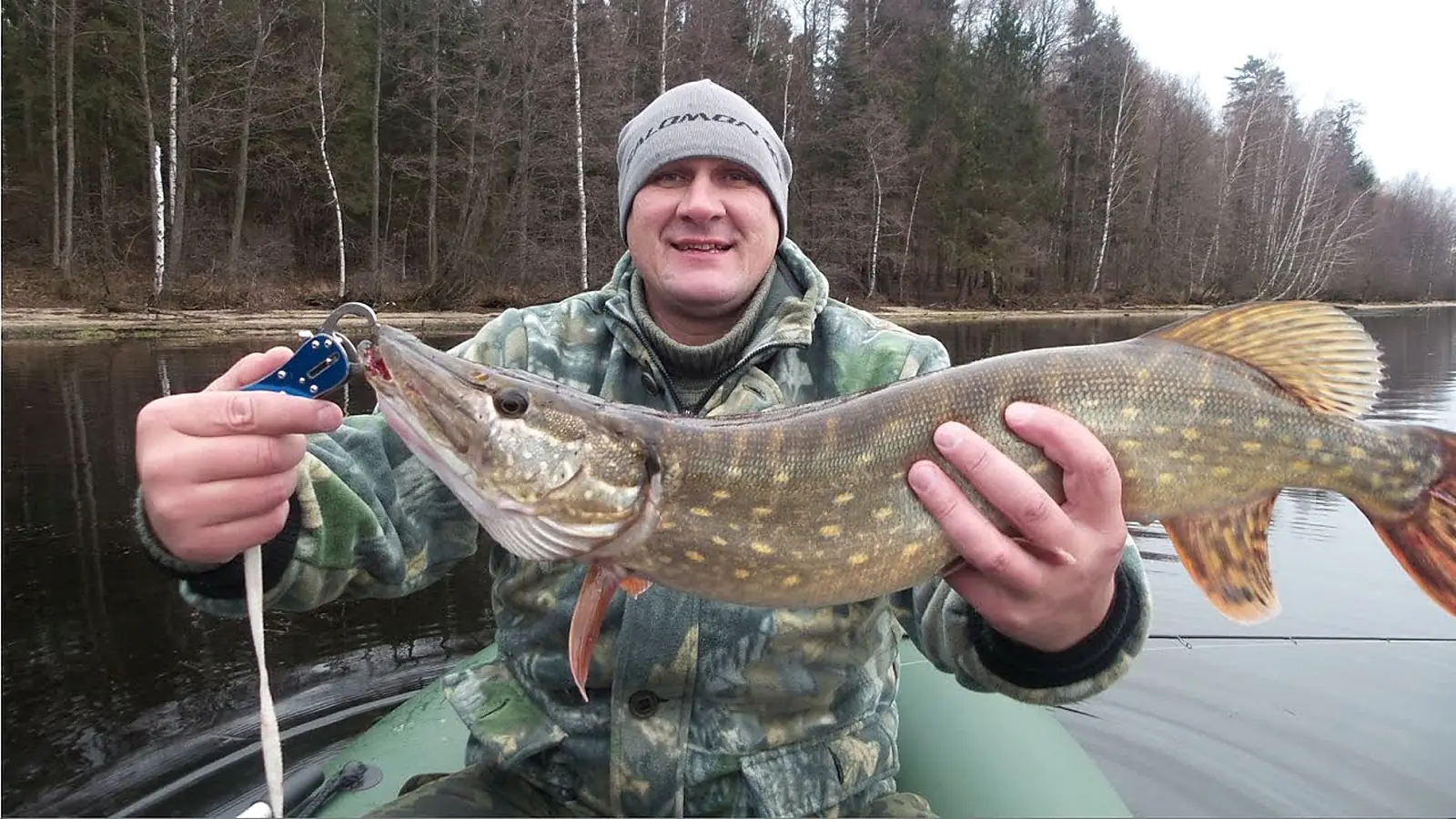
December is an exciting time for pike fishing, although the experience can be very different depending on where you live. In northern Europe, anglers may already be drilling holes through frozen lakes, lowering balancing jigs and watching for raised tip-up flags. Meanwhile, across Britain and much of western Europe, spinning rods are still in regular use, and pike continue to be caught from the banks of rivers, canals and reservoirs.
The arrival of winter changes the fishing, but it doesn’t bring it to an end. Pike remain active in cold water, and December can produce excellent catches for anglers who know where to look. Familiar autumn locations may still hold fish, while other areas become productive as vegetation dies back and shoals of smaller fish shift towards their winter feeding grounds.
The key is understanding these changes and adapting your tactics. Whether you’re casting a soft-plastic lure along a British canal or working a balancing jig beneath the first ice, December rewards anglers who pay attention to underwater structure, prey movements and the way pike respond to different presentations.
What Changes for Pike in December
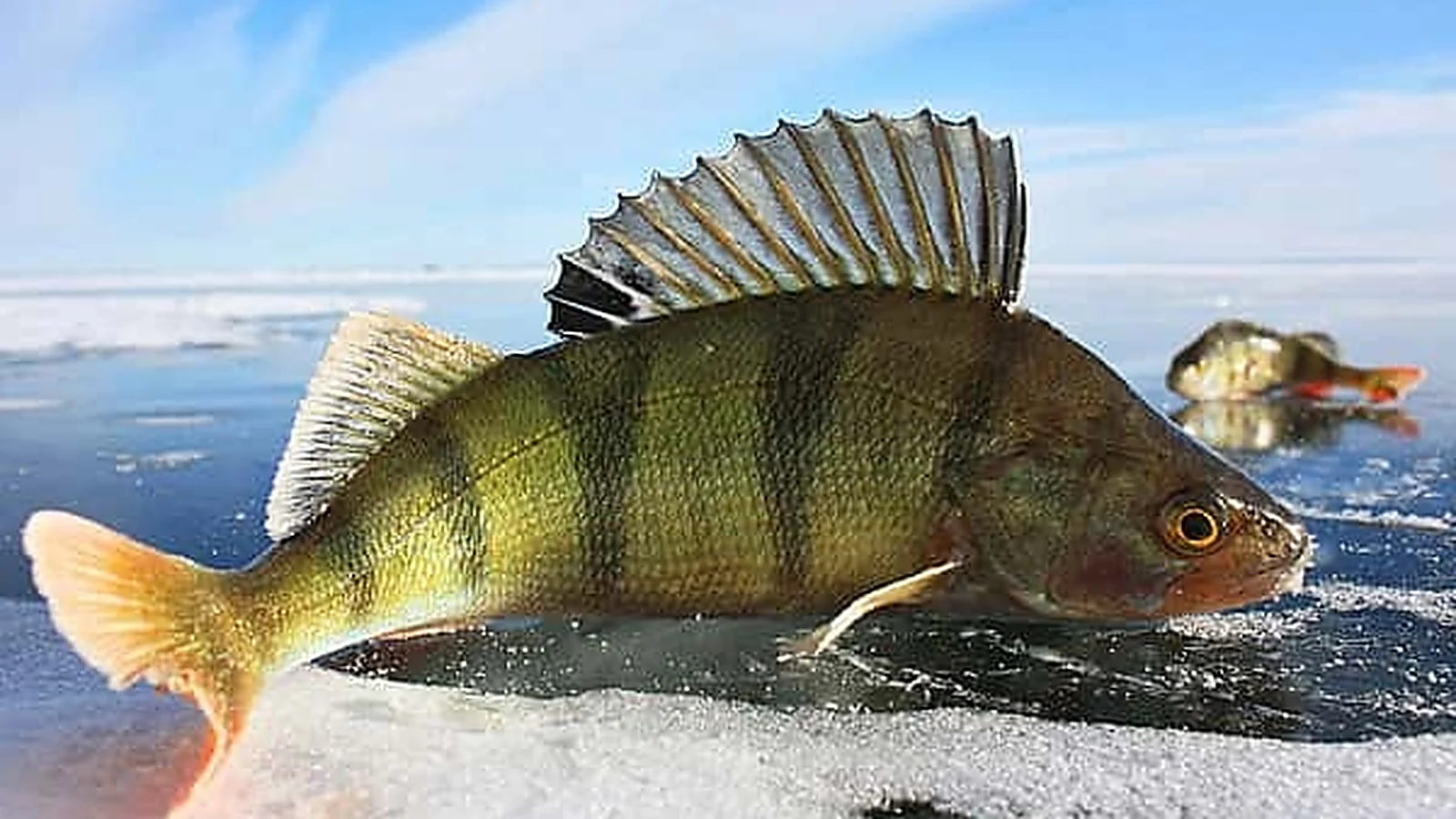
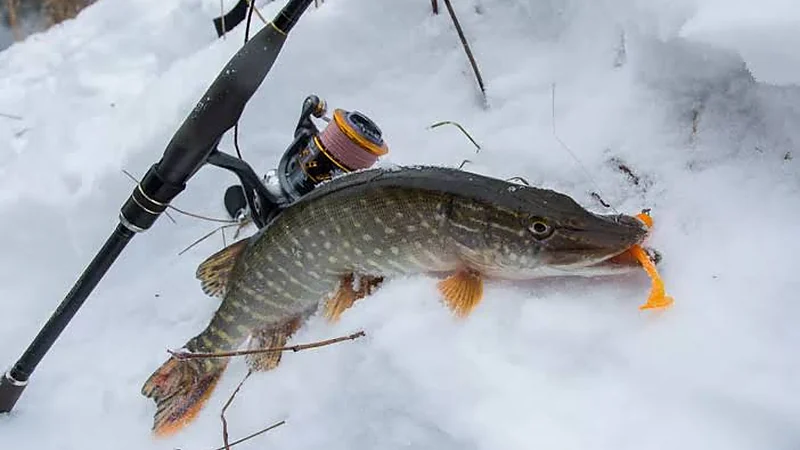 As water temperatures fall, the underwater environment begins to change. Aquatic plants gradually die back in many lakes, reducing the cover that smaller fish relied on during summer and autumn. Roach, perch and other prey species often gather around favourable depths and underwater features, and pike adjust their hunting areas accordingly.
This doesn’t mean every pike immediately leaves the shallows. Reed beds, submerged trees and remaining weed edges continue to provide excellent ambush points wherever prey fish are present. On other waters, pike become easier to find along deeper slopes and channel edges, where smaller fish gather as winter develops.
Cold water also influences how anglers should present their lures. A pike that ignores a fast-moving bait may respond to a slower retrieve or a lure that pauses close to its holding position. However, there’s no reason to fish every lure at a crawl. When pike are actively hunting, an energetic presentation can still trigger an aggressive strike.
An important lesson from modern research is that pike do not simply become inactive during winter. Tracking studies have recorded substantial movement even during cold periods, with greater activity during daylight in the waters studied. For anglers, this reinforces a practical point: don’t assume the fish have stopped feeding just because the weather is cold. Find where they’re hunting and present your bait effectively.
December also marks different stages of winter across Europe. In northern Finland, ice fishing may already be established, while a British canal remains completely open. This makes the choice between winter rods and conventional spinning tackle a matter of local conditions rather than the calendar.
Where to Find Pike in December
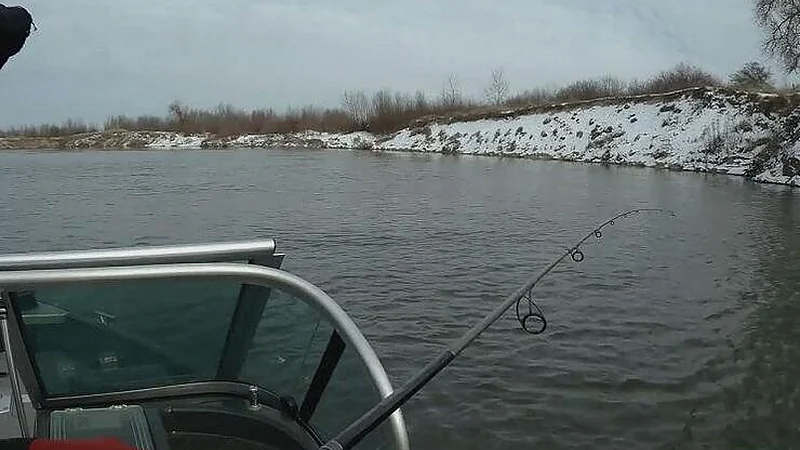 The best place to begin is often a location that produced pike during late autumn. If you regularly caught fish beside a reed bed, submerged tree or underwater drop-off in November, check that area again in December. Good feeding locations frequently remain productive as winter approaches, particularly when smaller fish continue using them. For more on finding these late-autumn feeding areas, see our guide to pike fishing in November.
Shallow water deserves attention first. Reed beds, sheltered bays and the edges of remaining vegetation are excellent places to search, especially where depths of around 1-2 metres lie close to deeper water. Pike use these boundaries to ambush prey moving between cover and open water. Make your first casts along the outside of the vegetation, then gradually explore farther from the bank.
Submerged trees and fallen branches provide another reliable starting point. A snag positioned near a drop-off gives pike shelter and access to different depths. Work a lure past the outer branches, allowing it to pass close enough to attract a fish without burying the hooks in the timber. When fishing with natural bait, position the rig alongside the structure rather than directly inside it.
If the shallows produce no activity, move towards deeper features. Underwater slopes, holes, channel edges and the entrances to deeper depressions are all worth investigating. Rather than concentrating on the deepest point, search along the transitions. A slope descending from 2 to 5 metres, for example, allows you to explore several feeding depths within a relatively small area.
Large pike frequently use these deeper features, but don’t overlook shallow feeding grounds when targeting trophy fish. A substantial pike can hunt surprisingly close to the bank, especially where a shallow bay borders a deeper channel and holds plenty of prey.
On smaller lakes and ponds, you can often explore several likely locations during a single session. Begin with the vegetation and submerged cover, then work towards deeper areas. If you already know the bottom contours, use that knowledge to concentrate on productive transitions rather than fishing randomly across the lake.
Large reservoirs require more preparation. Identify underwater points, old river channels, steep banks and bays connected to deeper water before arriving. A depth map is extremely useful here. It allows you to select a manageable area with several promising features instead of spending the entire day moving between distant locations.
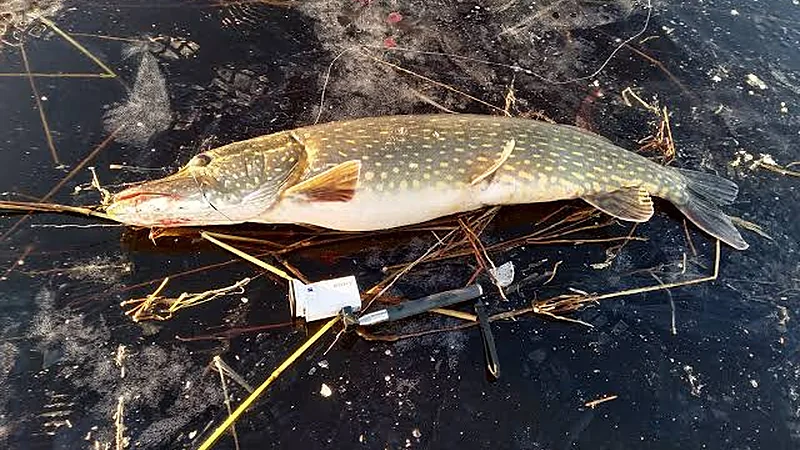 Rivers and canals offer slightly different opportunities. On rivers, begin with deeper outside bends, backwaters, slack water beside the main current and sheltered margins containing underwater cover. In December, rising water levels can push fish towards quieter areas where they can hold position without fighting the strongest flow.
On canals, concentrate on depth changes, bridges, remaining vegetation and stretches containing suitable cover. Work systematically along the bank, paying particular attention to places where small fish gather. A productive canal stretch doesn’t need to be particularly deep; it needs to offer pike a reliable opportunity to hunt.
One detail worth remembering is that catching a pike doesn’t mean the location is finished for the day. Good ambush points can attract several predators, and another fish may begin using the same area after the first has been caught. If a particular weed edge or drop-off produces a strike, give the surrounding water proper attention before moving elsewhere.
When Is the Best Time for Pike Fishing in December
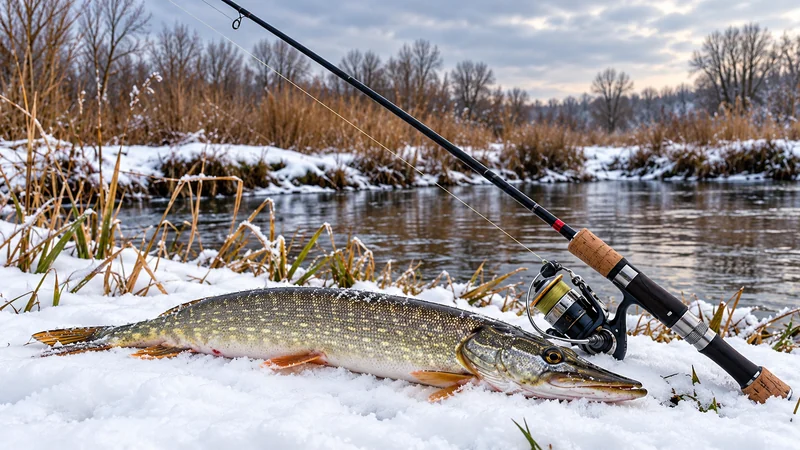 Early morning and late afternoon have traditionally been considered productive periods for pike fishing. Both can still provide excellent results in December, but winter fishing isn’t limited to these familiar feeding windows. Pike also hunt during the middle of the day, and some sessions produce their best action well after sunrise.
With daylight hours already short, there’s little reason to abandon a promising location because the morning has been quiet. Plan to spend enough time on the water to cover different feeding periods. If you’ve found an area holding prey fish, returning to it later in the day can be more productive than constantly moving to unfamiliar spots.
Weather deserves attention, particularly on rivers. A moderate change in water level can alter where fish gather, while severe flooding can make the usual fishing locations difficult to approach or fish effectively. On clear, shallow waters, overcast conditions are often a good choice because reduced light can help pike approach their prey. During bright conditions, concentrate on cover and slightly deeper water where predators can remain concealed.
Rather than chasing a supposedly perfect atmospheric pressure reading, focus on conditions that directly affect your fishing: water clarity, current, available cover and the location of prey fish.
The first half of December often provides good fishing on lakes where it coincides with the first ice. Pike can continue hunting around the same weed edges and shallow features that were productive during late autumn. As ice cover becomes established and prey distribution changes, exploring additional depths becomes increasingly important.
But the date alone doesn’t determine the best fishing. In Britain, a canal may remain productive throughout December, while farther north a lake might have been frozen for several weeks before the month begins. Follow the progression of local conditions, and you’ll have a much clearer idea of where to find the fish.
Pike Fishing on Open Water in December
Across Britain and western Europe, December offers excellent opportunities for conventional pike fishing. Two methods deserve particular attention: actively searching with artificial lures and presenting natural deadbaits in likely feeding areas.
Lure fishing is ideal when you want to cover water and locate fish. Deadbaiting is particularly useful when you’ve identified a promising spot and want to keep a bait close to the area where pike are hunting.
Lure Fishing: What to Use and How to Retrieve It
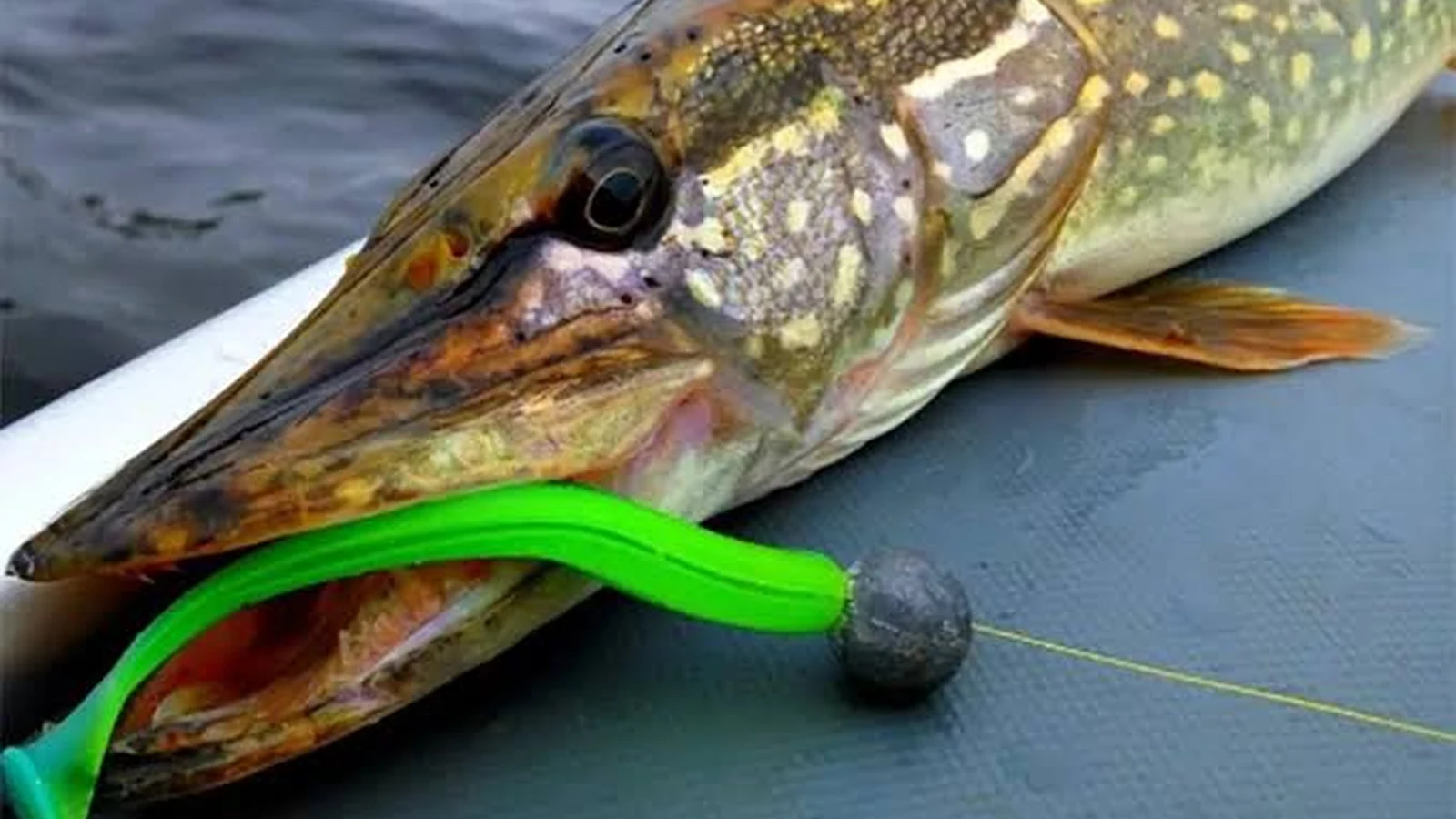
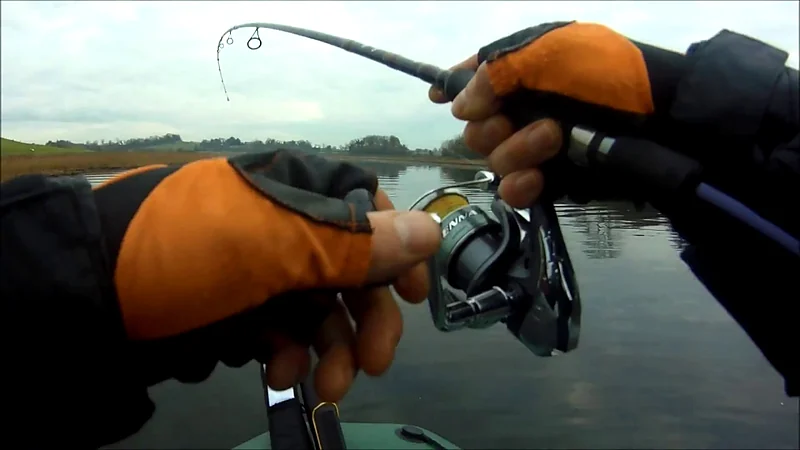 Soft-plastic shads are among the most versatile December pike lures. A baitfish imitation around 12-18 cm is a practical starting point, while larger softbaits can be used with heavier tackle when targeting substantial fish. Their main advantage is the control they give you over fishing depth. You can retrieve a shad steadily along a weed edge, let it sink towards a drop-off or work it with controlled lifts above the lakebed. A paddle-tail continues producing movement at relatively slow speeds, making it particularly useful in cold water. Our guide to scented pike softbaits includes shads and curly tails that keep working during slow retrieves, with recommended sizes and rigs for each.
Start with a steady, moderate-to-slow retrieve and keep the lure close to likely holding areas. On deeper water, allow the bait to sink before retrieving it with controlled lifts and pauses. If a pike follows without striking, try briefly increasing the retrieve speed or letting the lure fall before continuing. These changes can trigger a fish that has shown interest but hasn’t committed to an attack.
Suspending jerkbaits and hard-bodied lures are another excellent choice, particularly beside vegetation and submerged timber. Their ability to remain near the same depth during a pause is extremely useful in cold water. Try two or three short twitches followed by a pause of several seconds, giving the lure time to hang beside the cover. The sudden change from movement to stillness often provides a convincing opportunity for a following pike.
Spoons also deserve a place in the December tackle box. A medium or large spoon can cover water efficiently and is particularly useful when searching open stretches or working along deeper margins. Natural metallic finishes are good starting choices in clear water, while a darker silhouette or contrasting colour can stand out in heavily coloured conditions.
For general bank fishing, a spinning rod around 2.1-2.7 metres long is suitable for many situations, provided its casting weight matches the lures being used. Braided main line provides good contact with the lure, and a reliable wire or titanium trace protects against pike teeth. Don’t sacrifice trace strength in an attempt to make the presentation less visible. A bitten-through leader means losing the fish and potentially leaving hooks in its mouth.
When fishing an unfamiliar venue, make your first casts along visible cover before working across the transition into deeper water. Explore different retrieve depths and angles, then move to the next promising feature if there’s no sign of activity. On a known hotspot, try a contrasting lure or presentation before leaving. A pike that ignores a fast-moving spoon may respond immediately to a softbait passing more slowly through the same area.
Deadbait Fishing for Winter Pike
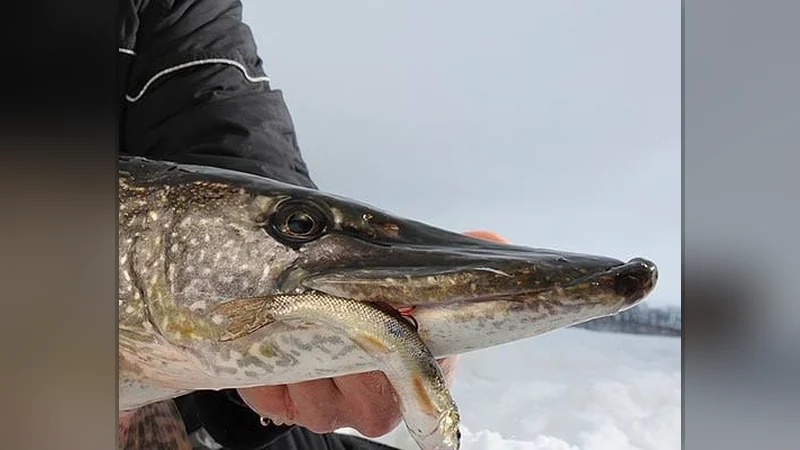 Deadbaiting is one of the established methods for winter pike fishing in Britain. Instead of actively retrieving a lure, the angler presents a dead fish close to a likely hunting area and waits for a predator to investigate it.
Mackerel, herring, sardines, smelt and sprats are all commonly used deadbaits. Mackerel is particularly convenient because its tough skin holds well during casting, while smaller fish such as sprats and smelt are useful on canals and other confined waters. Sardines provide an oily bait, although their softer flesh requires more careful handling.
A bait around 10-15 cm long is a reasonable starting size for general fishing. Larger baits are also worth carrying on waters containing substantial pike, particularly when targeting them with dedicated predator tackle. Whatever the size, make sure the bait can be presented securely and that the hooks remain positioned for effective, prompt hooking.
A running leger rig is a straightforward option for presenting a deadbait on or close to the bottom. Position the bait alongside a weed edge, at the foot of a drop-off or near submerged cover where pike are likely to pass. If the bottom is covered in thick weed or soft debris, a float or float-leger arrangement allows you to suspend the bait above the obstructions.
An 11-12 ft predator rod with a test curve around 2.75-3.25 lb provides a useful general-purpose setup for many British waters. Combine it with strong main line, appropriate hooks, a reliable wire trace and effective bite indication. A properly constructed trace around 30-45 cm long is a sensible starting point for conventional deadbait rigs, provided the complete setup suits the fishery and bait presentation.
Prompt bite detection is essential. Remain close to your rods and respond when a float moves steadily away, a drop-off indicator releases or a bite alarm signals a take. Deliberately waiting for a pike to swallow the bait increases the risk of deep hooking and serious injury.
On an unfamiliar lake, try positioning one bait near the remaining vegetation and another along a deeper transition, where the number of permitted rods allows. This gives you a practical way to compare locations without repeatedly disturbing the water. If one position produces takes, concentrate your efforts along the same feature.
For more advice on bait selection and natural-bait methods, see our guide to autumn pike fishing with live and dead bait.
Pike Fishing in December Through the Ice
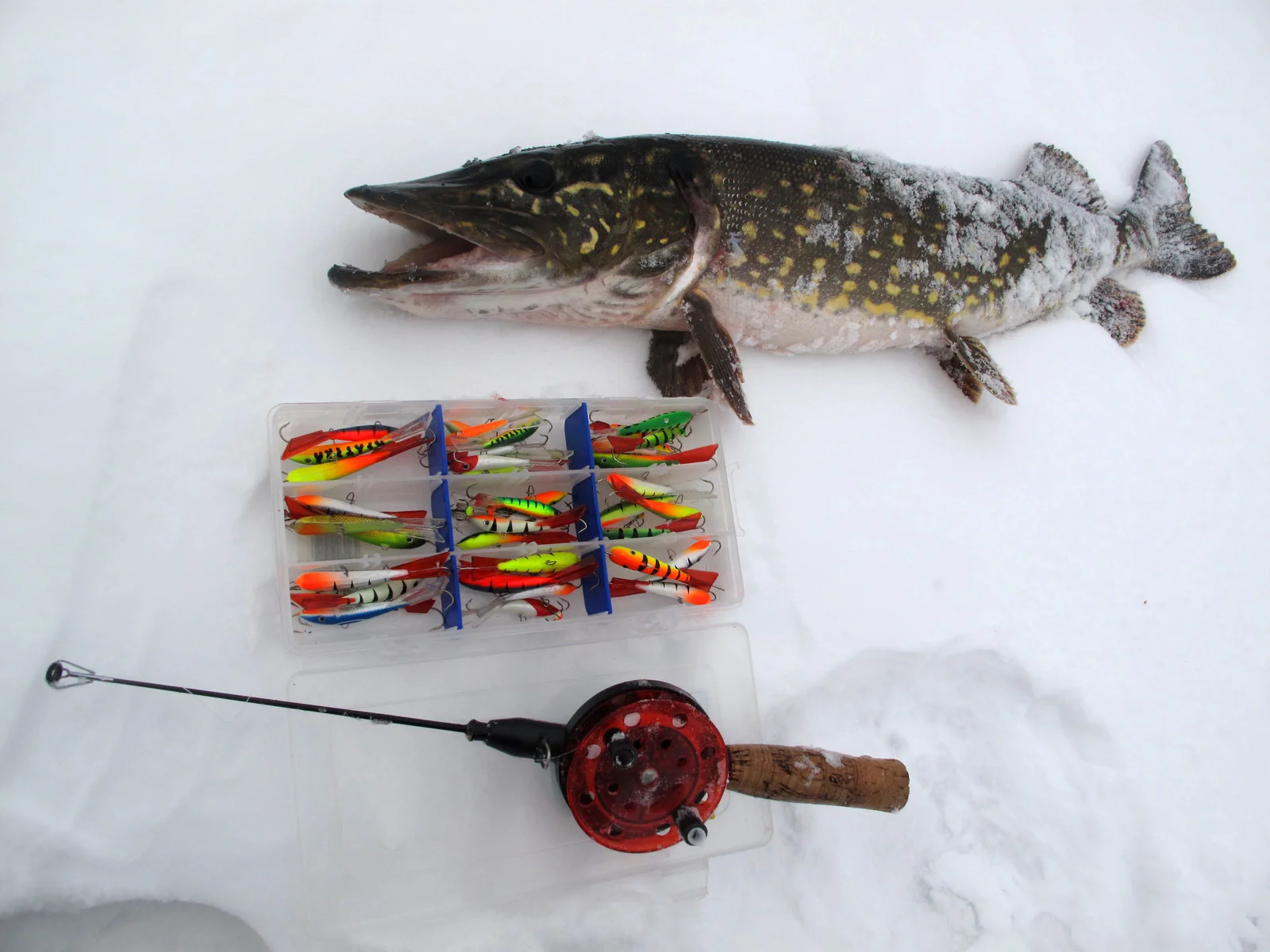
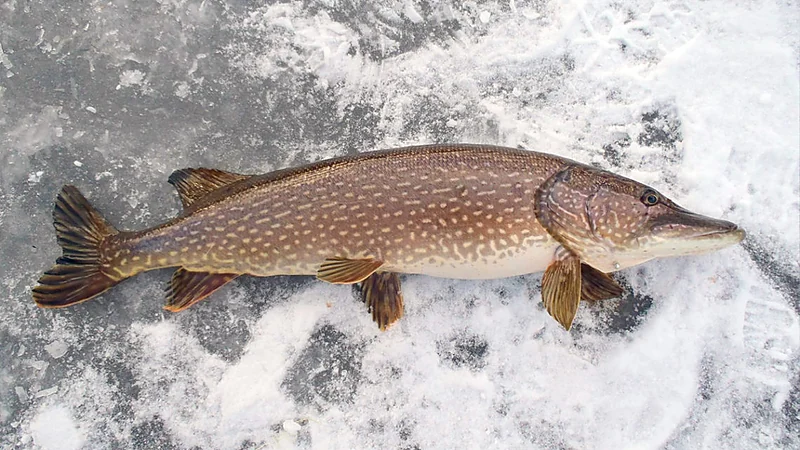 Where December brings reliable ice cover, pike fishing takes on a completely different character. Spinning rods give way to short winter rods, balancing jigs, vertical spoons and stationary bait-fishing devices. The basic task remains the same, though: locate suitable feeding areas and present a bait where the fish are hunting.
On a lake that has only recently frozen, begin with familiar late-autumn locations. Reed beds, shallow bays, submerged trees and nearby drop-offs are excellent starting points. If these places held pike before freeze-up, they deserve attention once the ice has been independently confirmed safe and access is permitted.
A depth map becomes particularly valuable when fishing through the ice. It allows you to identify underwater slopes and other features before drilling holes. Select a manageable area containing both cover and changing depths, then explore it systematically rather than spreading your efforts across the entire lake.
Pike Fishing with Tip-Ups
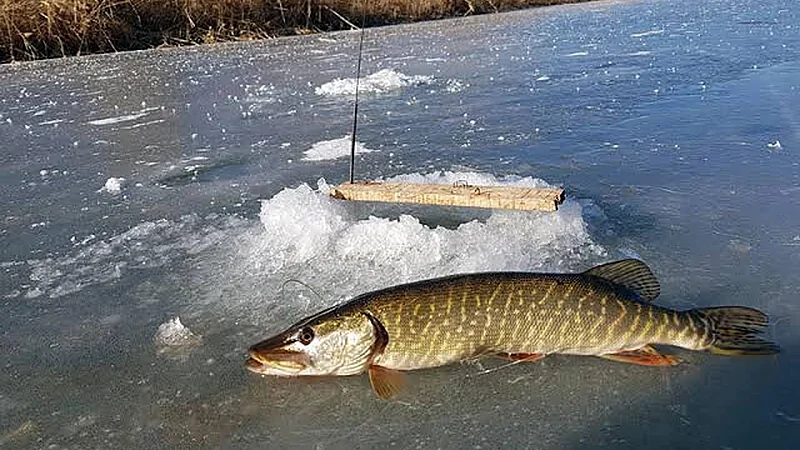 Tip-ups are one of the traditional methods for catching pike beneath the ice. A natural bait is suspended through a prepared hole, while a flag or similar indicator signals when a fish takes it. In Sweden, this style of stationary ice fishing is commonly associated with ismete.
Where local regulations permit several devices, arranging tip-ups approximately 5-10 metres apart can be a useful starting approach. Begin along a weed edge or depth contour, placing baits at different levels rather than presenting every fish at exactly the same depth. The aim is to discover where pike are hunting, not simply to cover the largest possible area.
Imagine a shallow bay descending towards deeper water. Position the permitted rigs across that transition, with some baits close to the edge of remaining vegetation and others farther down the slope. If repeated takes occur around one particular depth, move the unproductive rigs towards that area. This is one of the simplest ways to turn scattered information into a productive fishing pattern.
Traditional European bait choices include roach, small perch, gudgeon and other permitted prey species. A manageable baitfish that can be presented securely at the chosen depth is a sensible starting point. Livebaiting and deadbaiting regulations vary considerably across Europe, so use only species and methods permitted on the water you’re fishing.
Make sure the rig uses suitable hooks and a reliable bite-resistant trace. Keep every tip-up under active supervision and respond promptly to raised flags. Recent research into ice fishing for northern pike has shown that different hook arrangements involve trade-offs between hooking efficiency and fish welfare, reinforcing the importance of using appropriate equipment and handling fish carefully.
There is no reason to set ten tip-ups simply because an older fishing guide recommends that number. Use only the number permitted at your venue and the number you can monitor responsibly. In countries such as Finland, fishing with multiple rods generally involves permissions beyond the ordinary right to use a single short ice-fishing rod.
Balancing Jigs and Winter Spoons
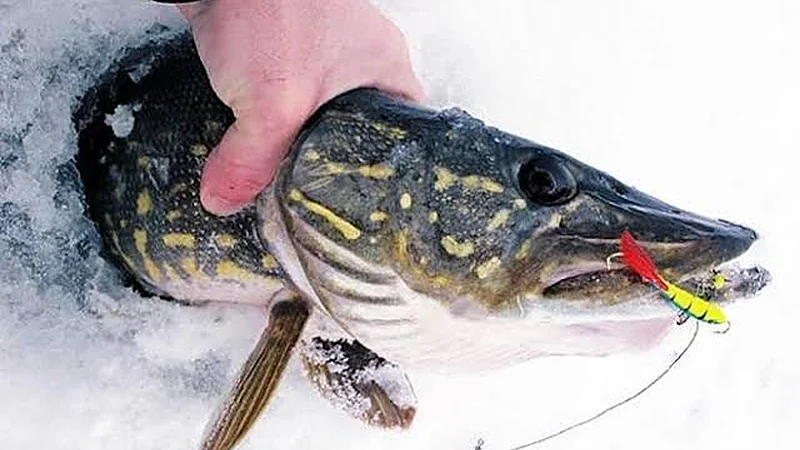 For anglers who prefer an active approach, balancing jigs and vertical spoons are two of the most reliable traditional winter lures.
A balancing jig normally hangs horizontally beneath the line. When lifted and allowed to settle, it glides away from the centre of the hole before returning. This movement resembles a small fish darting sideways and changing direction, making it an attractive target for a hunting pike.
A balancing jig measuring 7-9 cm is an excellent starting choice for December. Larger models around 10-11 cm are worth carrying when targeting substantial predators, while smaller jigs can be useful on waters where pike are feeding on relatively small baitfish.
Start with a controlled lift of approximately 20-40 cm and allow the jig to complete its glide before repeating the movement. Avoid constantly jerking the rod without giving the lure time to settle. Pike often attack as the jig slows down or changes direction, so controlling the pause is just as important as the lift itself.
Natural roach and perch patterns are dependable starting colours in clear water, while bright fluorescent finishes can be useful when visibility is poor. Carry a few contrasting patterns and concentrate on finding the presentation that produces the strongest response.
Vertical spoons provide a different movement. Some fall almost directly beneath the hole, while others flutter, swing or glide sideways before settling. Lower the spoon to the selected depth, lift it smoothly and let it fall on a controlled line. Pause after the drop, then repeat the movement.
The shape and weight of the spoon influence its action, so spend a little time understanding how each model behaves. A broad spoon may flutter slowly during the fall, while a narrower model can descend more quickly. Both actions can catch pike, but they create different presentations.
When actively searching, prepare several holes along a promising feature and fish them in sequence. If there’s no response after trying a few presentations at different depths, move to the next hole. Remember any position where you catch a fish or notice activity, and return later in the session.
For a more detailed explanation of winter tackle, tip-up rigs, lure presentations and under-ice locations, read our complete guide to ice fishing for pike.
Common Mistakes That Cost December Pike
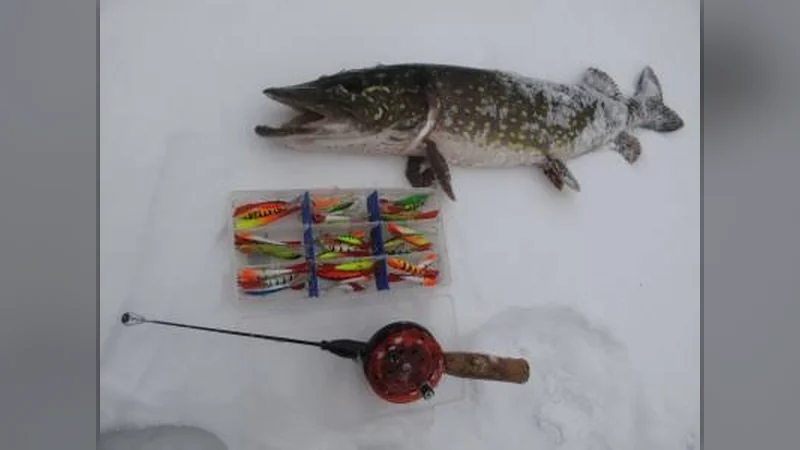 One of the biggest mistakes is abandoning shallow water too quickly. Anglers sometimes assume that all pike move into deep holes as soon as winter arrives. In reality, productive shallow features can continue holding fish throughout December, particularly when they provide cover and access to prey. Always investigate the remaining vegetation and nearby feeding areas before concentrating entirely on deeper water.
Another mistake is fishing every lure at the same speed. Cold-water conditions often reward deliberate presentations, yet some anglers continue retrieving their lures exactly as they did in summer. Change the speed, depth and movement when the fish show no interest. A softbait worked close to a drop-off or a suspending lure paused beside cover can reach fish that ignore a faster presentation.
Location is equally important when using natural bait. A perfectly presented deadbait is of little use if it lies well away from the areas where pike are hunting. Concentrate on known feeding routes, submerged structure and depth transitions, and use your bite indications to determine which positions deserve more attention.
Ice anglers should avoid another common error: drilling holes without a clear search pattern. Prepare your approach around known underwater features and cover different depths systematically. A smaller number of well-chosen fishing positions can provide more useful information than constantly moving across unfamiliar ice.
Finally, don’t underestimate the value of revisiting productive spots. Pike feeding activity often occurs in short periods, and a location that seemed quiet earlier may become productive later. If you’ve found a promising weed edge, drop-off or submerged tree, remember it and return when the conditions or presentation change.
Safety and Responsible Pike Fishing
 December fishing requires proper preparation, whether you’re standing on a riverbank or working from a frozen lake.
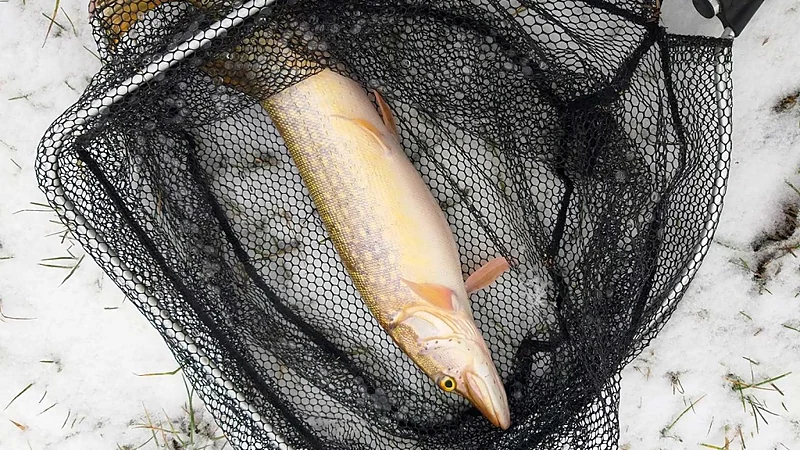
On open water, rising rivers, slippery banks and cold temperatures can make familiar venues dangerous. Wear suitable clothing and footwear, keep a charged phone protected from the weather and avoid fishing from unstable banks. Prepare your landing net, wetted unhooking mat, long forceps and cutters before starting, particularly when targeting substantial pike.
Ice fishing requires additional precautions. Only venture onto frozen water where access is permitted and reliable local assessments indicate suitable conditions. Ice strength varies across a lake, especially near inlets, outlets, underwater springs and areas with moving water. Carry ice picks and appropriate flotation equipment, avoid fishing alone and never rely on a single ice-thickness measurement as proof of safety.
Fish handling deserves equal attention. Use strong tackle to land pike efficiently, support large fish correctly and minimise the time they spend out of the water. In freezing conditions, avoid placing their eyes and gills against snow or ice. Remove hooks carefully and return fish promptly where release is required or appropriate.
Before fishing, check the regulations for your particular venue. Rules concerning bait species, livebaiting, rod numbers, tip-ups, permits and protected waters differ between countries and individual fisheries. The correct equipment and a clear understanding of local rules are as important as choosing the right lure.
A December Pike Worth Remembering
December can produce some of the most rewarding pike fishing of the year. Whether you’re working a soft-plastic lure along a cold riverbank, watching a deadbait float beside a reed bed or lowering a balancing jig beneath the first ice, the excitement of a sudden strike never loses its appeal.
The best results come from understanding the water and making sensible decisions. Begin with productive autumn locations, follow the movements of prey fish and concentrate on features that offer pike good hunting opportunities. Choose a method that suits the conditions, present your bait carefully and adjust your approach when the fish give you new information.
Winter may bring shorter days, colder hands and more demanding fishing, but it also offers the chance to catch a powerful predator in beautiful, quiet surroundings. Prepare your tackle, choose your water wisely and make the most of December.
Tight lines!