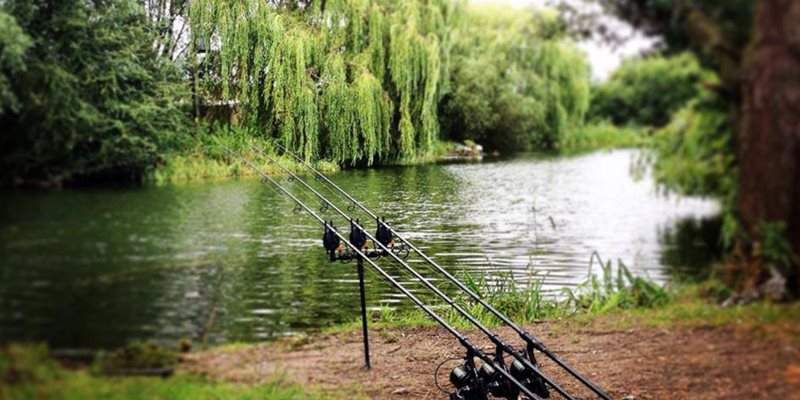
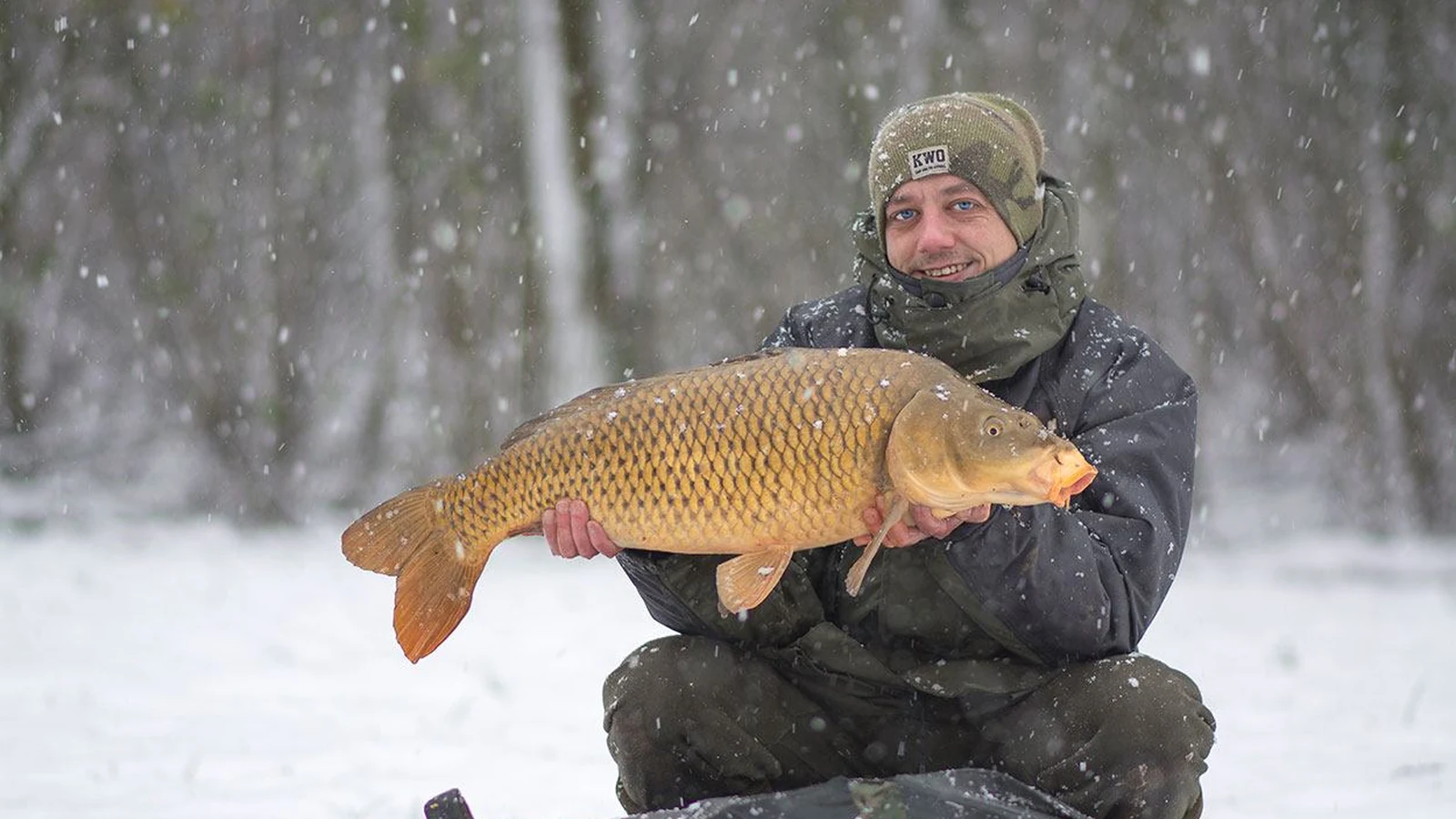
The deep end has been quiet all morning, then a carp rolls beside the reeds. Before you cast at the splash, watch the water for a moment. A second roll further along the reeds is a reason to try ahead of the fish. Fine bubbles that keep breaking over one patch suggest something different: the bottom there is worth a closer look.
Carp still feed in winter, but you can spend most of a short session waiting on a spot they never visit. Here’s how to choose your first fishing spot, work out whether to fish on the bottom or above it, and decide what to change when the rods stay quiet.
Choose a Water That Produces Winter Bites
If you have three hours on a Saturday and want a realistic chance of a bite, start with a well-stocked lake that’s produced carp recently. A small lake is easier to walk and lets you keep an eye on more of the water from one spot. If you’d rather fish a big gravel pit, spend more of the session looking and take only what you can move in one trip. On a big lake, knowing which bank has produced a fish recently can save most of a short session.
Ask the fishery staff or a local angler where the last few carp came from, roughly how far out they were caught and whether the bites came at a similar time. A catch from the far bank last week gives you somewhere to start your walk; a series of recent catches from the same bay gives you a reason to spend time watching it. Check the venue rules on bait, zigs and the number of rods before you pack.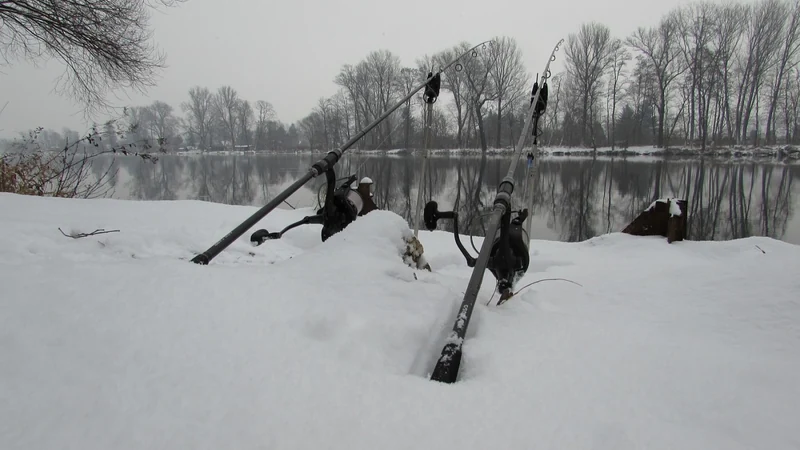
If nobody has recent information, look at how much of the water you can actually cover. A large lake with most of the bank closed or a long walk between the only two fishable spots makes it hard to test a second area in one afternoon. A smaller water where you can watch both a sheltered bay and an open stretch gives you a second option without eating up the afternoon. On a busy lake, have a spare spot in mind before you arrive. If that first-choice bank is full, start where you can still watch it without casting across anyone’s lines.
Where to Find Carp in Winter
Choose which part of the lake to watch before you choose where to put the lead. If you see carp, use their position to narrow the search to a stretch of bank or a feature. If nothing shows, start with a spot you can fish cleanly and keep a second option in sight.
Read the Water Before You Cast
Leave the rods packed for the first lap, or stop at two or three vantage points if it’s a big lake. Spend a few minutes looking across the water from each one. On a clear day, look along the margins with polarised glasses; when there’s a ripple, watch the sheltered corners first because small disturbances are easier to see there.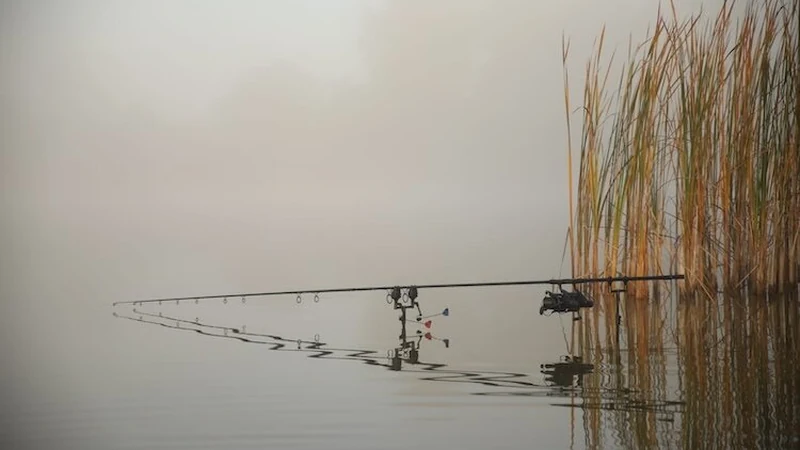
A carp you actually see takes priority over a spot that looks right on paper. Watch for another show before deciding where to cast. If the fish are moving along a reed line, try to put the bait ahead of them on a clear, fishable patch rather than landing the lead on top of the last splash. Keep away from cover you couldn’t steer a hooked fish out of.
Watch what the bubbles do. A little patch of fine bubbles that starts, stops and shifts a short distance, especially with a puff of silt, is a better clue than one isolated burst. It could still be another species. A visible carp is stronger evidence, and a fish you can actually see cruising high gives you a depth to try. A roll on its own tells you where to look, not where the carp is feeding.
Give yourself a far-bank marker for anything worth following up: the left edge of a tree, for example, rather than the whole bay. A ring on the surface spreads and vanishes, and it’s surprisingly easy to cast several metres beyond it. If you saw the fish from a different angle to the one you’ll fish from, check the line of the cast again before you commit. That matters most when the fish are tight to a narrow strip of clear bottom beside the reeds.
Where to Start When You See No Fish
On a deep lake, find a feature you can cover accurately from the bank: the foot of a shelf, a sheltered part of an old channel or the cleaner edge of a dying weed bed. On a shallow pond with little change in depth, spend less time looking for a hole and more time looking for cover, clear patches and recent signs of fish. If one of these spots has been producing bites lately, start there.
| What you find on arrival | Where to try first | What to check next |
|---|---|---|
| Several cold days and no signs on a deep lake | A sheltered shelf or the foot of a drop-off | Compare the shelf with the water below it. Don’t assume the deepest spot is the best one. |
| A shallow lake after a settled, mild spell | A clear strip beside sheltered reeds or a margin that’s had some sun | Watch the route between the margin and the first drop into deeper water. |
| Two promising areas, both quiet | The one with recent catches or better access to a clear spot | Keep the other as a move you can make quickly if you see fish there. |
When two features look equally good, give the first cast to the one you can fish cleanly and reach again. For example, start on the clean edge of a shelf rather than dropping a lead into heavy weed at the bottom of it. If you find a second clear spot at a different depth in the same area, you have a useful comparison. Casting two baits onto nearly identical patches tells you much less.
A deep spot can hold carp well above the lake bed. If you choose it for the feature, you’ve answered where to cast. You still have to find the depth at which to fish the bait.
When to Fish for Winter Carp
A milder spell after several cold days is a useful first choice if you can pick your day. Look at what the weather has been doing for the last few days as well as the forecast. One warm afternoon can be enough to make a sheltered margin worth checking, but the air warming up doesn’t mean the whole lake has warmed with it. Wind is useful information too: if it’s bitter, compare a sheltered bank with the exposed one instead of automatically following the wind.
On unfamiliar water, a session from early afternoon to dusk lets you look at the margins in daylight and stay for the change of light. If recent bites on that water have come at first light, go then instead. On a lake you fish regularly, note when carp show and when the bites actually come. They needn’t be at the same time. Once you find a pattern, aim to have the rods settled before that window opens rather than plumbing and feeding through it.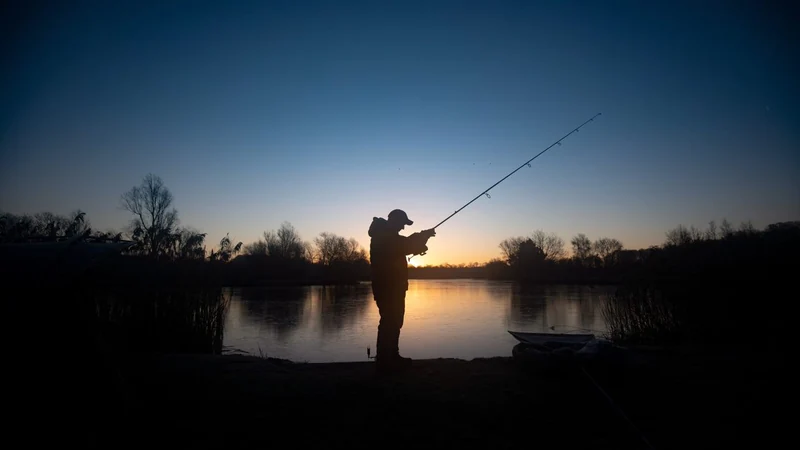
Use wind and sunshine to decide where to look again. On a breezy day, flat water behind a point is easier to read than the windward bank, but that alone doesn’t make it the better fishing spot. If you’ve had several mild days and the sun reaches a shallow bay, give that bay a second look later in the afternoon. If it still looks lifeless and the deeper bank has recent form, keep the deeper spot as your starting point.
For a dawn trip based on recent catches, do the legwork on a previous visit if you can. Pick a casting line and a clear spot while you can see the bank, then arrive ready to put a rig there quietly. For a dusk trip to an unfamiliar lake, arrive early enough to walk it and check the bottom. A short session works better when you use the daylight to narrow down your options before you commit.
Fish on the Bottom or Try a Zig Rig?
Start by deciding how far off the bottom the bait needs to be. A low pop-up can lift the hook clear of a thin layer of leaves while keeping the bait close to the bed. If the carp are holding well above that, a zig lets you put the bait at their level.
Start with a Bottom Rig When the Spot Is Clear
On firm, clean ground, start with a simple hair rig and a small sinking bait or a wafter, a balanced hookbait that sinks under the weight of the hook. The hair holds the bait just behind the hook, leaving the point clear. A proven rig is a better starting point than changing the hook, hooklink and bait together just because the water is cold. Keep the tackle strong enough for the cover you’re fishing.
If you’re new to feeling a lead down, compare two casts rather than trying to identify the bottom from one thud. Cast a bare lead to the likely patch. Once it hits the water, keep light tension on the line as the lead sinks so you can feel it touch down through the rod. Draw it back a short way, then make the second cast just off the first. A tap followed by a smooth pull suggests a cleaner, firmer patch. A soft drop followed by steady resistance can mean silt; if the lead comes back with weed attached, you have a better reason to adjust the cast. If fish are showing close in, keep the probing casts away from them.
In light silt, a slightly longer hooklink gives the bait more room to settle if the lead sinks in. Over a thin layer of leaves or low weed, try a low pop-up. Lower it into the margin first and check that it lifts the hook clear. If the rig comes back wrapped in weed, cast to the clean edge instead of trying to raise the bait over a thick bed. If you’re setting up from scratch, choose a carp rod suited to your casting range and rig weight; a rod you already cast accurately with is a good place to start.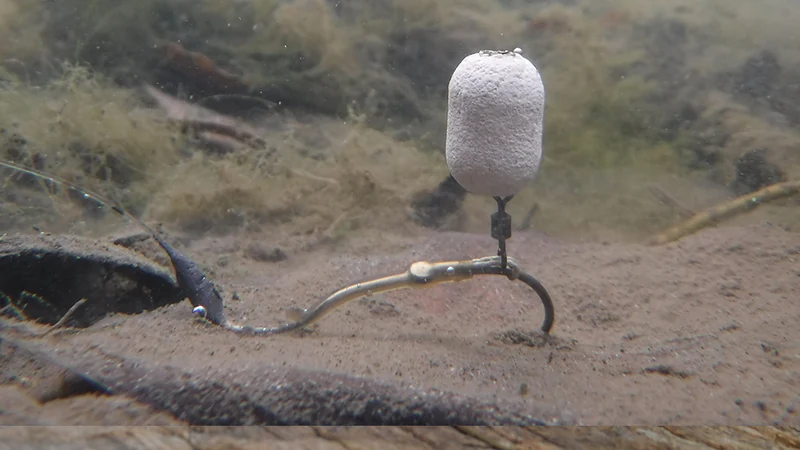
Use a Zig to Search Above the Bottom
A zig suspends a buoyant hookbait well above the lead. Try one when you can see carp cruising high, or when they keep showing over a deep area and a well-presented bottom bait has been ignored. A single roll tells you where a fish was; it doesn’t tell you what depth it’s feeding at.
Measure the depth where you’ll cast. With a marker float, wind it down to the lead, then pay out line in measured lengths until the float surfaces. In 3 m of water, if the fish are about 1 m below the surface, subtract that from the total depth. Start with a 2 m (about 6½ ft) hooklink. Use buoyant zig foam and check in the margin that it lifts the hook.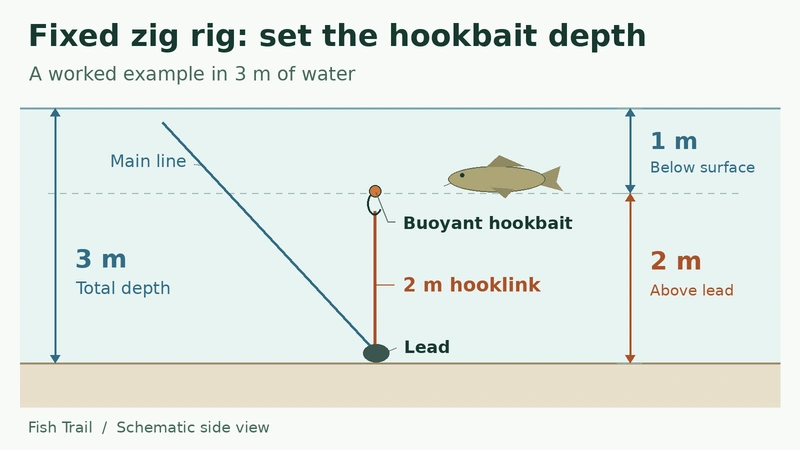
For a long fixed zig, lay the hookbait and hooklink in loose coils on a clean mat behind you, clear of grass and your feet. Make a smooth cast so the hooklink lifts cleanly off the mat. A nugget of dissolving foam on the hook can help keep it away from the main line. If the hook catches behind you or you see the hooklink bunch around the lead in flight, wind in and reset it. A tangled zig won’t tell you whether you picked the wrong depth.
Give the first depth a fair test while the fish are still there. If they’re cruising above the bait, lengthen the hooklink; if you want to fish lower, shorten it. A change of around 30-50 cm (12-20 in) is a useful first step. Keep the casting line and range the same so the depth is the only thing you’ve changed. In deeper water, an adjustable zig makes those changes easier without a succession of long fixed hooklinks.
If you know carp are in the area but can’t judge their depth, start a test zig halfway up. Try the next depth while the signs are still in front of you; if they’ve moved, follow the fish rather than carrying on with the depth test. With two rods, keep one fishing on the bottom so you have a point of comparison. With one rod, start with the presentation that fits your best clue: bottom if you’ve seen feeding signs on the bed, a zig if carp keep showing high. If you have no clue about either location or depth, another promising spot is usually a better use of a short session than working through every zig length in one place.
How Much Bait to Put In
If you’ve just seen a fish and want a quiet first cast, put out a single hookbait. A small wafter or a 10-12 mm boilie is a useful starting point on a clean patch. If you know the spot has been producing and want a little attraction around the hook, start with a small parcel of dry crumb or a few crushed boilies in water-soluble PVA mesh. Drop a spare parcel into the margins before fishing it; what matters is that the mesh opens in the water you’re actually fishing.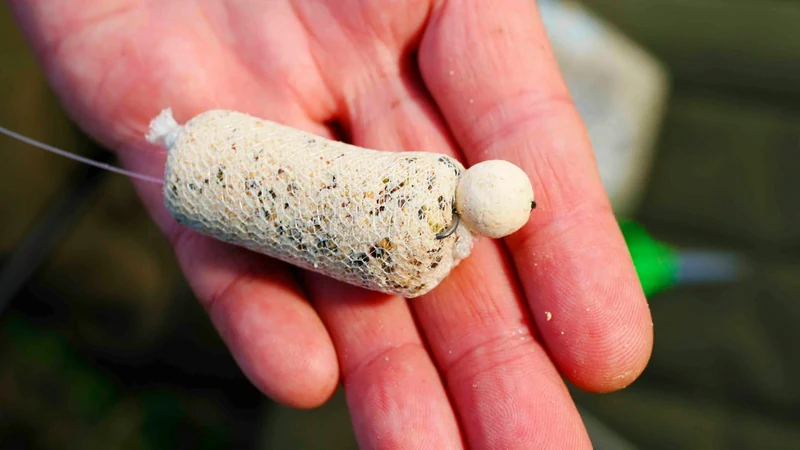
At close range, try five to eight grains of corn or two chopped boilies around one hookbait. That’s a starter portion for one cast, so choose one or the other. If you land a carp and fish are still showing on the spot, put back roughly the same amount. If the signs stop, cast the hookbait back on its own before adding more. When you’re using a zig to work out how high the fish are, start without putting feed on the lake bed.
If the mesh doesn’t open cleanly in your test, fish a single hookbait or add a few loose offerings by hand if the spot is within reach. On a stocked lake with clean bottom, a small Method feeder is another way to put a measured pinch of feed around a wafter. Check in the margin that the feed breaks away from the feeder. If small fish repeatedly strip the bait, try a boilie that stays on the hair. Adding feed won’t help if the hookbait is gone when a carp arrives.
What to Change When You’re Not Getting Bites
A quiet rod is only useful information once you know the rig is fishing properly. Wind in to check if a cast landed badly, or if you suspect the hook has picked up weed or the bait has come off. When the bait is intact and the hook is clean, use what’s happening on the water to decide your next move.
Watch the line as well as the alarm. A lone bleep that coincides with a gust can be line movement. If the line keeps tightening or slackens noticeably, check the rod promptly. On a zig the indication can be small, so waiting for a long run can cost you a bite. A few isolated bleeps are a reason to watch more closely, not enough on their own to tell you where the fish are holding.
A Three-Hour Session on an Unfamiliar Lake
Say you arrive with three hours until dusk. The lake’s been cold for several days, nobody has reported a recent catch, and nothing shows on your first walk. You’ve found a clean patch on a sheltered shelf and a second spot off the reeds that will be easy to reach if you move. Give the shelf the first cast with a single hookbait. From there you can still watch the reed line, and you haven’t put in a bed of feed you’ll feel obliged to sit over.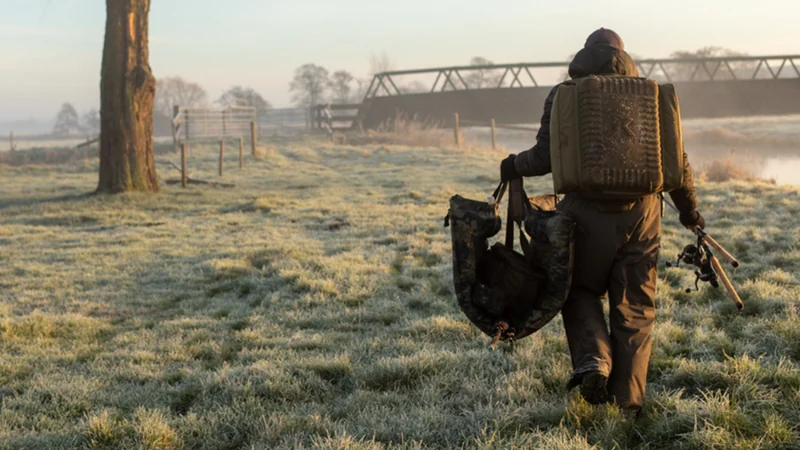
After the first hour, the rod is quiet. You wind in to check and find the hook clean and the bait intact. If you’ve since seen two carp roll over deeper water within reach of the shelf, keep the spot and try a zig at one depth. If a carp rolls by the reeds, move before the light goes. If the whole lake is still quiet, the reeds offer a real change: a shallower edge and a new area to watch. Make that one move with enough time to fish it into dusk. If your second spot were much the same as the first, or you knew the shelf regularly produced at last light, you’d have a better reason to stay. The hour is a check-in for this trip, not a rule for recasting.
Before you leave, note where you fished, how far out you cast or which far-bank marker you used, and the time of the first show or bite. Even a blank can tell you where to start looking next time. That’s more useful than remembering which boilie you happened to have on when the lake went quiet.