A quiet gap in the reeds can look perfect from the bank. Make a trial cast before feeding it: if the float shoots past the gap, your hookbait may spend only a second where you want a fish to find it. Move a little closer to the slack water and try again. That small change can turn an awkward swim into one you can fish with a light float.
River crucians are worth looking for in slow reaches and sheltered backwaters. Pick a swim where you can control the bait, choose when to fish it, then use a float for close work or a light feeder when you need the bait to stay put. Here is how to make those choices and set up both rigs.
Where to Find River Crucians and Where to Cast
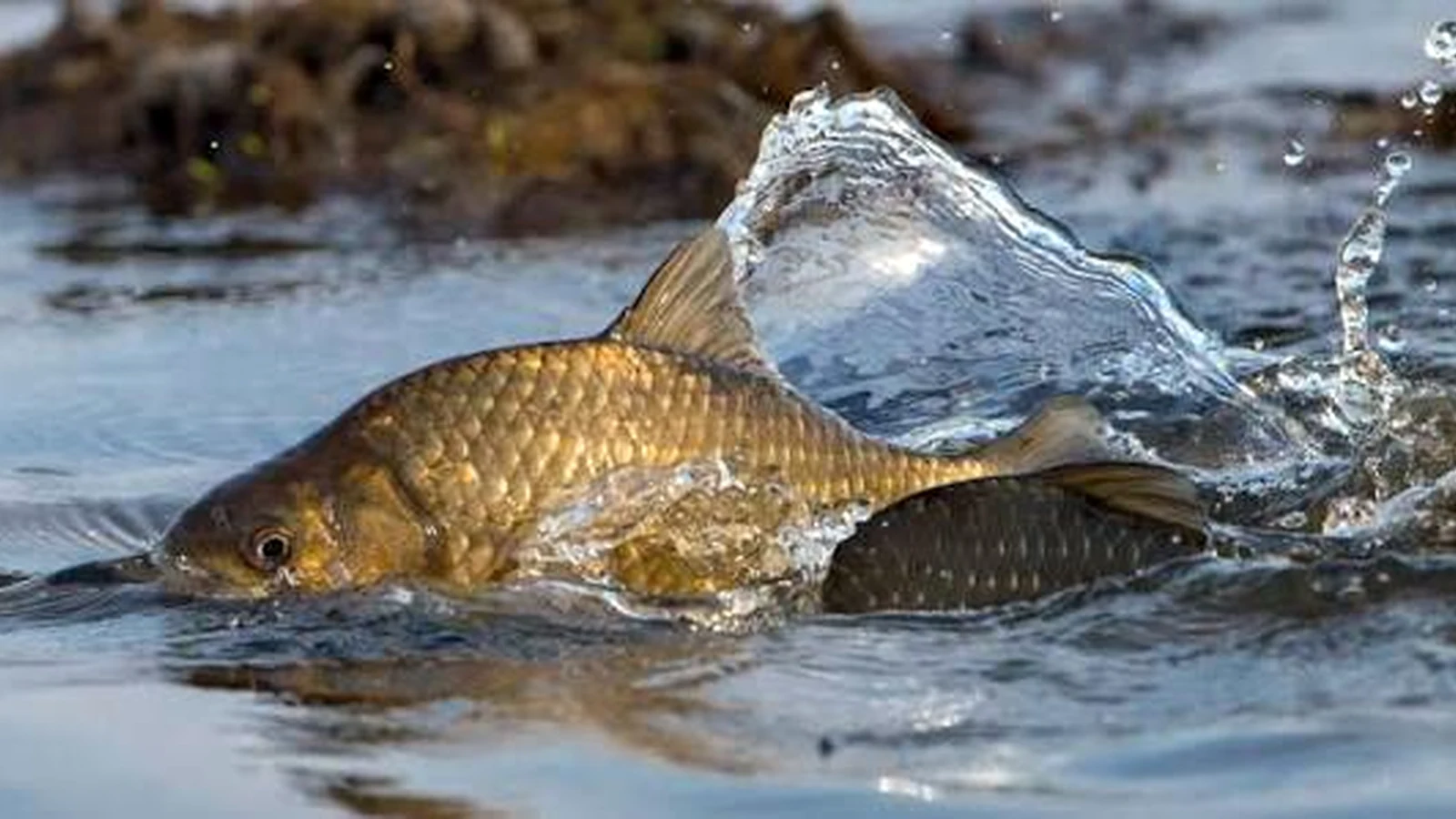
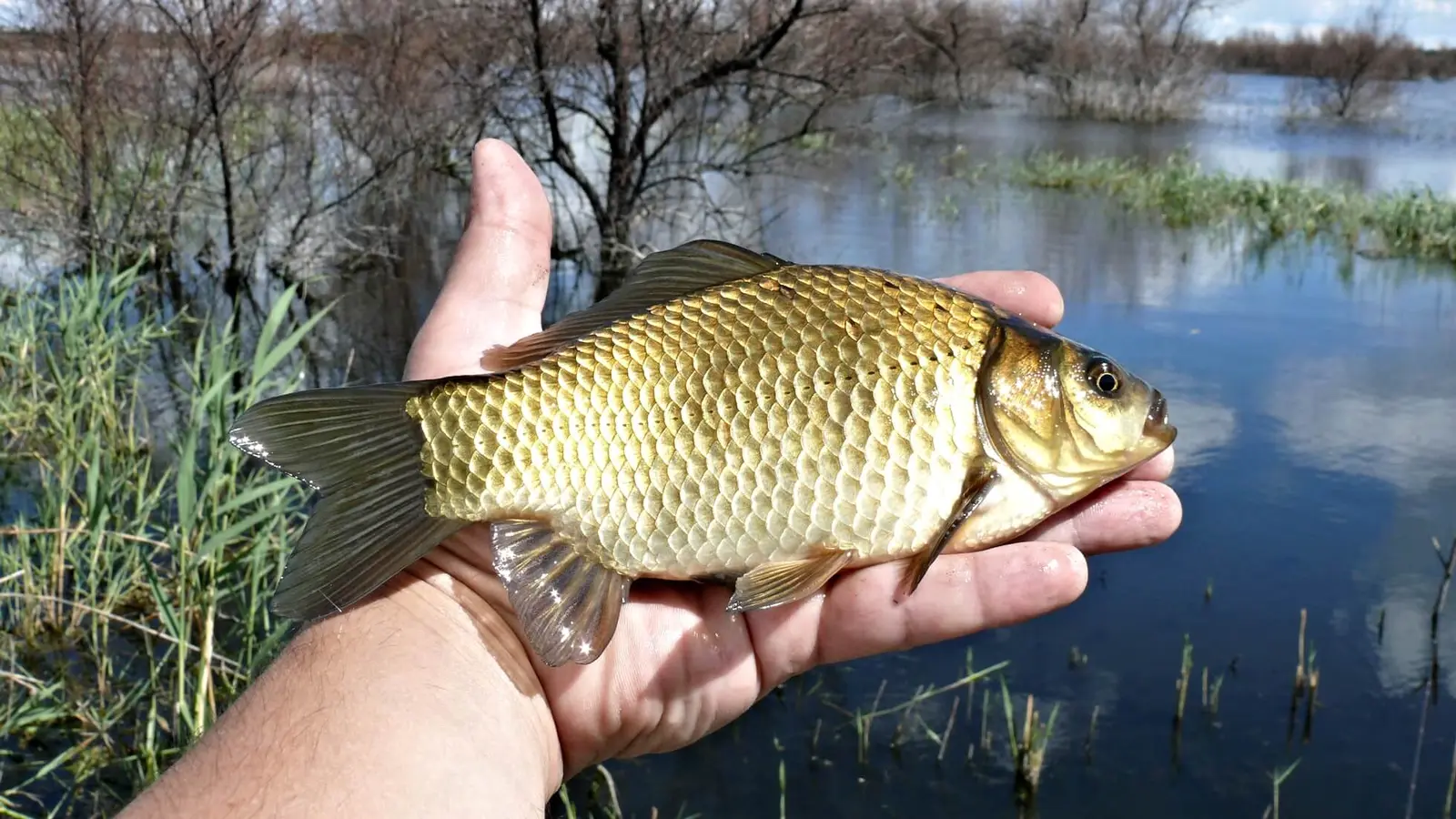
Start with a reach known to hold crucians. In Britain, the true crucian carp (Carassius carassius) is mainly associated with still waters, although it also occurs in some slow rivers and canals. On mainland Europe you may also encounter Prussian carp (Carassius gibelio), a different species. A report of “crucians” from a river is a useful lead, but colour alone won’t tell you which fish it holds.
Look first at backwaters, side channels and sheltered bends. Along a reed bed, try the quiet side of a gap where you can lower the bait close to the stems and still draw a hooked fish into open water. At a lily bed, fish the clear strip just outside the pads. A submerged tree can create a sheltered pocket downstream; put the bait on the open-water side of that pocket, where you can land a fish clear of the branches.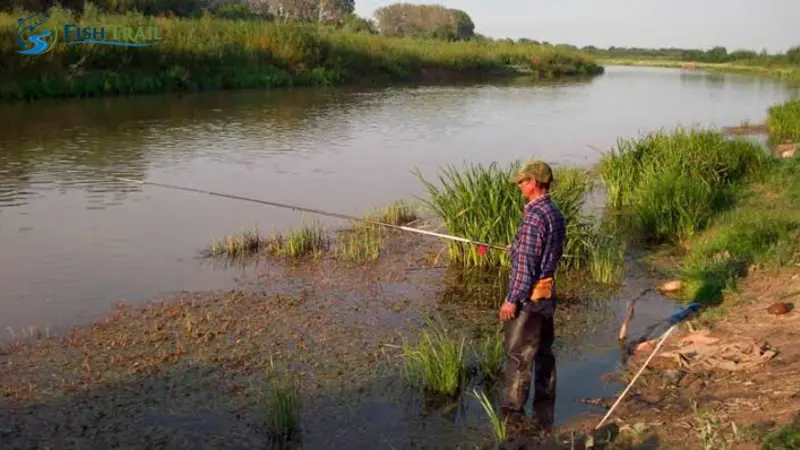
Then look for the seam where gentle flow meets slack water. A loose leaf can show you the surface seam, but run the rig through before you feed: the bait near the bottom may take a different path. Start on the quiet side. If the water has risen and your usual swim is being swept through, walk the bank and look for a new slack behind cover. After a cold spell, a deeper pocket next to the reeds is worth checking if the shallow margin produces nothing.
The Best Season and Time of Day for River Crucian Carp
If you can choose when to go, start with late spring to midsummer, where river fishing is open. Pick a settled spell, then use the water level and recent weather to decide which part of the day to fish.
| Conditions | When to start | What to look for |
|---|---|---|
| Spring, once high water has fallen | Fish in daylight. If you only have a few hours, late morning into the afternoon is a good place to start. | Try a sheltered margin as the shallows warm, with a gentle flow you can fish accurately. |
| Hot, settled summer weather | Early morning or late evening | Try the reed edge before the sun gets high or as the light drops. If you are there at midday, try a shaded swim or a slightly deeper pocket. |
| Autumn as the water cools | On mild days, try early or late. After cold nights, start around midday or in the early afternoon. | On a warmer day, recheck a sheltered feeding area. If the shallows stay quiet, try the nearest deeper slack. |
 On a river you already know, a hot spell can make the last hour of light worth extending into darkness where night fishing is permitted. Start with the evening session so you can see the line of the reeds and pick a place to land a fish. For more on adjusting as the water cools, see our guide to autumn crucian carp fishing.
Check the river’s rules before planning a spring trip. In England and Wales, the coarse fishing close season on rivers runs from 15 March to 15 June inclusive. The spring advice applies where river fishing is open.
How to Set Up and Fish Two River Rigs
Use a float when you can follow it and control the bait’s route through the swim. Choose a light feeder when the spot is farther out or when you want the bait to sit on the bottom rather than travel past it. If neither rig lets you fish the spot cleanly, try the quieter side of the seam before reaching for heavier tackle.
Float Rig for a Slow Drift or a Quiet Margin
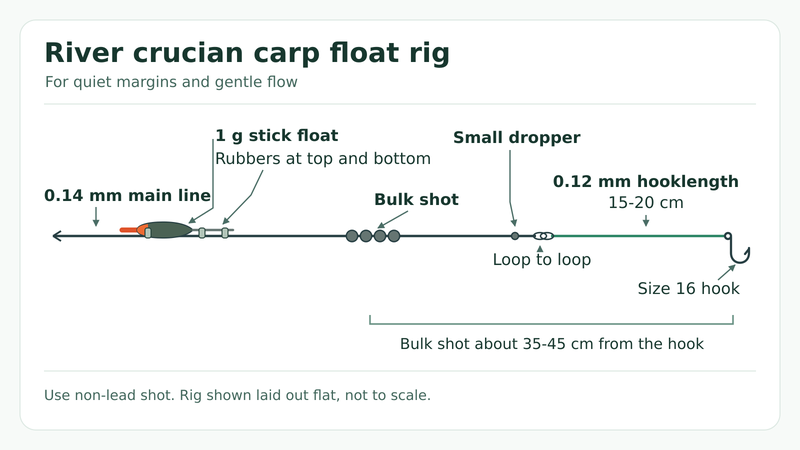
For close work, start with a 3.6 m float rod, a small fixed-spool reel, 0.14 mm main line, a 1 g stick float and a 15-20 cm hooklength of 0.12 mm. Tie on a size 16 hook for a grain of barley or one or two maggots; try a size 14 if a piece of worm crowds the smaller hook.
- Fix the stick float to the line with float rubbers so it is held at the top and bottom. To adjust the depth, slide the float up or down by hand. The rubbers should hold it in place during the cast and drift.
- Join the hooklength loop to loop. Use non-lead shot. Group most of it on the main line about 35-45 cm above the hook, with one small dropper just above the hooklength join. Test the rig in the margin. Leave enough of the tip showing to follow it through the swim.
- Clip a plummet to the hook and lower it at the point you want to fish. If the float sinks, slide it away from the hook to fish deeper. If it lies flat or sits too high, slide it towards the hook to fish shallower. Adjust until the float stands upright with just its tip showing and the plummet resting on the bottom. Remove the plummet. Keep that setting for a bait that just touches bottom in a quiet pocket, or shorten the depth by a few centimetres for a clean pass along a gentle seam.
 In the slack, lower the bait beside the cover and keep loose line off the faster water. On the seam, cast slightly downstream and let the float run, checking its speed briefly as it reaches the spot you want to fish. If the float dips at exactly the same place on successive passes, try fishing a little shallower: the hook may be brushing the bottom. Lift the rod if the float rises, slides sideways or dips away from the spot where it usually catches.
Running Feeder Rig for a Bait That Stays Put
For a short cast into a sheltered swim, start with a 3 m light feeder rod, a small fixed-spool reel, 0.18-0.20 mm main line and a 15-25 g small cage feeder. The weight is for the empty feeder. Use a 30-45 cm hooklength of 0.12-0.14 mm and a size 14 or 16 hook to suit the bait. Pick a quiver tip that shows a bite without being pulled into a deep bend by the current.
- Thread a running feeder link onto the main line and clip on the feeder. Add a buffer bead below the link, then tie on a small swivel.
- Attach the hooklength to the other end of the swivel. Leave the line above the running link clear so the feeder can slide off that end if the main line breaks above it.
- Make a trial cast with the feeder loaded as you intend to fish it. Let it settle, then wind in just enough slack to give the quiver tip a small bend. Use a feature on the opposite bank to repeat the cast.
Watch the tip before you commit to the swim. If it repeatedly tightens and springs back and the line angle keeps changing, the feeder may be creeping downstream. Try the next weight up within your rod’s casting rating, allowing for the feed inside. If it still walks out of the feeding area, cast into the quieter water. Once the feeder is holding, watch for a steady pull or a clear drop-back, when the tip straightens as the line goes slack. Lift smoothly into the bite.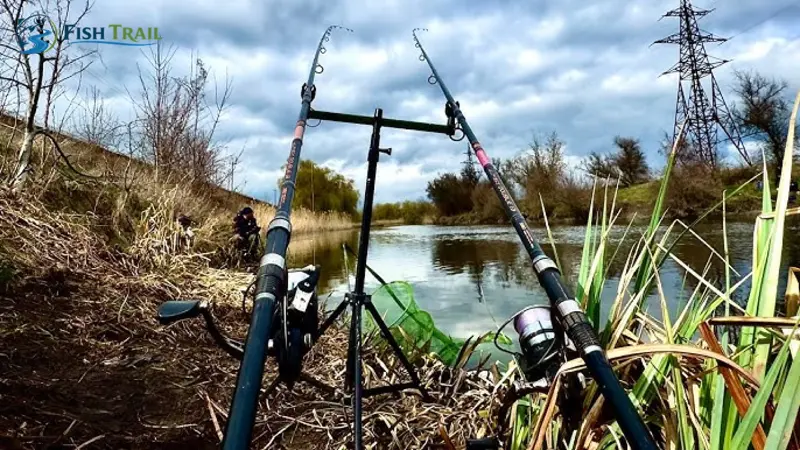
What to Put on the Hook and When to Change It
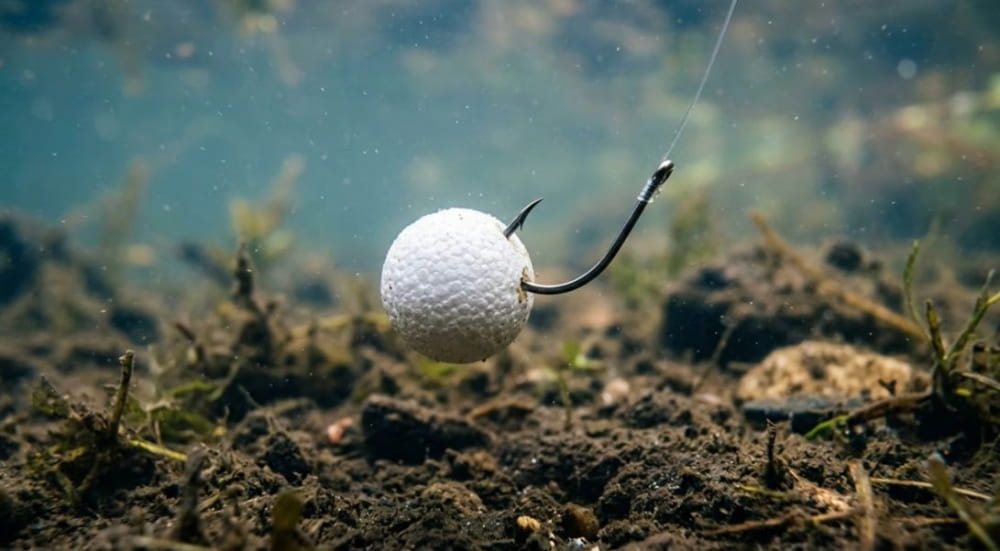
Take two contrasting hookbaits: a small piece of worm and softened pearl barley. Start with a small piece of worm where you can hold the bait close to the cover. One or two maggots give you a compact alternative when you want a smaller mouthful. Leave the hook point clear whichever bait you use.
To prepare the barley, put a small amount of dry pearl barley in a flask, cover it generously with boiling water and leave it overnight. Leave room for the grains to swell. Drain them in the morning and pick a grain that is soft enough to hook but firm enough to stay on during a cast. Push the hook through once and check the point is exposed.
If the worm comes back ragged on successive casts, switch to a grain of barley or a small piece of sweetcorn. Reel in shortly after the first cast to check that the bait has stayed on the hook. If you get taps without a positive bite and the bait comes back untouched, check the depth and try a smaller offering before changing everything. A tiny pinch of bread is worth trying in a still pocket, where you can lower it in gently and check it regularly. For more warm-weather options, see our guide to summer crucian carp baits and float rigs.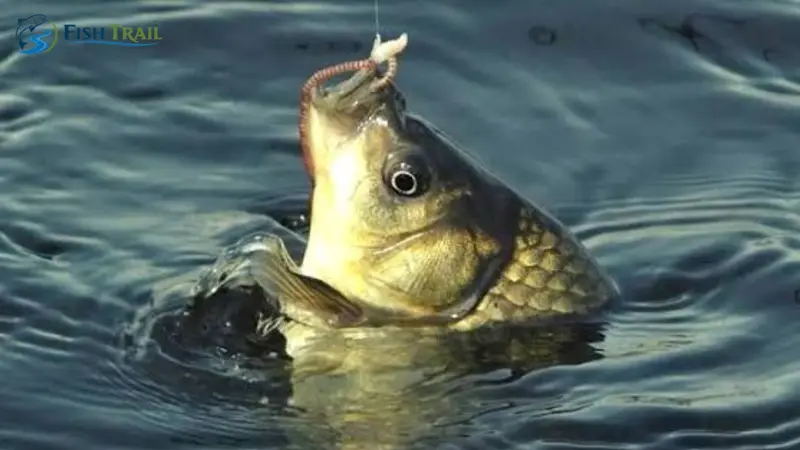
Where to Put the Groundbait and When to Feed Again
Run the float or test the feeder before putting in a large amount of feed. First decide where you want the hookbait to be when a fish picks it up. In a near-still margin, start with one or two walnut-sized balls of damp fine groundbait on the spot, with a few grains of barley or a small pinch of chopped worm mixed in. In a cold, quiet swim, start with one.
On a gentle drift, place the feed a little upstream of the point you want to fish so it can settle close to the path of the hookbait. Make the first throw small: the stronger the pull and the deeper the swim, the more important it is to see what the feed does before adding more. Squeeze the mix firmly enough to sink as a ball, and drop a test piece beside the bank to see how quickly it breaks up. If your float never passes through the fed line, change the starting point of your cast before adding another ball.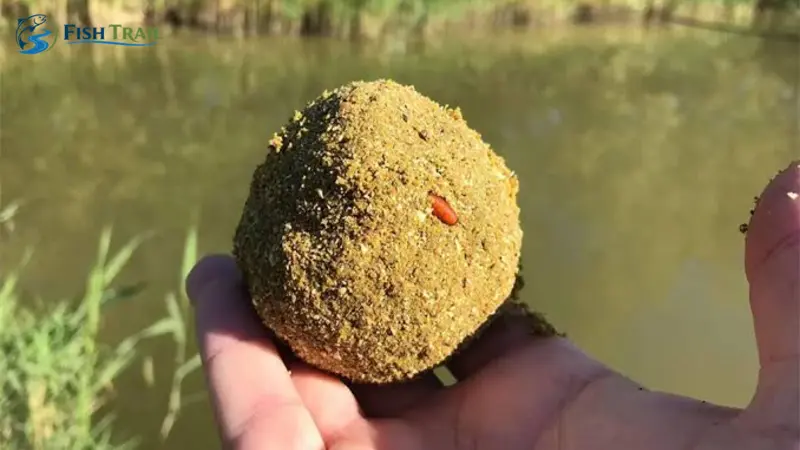
With the feeder, let the first small loads put the feed down for you. Cast along the same line and to the same distance. If the cage holds bottom but you can see feed washing out on the way down, squeeze the mix into it a little more firmly or switch to an open-end feeder with solid sides. In a deeper swim where you cannot see the feeder, try the more enclosed design if the mix breaks up as soon as it hits the water beside the bank.
If bites come and then fade, try a small top-up in the same spot. If you have had no clear bites from the start, check whether the bait is coming back intact and whether the rig is fishing where you fed. If both are right and the swim still looks lifeless, try the next pocket of quiet water.