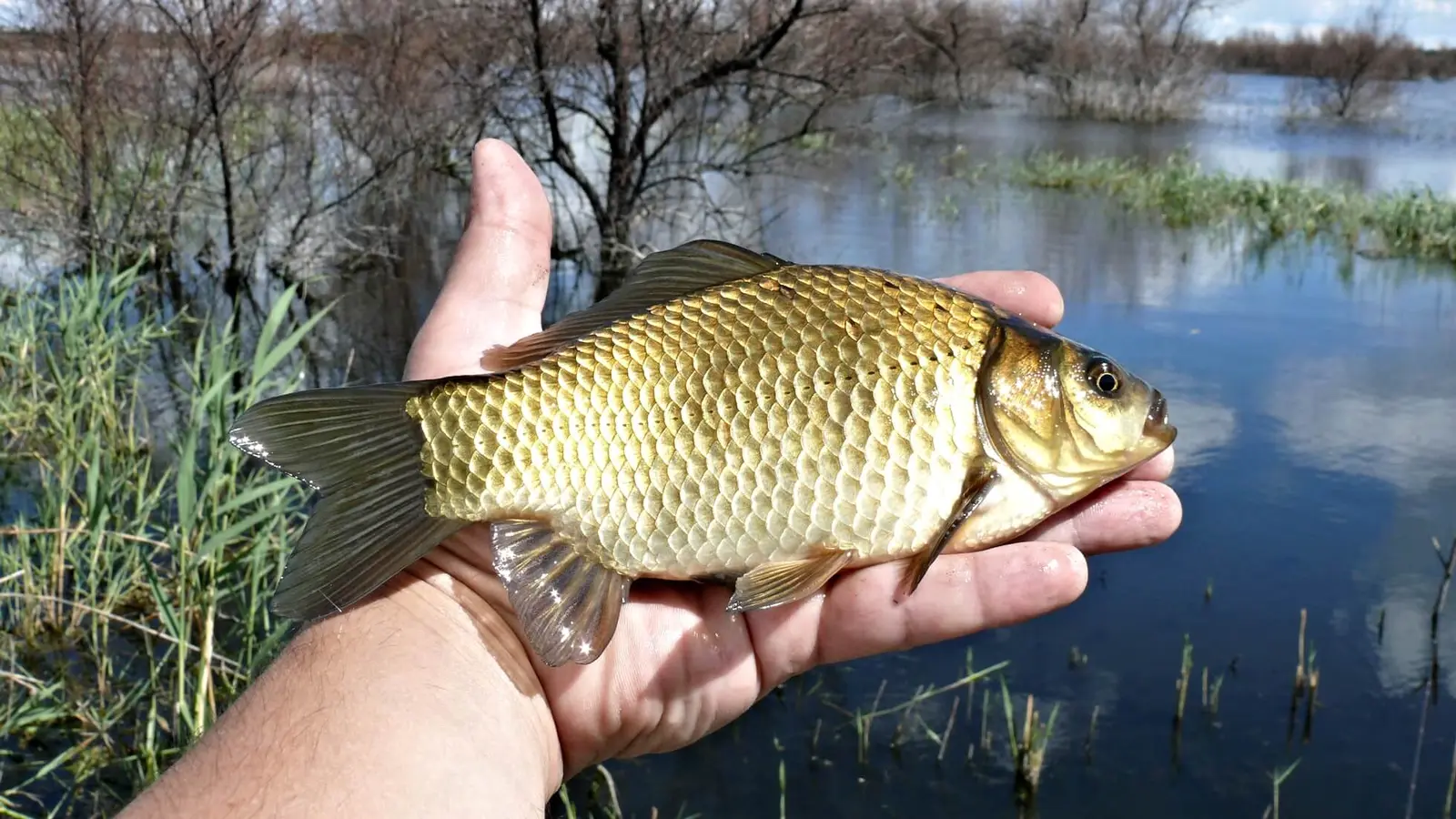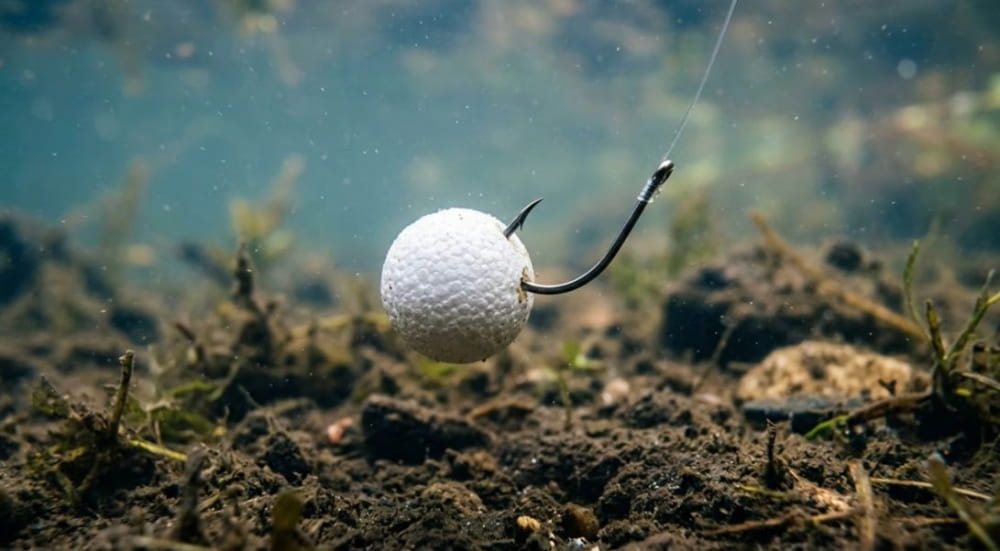
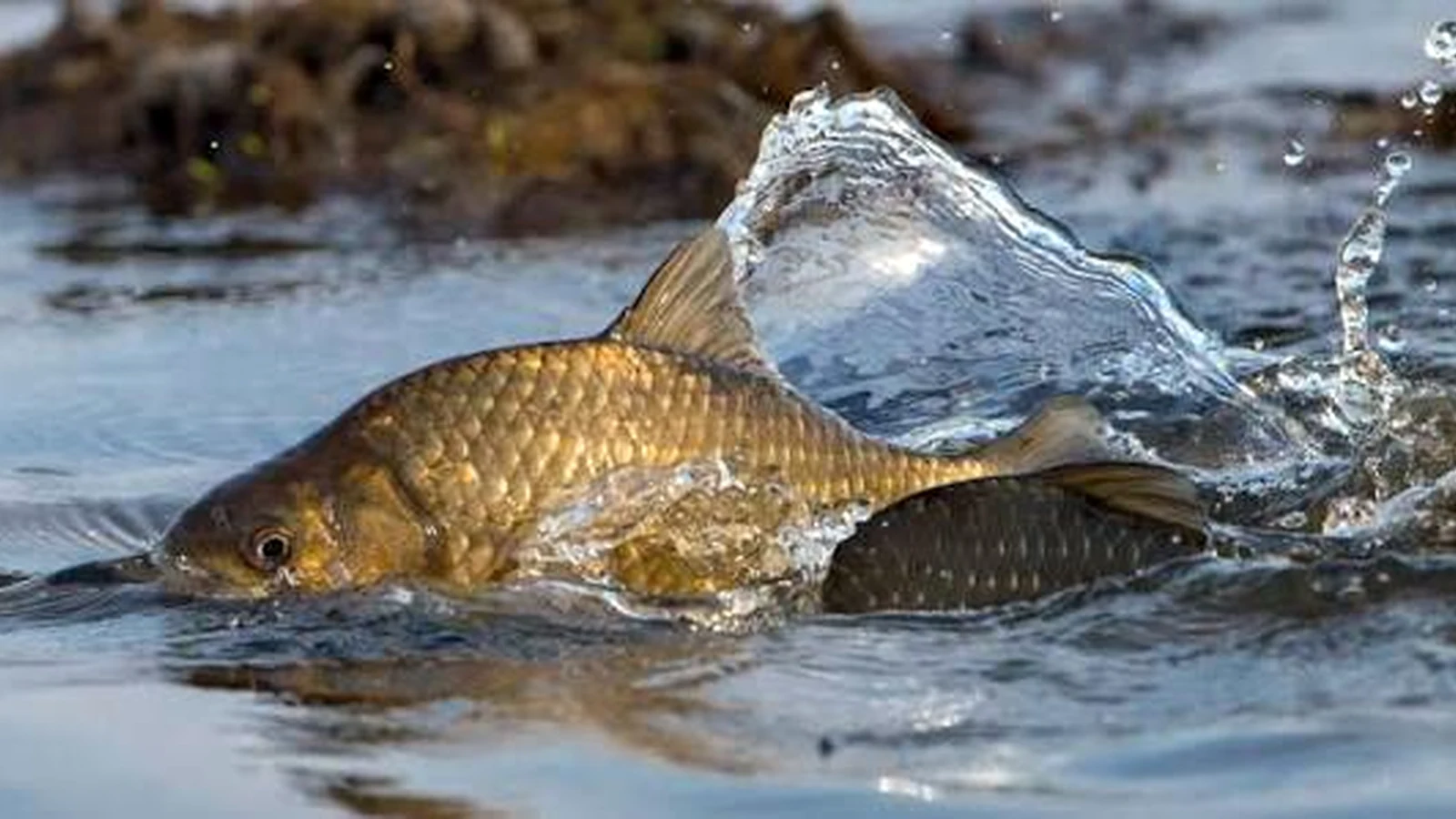
An autumn crucian session often starts with a familiar puzzle: the swim that produced steady bites a few weeks ago now looks completely lifeless. The float sits perfectly, the bait comes back untouched, and adding another handful of feed changes nothing. Before abandoning the water, check whether you are still fishing where the crucians are feeding.
The key to crucian carp fishing in autumn is keeping your presentation close to the fish. As the water cools, work more carefully on location, reduce the amount of loose feed and offer small, neatly presented hookbaits. A sensitive float and an accurately plumbed swim become more valuable than a bucket full of groundbait.
This guide focuses on crucian carp, Carassius carassius, found in British and European stillwaters. Prussian carp, Carassius gibelio, and feral goldfish are different fish, although they are frequently grouped together as “crucians” in fishing reports. Check what your chosen water holds rather than assuming every small, deep-bodied carp is the same species.
Where to Find Crucian Carp in Autumn
Start with a water known to contain crucians. A mature pond with a reliable population is a better prospect than a large lake chosen simply because it looks suitable. Recent catches, fishery information and a quiet walk around the banks will help you narrow the search before you assemble a rod.
In early autumn, inspect the places that held fish through summer: reed edges, gaps beside lily beds, submerged vegetation and sheltered margins. Remaining cover still matters, particularly where it borders a clear patch of bottom. Do not cast past a promising near-bank swim just because the nights have become cooler.
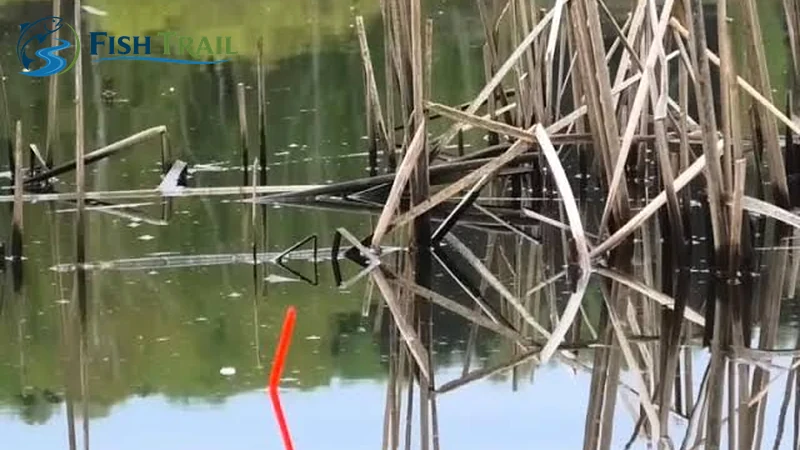
As vegetation dies back, look for a fishable strip along its outside edge. A bait buried in collapsed weed or a thick layer of fallen leaves is easily missed. Use a plummet to compare several positions, checking both depth and whether the rig settles consistently. If it keeps returning with debris, move the bait onto a cleaner patch nearby.
After sustained cooling, give more attention to the lower part of the marginal slope, small depressions and deeper areas close to cover. These are practical places to investigate, rather than a command to fish the deepest hole in the lake. On a shallow pond, the useful depth change could be from 80 cm to 1.5 m; on a larger water, it could be the transition from a shallow shelf into 2-3 m.
Weather helps decide which position to try first. Following cold nights and a chilly wind, begin in a sheltered swim with some depth. During a settled mild spell, check the shallower feeding areas again, especially later in the day. A cold wind blowing into a bank is no reason to sit there simply because fishing into the wind worked in summer.
Prepare two different options where space allows: one near cover and another on the adjacent deeper line. Keep the feed separate and modest. This gives you somewhere useful to move the bait without scattering food across the whole swim.
Present the bait almost “on a plate”: place it on a small, accurately fed patch and keep it still enough for a crucian to pick up easily. Spend more time finding that patch and less time making increasingly long casts.
When to Fish for Autumn Crucians
Fish the conditions rather than treating September, October and November as three fixed stages. A mild October on a sheltered English pond is a different proposition from October after repeated frosts in northern Europe. The weather over several days is more useful than the date alone.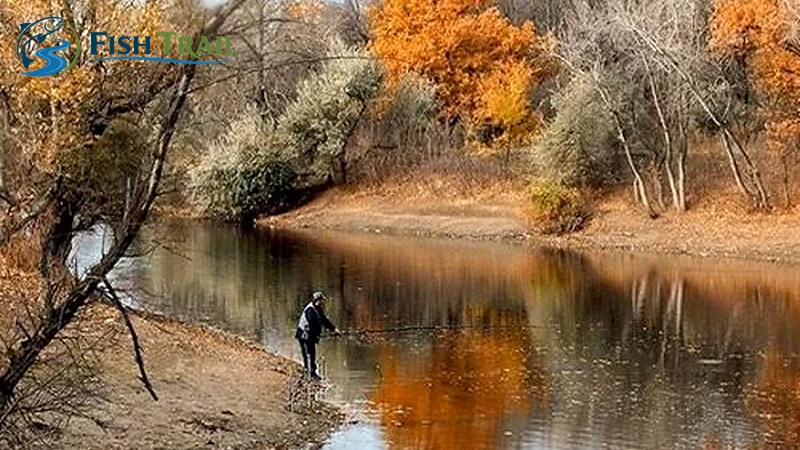
While the water retains its summer warmth, dawn and evening sessions remain worth planning. There is no need to abandon an established feeding time after the first cool night. The approach described in our guide to summer crucian carp fishing still provides a useful starting point during a warm early autumn.
Once cold nights become regular, make late morning through the afternoon your first choice for a short exploratory session. You will cover the part of the day when shallow water has had time to receive some warmth. On waters with a known evening feeding spell, stay into dusk rather than packing away as soon as the sun drops behind the trees.
| Conditions | When to start | Practical approach |
|---|---|---|
| Warm early autumn with mild nights | Dawn or late afternoon into evening | Begin with productive summer swims and restrained regular feeding |
| Cold nights followed by a calm, sunny day | Late morning through the afternoon | Compare a sheltered deeper line with nearby shallower water |
| Several mild, settled days after a cold spell | Afternoon into dusk | Revisit feeding areas that went quiet during the cold weather |
| Persistent cold with little sign of feeding | A short session covering the water’s known bite time | Concentrate on the best holding area and feed very lightly |
Warm, overcast weather is also worth using. Do not wait for sunshine if a mild spell gives you several stable days and comfortable conditions for presenting a light rig. Equally, a sharp weather change is not a promise of a feeding frenzy before the front arrives.
Late autumn requires more selective expectations. Feeding opportunities become harder to find, and a blank session does not automatically mean the tackle is wrong. Record the time and location of every crucian you catch; even a short feeding spell gives you something concrete to build the next visit around.
Best Baits for Crucian Carp in Autumn
Take a small selection of contrasting baits rather than relying on one supposedly unbeatable autumn offering. Maggots and worms make a strong starting pair, with casters and a compact plant-based bait giving you useful alternatives. Freshness, size and presentation matter more than filling every compartment of the bait bag.
As the water cools, start with a single maggot or a small section of worm. These are manageable mouthfuls that suit a light hook and reveal whether fish are prepared to feed. Keep the hook point clear and replace damaged bait promptly.
The following selection covers most autumn sessions:
- Maggots: Start with one on a size 18 hook, moving to two on a size 16 when fish respond confidently. Check for sucked-out skins after missed bites and renew the bait.
- Worms: Use a small redworm or a short section of dendrobaena, leaving the point exposed. A compact piece is easier to present neatly than a large worm folded repeatedly around the hook.
- Casters: Fish a single sinking caster on a fine-wire hook. Test them in water first and remove floating ones from any loose feed intended to reach the bottom.
- Bloodworm: A useful delicate bait where it is available and permitted. Use a suitable fine-wire hook and handle the larvae gently; these are freshwater midge larvae, rather than the large marine worms sold under the same name in North America.
- Sweetcorn and bread: Keep a small soft grain of corn or a neatly punched piece of bread available, particularly during mild weather. They also give you alternatives when small fish repeatedly intercept maggots.
- Soft pellets: A small expander pellet is worth trying on waters where pellets are regularly fed. Start with a compact 4 mm offering rather than copying a larger summer carp hookbait.
 Bloodworm needs particular care between trips and on the bank. Our guide to keeping bloodworms fresh explains how to store and handle these delicate larvae.
Do not discard corn, bread or pellets simply because the calendar says autumn. Compare them against an animal bait in the same productive area. When small fish strip maggots before crucians reach them, a neatly mounted grain of corn gives you a hookbait that stays available for longer.
Cocktail baits are worth trying when individual offerings stop producing bites. Try a small worm section tipped with one maggot, or a small grain of corn with a maggot alongside it. Keep the combination compact and move up a hook size if necessary to leave enough gape exposed. Combining baits should create a neatly presented mouthful, not a crowded hook with no room to take hold.
Change the bait for a reason. If maggots are constantly damaged by small fish, try corn or a soft pellet. If a bulky offering produces tentative indications but no hooked fish, reduce it to a single maggot or smaller worm section. If the bait returns untouched and there are no convincing signs of fish, reassess its position before working through every bait in the bag.
Groundbait and Feeding in Cooler Water
Use groundbait to concentrate feeding around the hookbait. It remains useful in autumn, but increasing the quantity will not compensate for fishing an empty area. Begin with less than you would during an active summer session and let the response determine the next helping.
For a lightly stocked pond in cooler conditions, two walnut-sized balls of fine groundbait make a sensible starting point. Add a pinch of the bait you are using, such as casters, dead maggots or finely chopped worm. Mix the groundbait so it reaches the bottom and breaks down there; a cloud hanging through the water column can bring small fish above the crucians and make presentation harder.
A fine crumb-based mix is enough to start with. In clear water, choose a colour that sits discreetly against the lakebed, and resist adding several strong flavourings at once. There is no need to make a large batch: you can always mix another small portion if feeding activity justifies it.
Once bites begin, top up with a pinch of loose feed or another small ball. If activity fades immediately after feeding, stop adding bait and give the swim time to settle. During very slow fishing, put the hookbait over the original patch without automatically feeding on every cast.
Simple Tackle for Autumn Crucian Fishing
A light float outfit is the first choice when the fish are within comfortable casting distance. It lets you position small baits precisely and see indications that would barely register on heavier tackle. Use a light feeder when extra range, depth or wind makes that presentation difficult.
For float fishing, a forgiving 11-13 ft match rod and a small fixed-spool reel form a practical outfit. Monofilament mainline around 0.16-0.18 mm with a 0.10-0.14 mm hooklength suits open-water crucian fishing. Choose the stronger end of that range near vegetation or where tench and carp are likely. If the swim requires more strength, step up the tackle or choose a clearer position rather than risking repeated breakages.
Match the hook to the bait. Sizes 16-18 cover single or double maggot, small worm sections and many compact autumn offerings; a size 14 suits a larger grain of corn or a more substantial cocktail. Choose a fine-wire pattern with enough strength for the fish and follow the venue’s rules on barbs.
Set the float carefully. In calm close-range water, a light pole float on suitable tackle or a slim waggler works well. Shot it down until only a clearly visible tip remains above the surface. Use enough float capacity to control the rig: an extremely light float that drifts constantly is less useful than a slightly heavier one that holds the bait accurately.
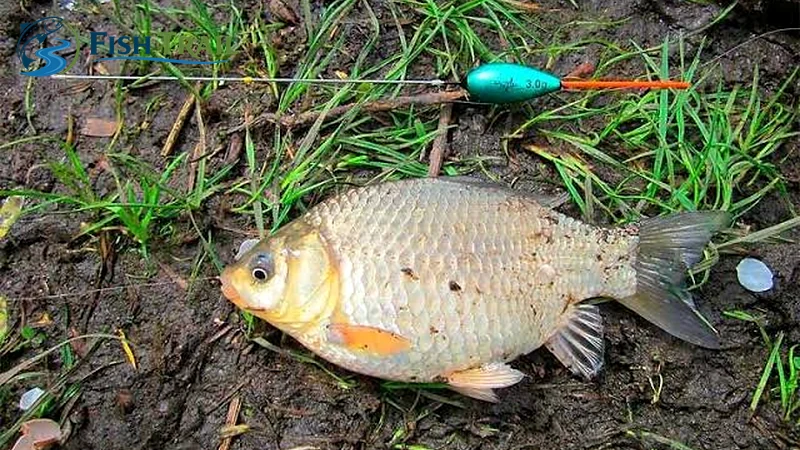 Plumb the chosen patch and begin with the hookbait just touching bottom. Keep a small dropper shot around 10-15 cm above the hook and place the remaining shot higher up the line. If tow drags the bait along, add a little depth so a short section of hooklength rests on the bottom. Keep adjustments small and recheck the presentation after moving to a different depth.
Watch for a definite dip, sustained sideways movement or a clear lift. Lift the rod smoothly when an indication develops rather than striking wildly at every wobble. If repeated movements produce nothing, inspect the bait, check the depth and reduce the hookbait before assuming all the fish are too small.
For feeder fishing, use a light quivertip rod with a small feeder or bomb heavy enough to stay in place. A small running feeder carrying a modest amount of groundbait is a straightforward starting point. Mainline around 0.18-0.22 mm and a 0.12-0.16 mm hooklength provide a practical starting range for clear, relatively snag-free swims; increase strength where larger fish or cover demand it.
Choose a quiver tip that shows bites without being pulled into a deep bend by wind or tow. Take up slack gently after casting, avoiding enough tension to drag the feeder across the bottom. If the swim already contains sufficient feed, replace the feeder with a small bomb and continue presenting the hookbait over the same patch.
When a swim stays quiet, work through a simple sequence:
- Check the bait and hook point. Replace damaged bait and remove weed or debris.
- Confirm the depth and bottom contact. Make sure the hookbait is not suspended above the feeding area or buried in loose material.
- Reduce the offering. Try a single maggot or smaller worm section on a suitably sized hook.
- Rest the fed patch and test the second line. Change position deliberately rather than scattering repeated casts and feed around the swim.
Once a position produces a crucian, return the next bait to that same patch. Accurate presentation and restrained feeding give you a stronger basis for the session than repeatedly changing tackle. In autumn, the productive adjustment is often a small one: a cleaner patch of bottom, a neater bait or a better-timed visit.