A good cast puts your lure where you want it and leaves you ready to fish. Sending it a long way is only part of the job: a controlled cast lets you work along a reed edge, reach the far side of a canal or land beside cover without throwing straight into it.
Learning how to cast a spinning reel starts with a simple sequence: hold the line, open the bail, move the rod smoothly and release the line during the forward stroke. Once those actions become familiar, you can shorten the movement, change the casting angle and place your lure more accurately. This guide covers a spinning rod with a fixed-spool reel mounted underneath it, rather than a baitcaster or a closed-face push-button reel.
Get Your Tackle Ready Before Casting
Start in an open swim with firm footing and enough space for both the rod and the lure behind you. Check above and beside you as well as directly behind: branches, other anglers and overhead power lines must be clear of the casting path. For practice away from the water, use a hookless casting plug or remove the hooks from a suitable lure.
Use a weight that sits comfortably within the rod’s stated casting range. A compact 10 g practice plug, for example, is a sensible starting point on a rod rated around 5-20 g. With a soft plastic, count the jighead, hook and plastic together; the number stamped on the jighead is not the weight of the complete lure.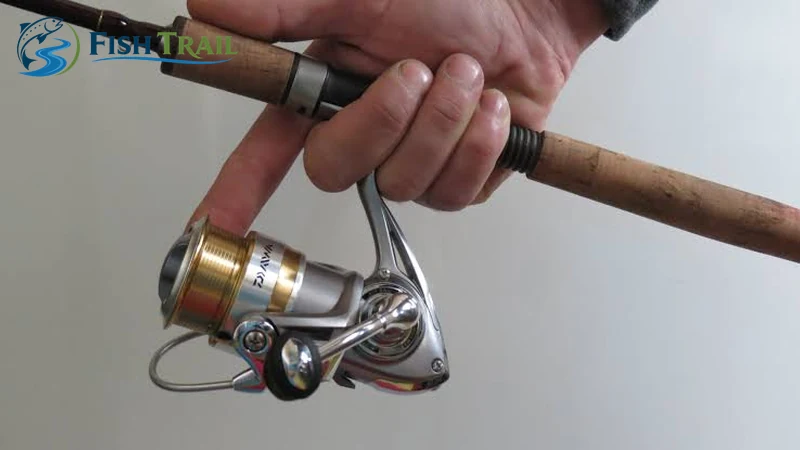
Check that the rod sections are seated securely, the guides line up and the line passes through every guide without wrapping around the tip. Keep clips and swivels outside the tip ring. There is no need to buy a different outfit before learning: a balanced setup you can handle comfortably is more useful than a powerful rod that barely bends under your practice weight.
How to Cast a Spinning Reel Step by Step
Begin with an overhead cast in open space. It gives you a straightforward movement to repeat while learning when to release the line. Use modest effort at first; you should be able to concentrate on the sequence without trying to reach the opposite bank.
1. Hold the rod with the reel underneath.
Grip the handle around the reel seat, with the reel stem between your fingers. Two fingers in front of the stem and two behind is a useful starting position, but adjust the grip so your index finger can reach the line comfortably. Keep your wrist relaxed and your grip secure without squeezing the handle as hard as possible.
Wind in until the lure hangs roughly 20-30 cm below the rod tip. This short drop is convenient for learning an ordinary overhead cast, rather than a fixed rule for every lure and casting style. Stop the lure swinging before you begin.
2. Pick up the line with your index finger.
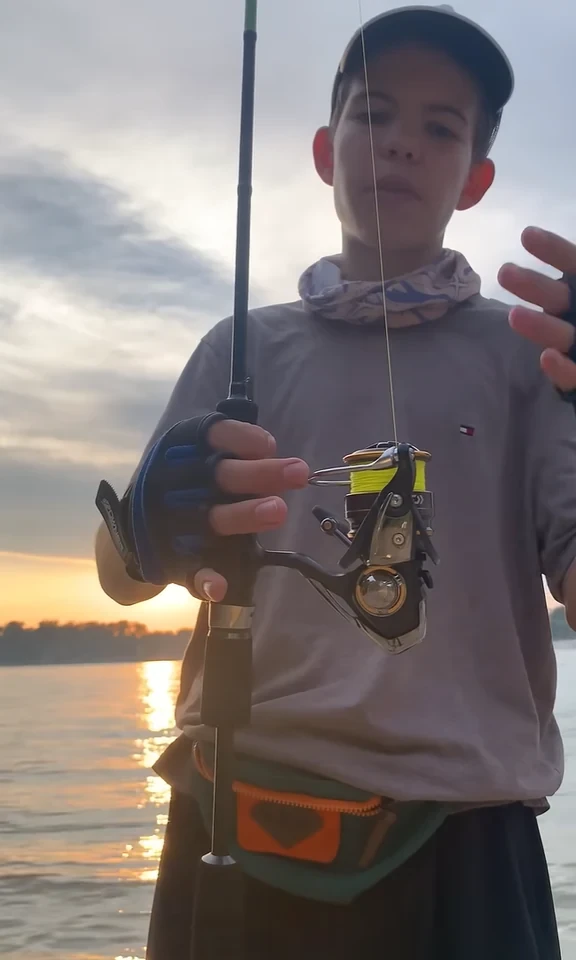
With the bail still closed, turn the handle until the line roller is within comfortable reach of your casting hand. Hook the line gently with the pad of your index finger and draw it towards the rod grip. Your finger must hold the lure’s weight before you open the bail; otherwise, the lure can drop and pull line off the spool.
Keep the line near the fingertip so it can leave cleanly when you straighten the finger. Do not wrap it around your finger or trap it deep in a joint.
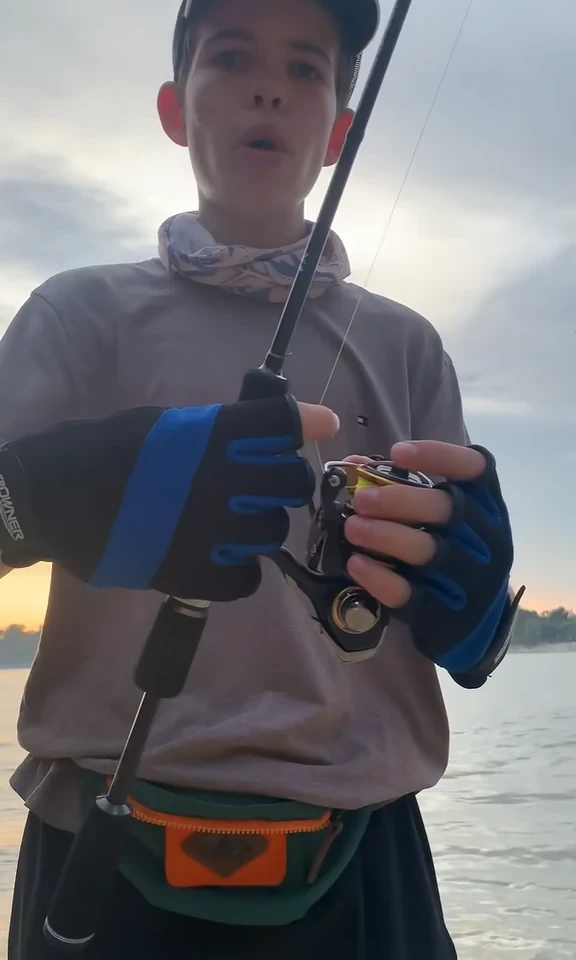
3. Open the bail with your other hand.
Flip the wire bail fully open while continuing to hold the line. The lure should remain hanging at the same height. If it drops, close the bail, reset the drop and secure the line again before continuing.
On a spinning reel, the spool does not spin to release line during a cast. With the bail open, line comes off over the spool lip when your finger lets it go. That is why holding and releasing the line is the key part of the preparation.
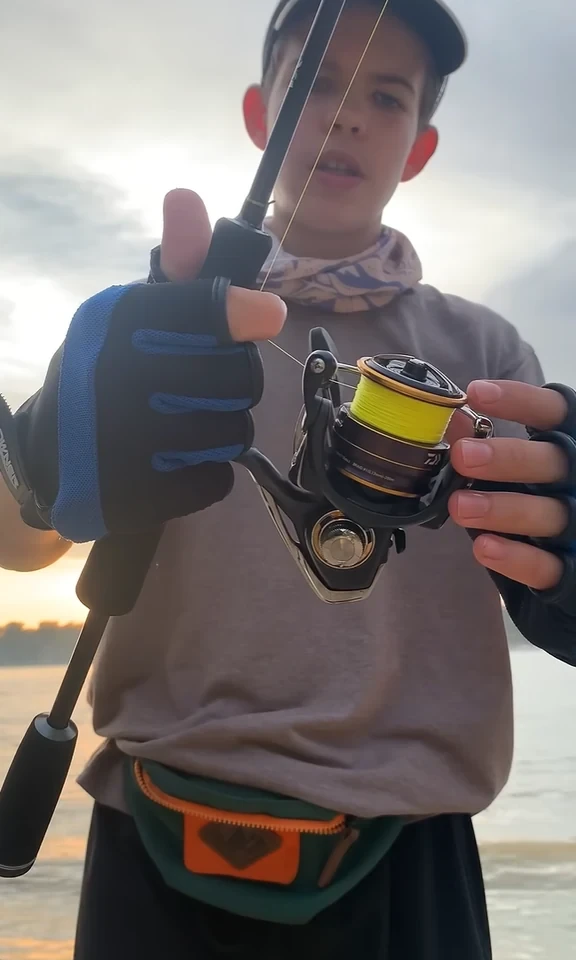
4. Bring the rod back smoothly.
With the line held and the bail open, face your target and settle into a comfortable stance. Check behind you again, then bring the rod back over your casting shoulder by bending your elbow and allowing a small wrist movement. Keep the movement controlled rather than dropping the rod far behind your back.
Move smoothly into the forward stroke. The lure’s resistance bends the rod, and the recovering blank helps propel it. You do not need to throw your whole arm around from the shoulder. If the rod has a longer handle, your other hand can support and guide the butt, but it should not make a separate, exaggerated swing.
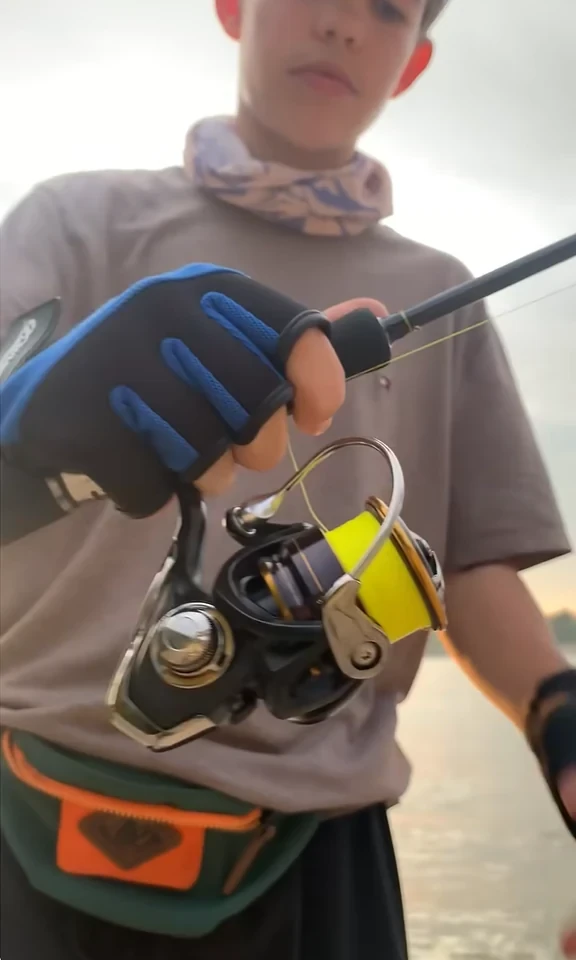
5. Accelerate forwards and release the line.
Sweep the rod forwards towards the target, building speed smoothly. Straighten your index finger during the forward stroke so the line leaves it freely and the lure flies out over the water. Finish with the rod pointing along the casting direction, allowing the line to run through the guides.
Use the lure’s flight to judge your timing. If it climbs steeply, you are usually releasing too early; if it slaps down close in front of you, you are usually releasing too late. Reduce the effort and make a small timing adjustment on the next cast rather than trying to correct everything by swinging harder.
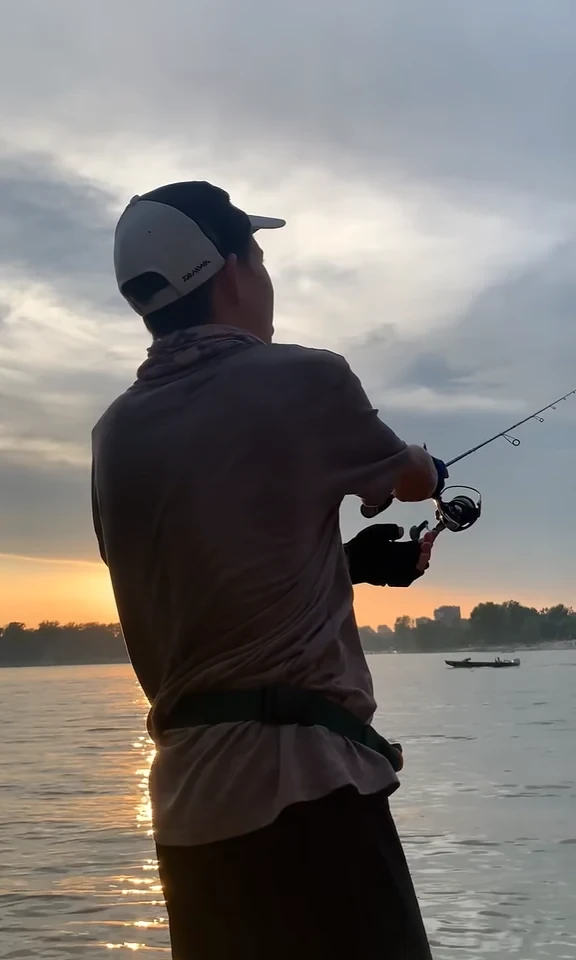
6. Control the landing and close the bail.
As the lure approaches the water, lightly touch the spool lip with your index finger to slow the outgoing line. This is called feathering. Start with gentle contact: stopping the line abruptly can pull the lure short or make it swing back towards you.
At splashdown, stop excess line coming off the spool and close the bail with your free hand. Check that the line is seated in the roller, then wind in the loose line without dragging the lure a long way from its landing point. This helps prevent slack loops being wound onto the spool and leaves you ready to begin the retrieve.
A shallow-running lure can be worked almost immediately. A sinking lure needs time to reach its fishing depth, while you maintain enough contact to notice a take. When jig fishing for perch, for example, controlling the initial fall is part of the presentation, not a pause before the fishing begins.
A Compact Cast Can Do More Than a Big Swing
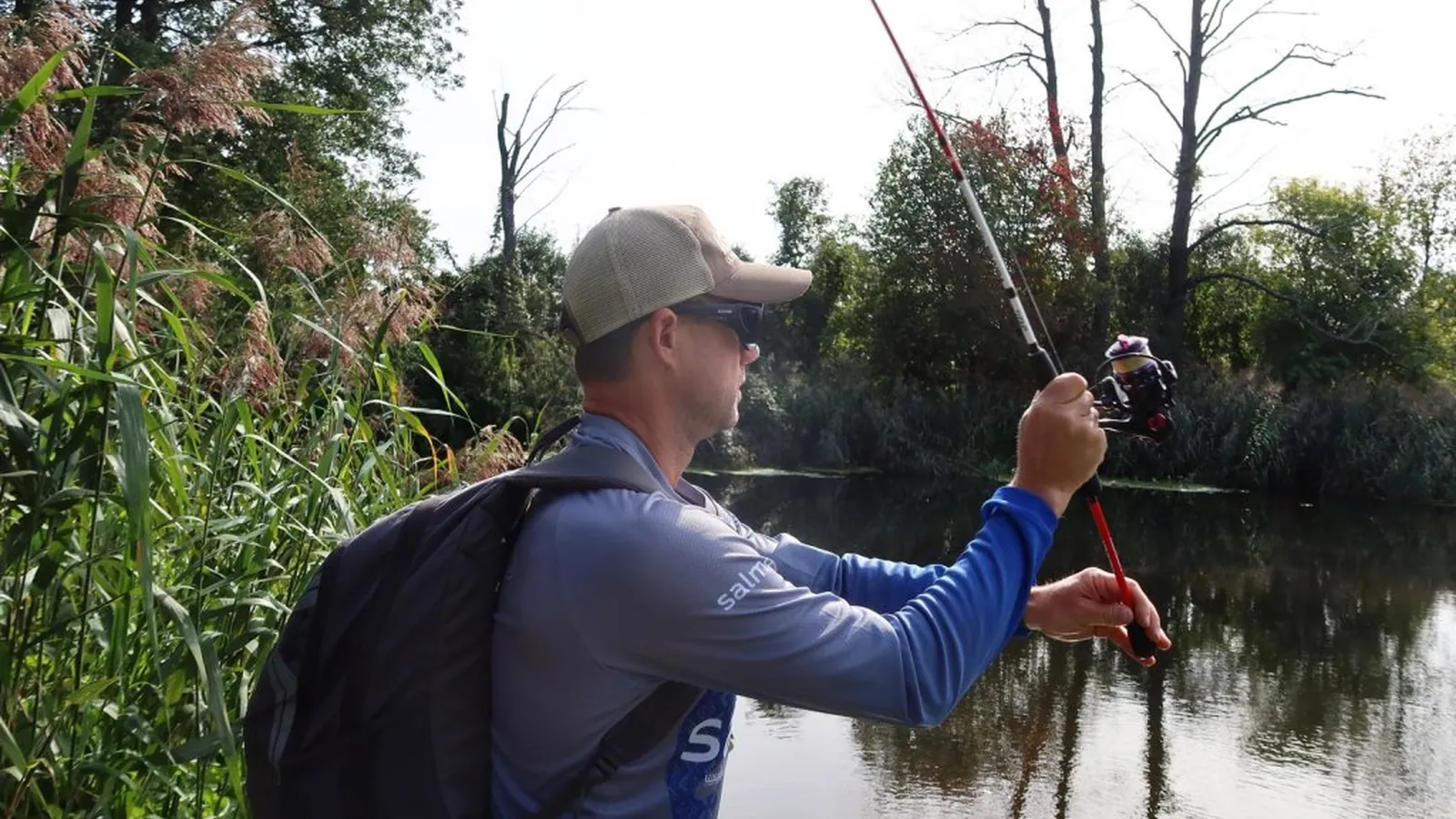
Watch the short clip below for an example of a compact cast with a spinning reel. Pay attention to how little sweeping arm movement is involved and how the rod recovers as the line runs out. The clip also shows the bail being closed by hand at the end.
A short movement works when the lure loads the rod and the release is well timed. Copy that coordination before trying to copy the apparent distance. The landing point is not clear enough in this clip to measure the cast, and different lure weights and rod actions require different amounts of movement.
For heavier lures or longer casts, a wider stroke and support from the second hand can be useful. The aim is to make both hands work together smoothly, rather than adding movement that throws the rod off line.
When to Use a Sidearm or Underarm Cast
An overhead cast is a useful starting point, but the bank will not always give you room for it. Changing the casting angle lets you keep fishing beneath branches or present a lure at short range without a large backswing. Prepare the reel in the same way: hold the line first, then open the bail.
Sidearm Casts Beneath Overhanging Cover
Move the rod back and forwards beside your body, keeping it in a consistent casting plane. Release the line as the tip moves towards the target. The lower flight path helps you send a lure beneath overhanging branches, provided there is a clear path for both the rod and the lure.
Sidearm casting can be accurate, but a small change in release timing sends the lure left or right. Practise towards an open patch of water before aiming into a narrow gap. Check the full area beside you: a low cast can sweep a hook across someone standing outside your direct line of sight.
Underarm Casts for Short, Controlled Presentations
For nearby targets, lower the rod tip and let the lure hang freely with enough clearance above the bank or water. Use a small, controlled pendulum movement, then guide the rod forwards and upwards, releasing the line as the lure swings towards the target. Keep the lure clear of your legs throughout.
This is useful for presenting beside a near-bank reed bed, along a boat or beneath an obstruction that prevents an overhead cast. Begin with short distances and a clear target. Holding a hooked lure and bending the rod back like a catapult adds unnecessary risk for a beginner and is not needed to learn this presentation.
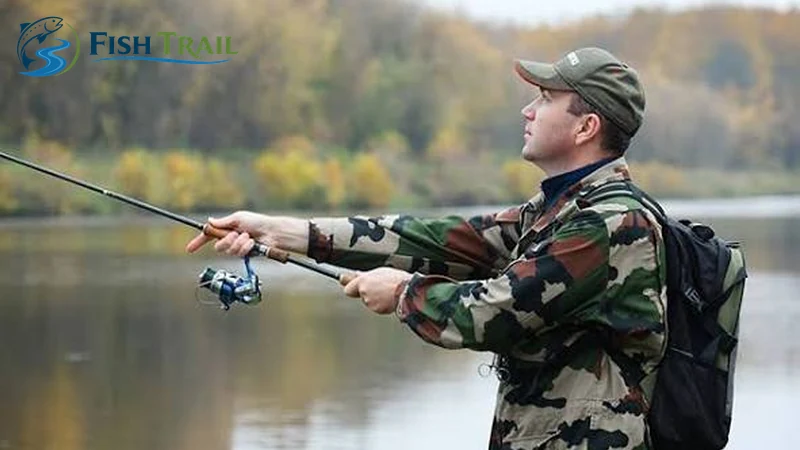
Improve Accuracy Before Chasing Distance
Choose a small target instead of aiming vaguely across the water. A clear patch beside a weed bed gives you something definite to judge. Keep your eyes on that spot and send the rod tip along the same path on each cast. Use a repeatable lure drop and moderate effort so you are changing as few things as possible.
Start with a comfortable distance, such as 10-15 metres, and try to group several casts in the same area. If the lure consistently lands beyond the target, reduce the power first, then use gentle feathering to refine the landing. If it scatters to either side, check whether the rod is moving across your body instead of following the intended direction.
When fishing near cover, aim for a clear landing area that lets you retrieve past the feature. A lure buried in reeds cannot fish. On a river, also allow for the current carrying a sinking lure away from its splashdown point.
How to Cast Farther with a Spinning Reel
Once you can repeat a clean cast, increase the stroke and acceleration gradually. A sudden punch at the start often sends the lure tumbling or spoils the release. Distance improves when the rod loads progressively and releases the lure cleanly, not simply when you apply more force.
Check the tackle before blaming your technique. An underfilled spool makes the line climb farther over the lip, while overfilling encourages loose coils to spill off. Follow the reel manufacturer’s fill guidance and keep the line laid evenly under tension. Remove loose loops and inspect the line and leader knot if you feel them catching during a cast.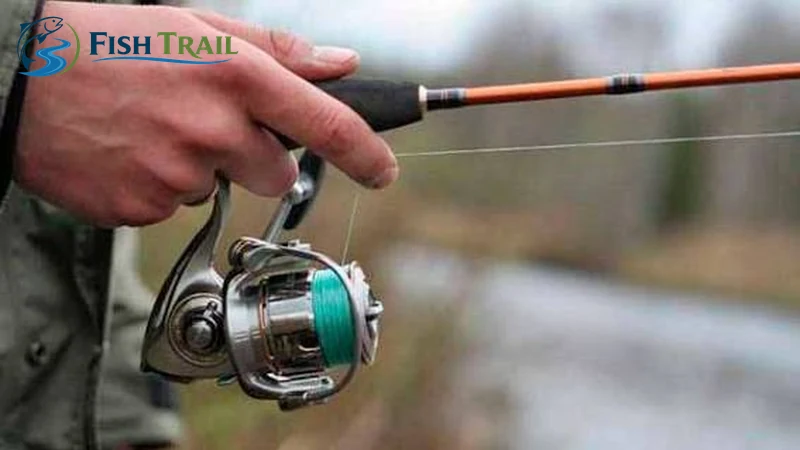
Lure shape matters as well as weight. A compact spoon or casting jig generally travels more cleanly than a bulky lure of similar weight that catches the wind. Stay within the rod’s casting range and choose the lure for the fishing you need to do; adding weight solely for distance can spoil the presentation.
Light lures need a rod that bends under their small load. If a tiny lure barely flexes your rod, a harder swing will not turn it into a suitable outfit. Use lighter tackle or accept a shorter cast. With jigheads and soft plastics, increase weight only when the required depth, current and presentation justify it.
A longer rod can help on an open bank, but there is no minimum rod length that unlocks long casts. Rod action, line diameter, lure shape, casting room and your timing all contribute. Into a headwind, use a controlled, lower trajectory instead of sending a high cast up for the wind to catch.
Fix the Problem You Can See
When a cast goes wrong, look at the flight and the line before changing your whole technique. One small correction is easier to learn from than a different grip, harder swing and new release point all at once.
| Problem | Likely cause | What to change |
|---|---|---|
| The lure flies steeply upwards | Early release during an overhead cast | Reduce power and release slightly later in the forward stroke. |
| The lure hits the water close in front | Late release | Let the line leave your finger slightly earlier and finish towards the target. |
| The lure travels to one side | The rod moves off line, or sidearm release timing varies | Slow down and repeat the same casting path before adding distance. |
| The line stops suddenly | Closed bail, line around the tip or a loop catching in a guide | Stop casting and inspect the line path. Do not force another cast. |
| Loose loops spill off the spool | Overfilling or slack line wound onto the reel | Clear the loops, check the fill level and retrieve under light tension. |
| The cast is short despite considerable effort | Poor loading, unsuitable lure weight or excessive line resistance | Check the rod’s casting range and spool, then return to a smooth, moderate cast. |
Finish a practice session with a few controlled casts to the same target rather than one maximum-effort throw. When the preparation, release and line control become repeatable, extra distance is easier to add without losing the accuracy that makes the cast useful.